Men on Show · Episode 14
Men, the Media and Therapy with Chris Hemmings
- 20 December 2023 .
- 35 min .
- Hosted by Andrew Pain .
Chris is a BACP psychotherapist and coach who specialises in working with men and boys, focussing on helping them to develop their emotional well-being.
Andrew hosts this podcast. His own keynotes are on burnout, resilience, imposter syndrome and difficult conversations.
In this episode
About the conversation
He previously spent ten years as a journalist, producing and presenting numerous documentaries on the subject of men and masculinity for the BBC, whilst also writing about it in mainstream media such as The Guardian, The Independent and The Telegraph.
Key points of the episode
- How on paper his life was fine, but he felt a mess, so started asking probing questions.
- Redefining the "hero" archetype.
- How there are so few things targeted directly at men now and the need for it.
- How to drive allyship (and not drive it away) .
- How a magical spontaneous conversation happened at one of his events.
- A beautiful message for men.
Men on Show shares lived experience and honest conversation – it is not medical or therapeutic advice. If you're struggling, you don't have to cope alone.
Samaritans: call 116 123 (free, 24/7) NHS: 111
Full transcript
Read the whole conversation
A complete, verbatim transcript of this episode – every word is the host's and guest's own; the topic headings are ours.
Welcome to Men on Show, the podcast, Candid Conversations with Everyday Heroes. Join Andrew Pain as he interviews fascinating guests, ordinary men doing extraordinary things. If you love the show and you think somebody could benefit from hearing it, why not tell them about it by giving it a share on social media? Oh, and at the end of the podcast, if you can leave us a five-star rating and a review, it really helps us more than you know, and it gets this important message out to more people that need to hear it the most. Right now, enjoy the next episode. See next episode.
Hi, my name's Andrew Pain, and welcome to Men on Show. And I'm absolutely delighted to welcome Chris Hemmings to the show. A former journalist for the BBC, and writer for The Guardian, The Independent, The Telegraph. Chris is the author of Be A Man, and How Macho Culture Damages Us, and How to Escape It. He's the founder of M Path, which is focused on improving men's wellbeing through workshops and talks on masculinity and empathy. Chris is also a psychotherapist and coach, and passionate advocate for social change.
Chris, welcome to the show. So Chris, just tell me about your life growing up as a boy and as a young adult. Kind of what stands out to you from that time? What do you remember?
Growing up in Manchester, and his dad's death
Yeah, my upbringing is actually the thing that fuelled my interest in this space. And I only kind of came to realise that in my mid to late twenties. And I'll do the kind of Tarantino thing of telling the middle of the story, and then the end, and then go back to the beginning. So at 26, my dad died. And in the wake of that, I found myself coping in quotation marks, coping through suppression, obviously, classic, and refusing to acknowledge that anything was really wrong going back to work the next day at the BBC.
And I recall vividly standing in the church in Manchester, delivering a eulogy at his funeral and pretending not to cry, having this twisted sense of achievement, actually, that on the second saddest day of my life, saddest obviously being the day he actually died, that I was able to contain my emotions because it's what he would have wanted, right? Three months later, I pulled myself through some help with friends out of a drug and alcohol mess. And at that point, I started to do some soul-searching because at that point, I'm a BBC journalist.
And I think to myself, well, first of all, I'm meant to be smart. I'm meant to be someone who's intelligent. I'm meant to be, you know, on paper, I'm a white male, privately educated 2.4 family, had everything that is in line with privilege. And yet here I was, an absolute mess. So I started to do some digging around and I started to think about how my upbringing had affected that. Yeah, I grew up in Manchester. I grew up in a pretty hardy bit of Manchester.
It's kind of machismo, macho culture was very much part and parcel of day to day life. You know, the surroundings I was in, my familial upbringing, even though, you know, I talk about my dad a lot in the kind of foundation of the work I do. And my dad was fantastic in so many ways. He was loving, he was nurturing, he was kind. I started to focus on these issues more widely. I made documentaries for the BBC, which I presented and produced on these issues.
And then, yeah, about four or five years ago, I met one of my new best mates, Annie, in Guatemala. And she was like, well, you want to help men so much, why don't you put your money where your mouth is and train to be a psychotherapist? And so I did, and I qualified in May this year. And I'm working solely with male clients for reasons that I'm happy to expand on. And yeah, I'm focusing specifically now in businesses, workplaces, and trying to engage men in their own wellbeing, and engage in their own understanding of the self through a lens of trying to make them feel more included, and to also help them to become better allies, not just for themselves, but for each other, and for women and minorities and queer people and everyone.
Because I actually think it's something that we as men are not particularly good at, and we actually are frightened of doing, because we're scared about getting it wrong. So it's about trying to give men the tools to help themselves and each other in an emotional sense.
Yeah, and you know, there is so much there that you've mentioned, there's so much we could unpack. You know, I see myself as a loving father, a kind father, a father who...
Strength, bravery and the alpha male
of strength, bravery, toughness, courage, being a leader. None of those things are negative. None of those things are inherently bad in any way. You know, I talk about a lot that, you know, masculinity isn't toxic. I know that's something that we're, that you and I are keen to talk about together. But masculinity is not toxic. And actually, there are many, many of the traits and attributes associated with the masculine paradigm, the masculine stereotype, the masculine ideal, which are beautiful and brilliant.
Unfortunately, I think that many of them have been co-opted to mean something that they shouldn't. You know, this idea of bravery, that, you know, we as men, we should be running into battle and we should be charging into burning buildings. Well, no. How about being brave enough to actually challenge and speak up and to ask for help? You know, that takes immense levels of bravery and courage. That we can be leaders, right? And I talked to young men about this idea of the alpha male.
Now, the alpha male, people assume to be the biggest and the hardest and the strongest. Well, actually, in wolf packs, which is where the idea of the alpha male came from, research on wolf packs, the alpha male is the one who has the most empathy, who is the most nurturing, who is the most kind. Sure, he's a hardcore badass too, but he's also the most emotionally literate, but we don't see it that way. So I think that-
The media's role in men's issues
In the media, we think about, we hear these phrases, men are in crisis, the suicides, that as you mentioned, sort of 10 years ago, perhaps sort of longer, it wasn't so well known, but of course, now we know that three quarters of men, three quarters of people who died by suicide are in fact men. And there's a whole bunch of other stats and data which make for fairly grim reading that 95% of people in prison in the UK are men, 85% of rough sleepers are men. But how guilty are the media in fuelling some of the issues that our men and boys face today?
Read the rest of the transcript Collapse transcript
Such a tough question, because it's the chicken and the egg situation. Whether the media in itself are fuelling the issue is a hard question to answer, because also what counts as the media, right? The media these days is, this is media right now. We are doing media, Andrew, if that's the way to describe it, right? So media has become a vast juggernaut of everything. But if you're talking about the kind of traditional mainstream media, you know, the old MSM, as certain people would call it, I think it has a lot of responsibility.
And I think a lot of that responsibility comes down to, you know, from very basic things, like depictions of men in, I mean, how many, am I allowed to swear on this podcast?
Well, as long as it's not too offensive, I suppose.
All I was going to say was, how many fucking Marvel movies do we need, right? Like, this idea of the superhero, right? And yes, of course, there are female superheroes, but we all know who the vast majority of people watching Marvel movies are. They are, that's a vastly male audience. You know, I see so many young kids running around in Spider-Man and Superman costumes, and it's like, you know, what are we teaching them? So that's not helpful.
But actually on a more granular level, a great example of it recently was somebody that I used to know, somebody that I used to work with, Ava Evans. She was speaking publicly on somewhere around this time when a month or so ago, there was a conversation about a minister for men in the UK. And she was speaking eloquently, of course, because she is very eloquent, about the reasons why she doesn't believe there should be a minister for men.
And her reasons are that men don't, you know, more or equal amount of women try to take their own life. That women have bigger problems than men. And then unfortunately, you had Lawrence Fox coming back to challenge in that gross way that he did on Dan Wootton's programme, which doesn't help. So the problem is that we have a lot of people saying that men don't need help, that men are all inherently privileged, and that women and minorities are the ones that all the focus should be on.
And then we have crappy guy role models like Dan Wootton and Lawrence Fox coming on to shoot ourselves in the foot. So the issue for me is that as a society, if we don't create, I don't need to name the statistics, you just name some brilliant ones. We could name so many statistics, but I don't like to play the zero, some, them versus us game, right? Many men need help. And actually, there are so few strategies, all organisational strategies, governmental strategies.
There are so few things now that are actually directly targeted at men. So men are then made to believe, well, my issues aren't as important as others. So why should I care about my own well-being? Why should I care about my own mental health? Why should I care about other people's well-being and mental health and experience of existence if nobody seems to care about mine? Yeah.
Arguments against a minister for men
I mean, I saw that interview that you referred to. I mean, one of Ava Evans' other points just to sort of add to what you're saying was one of her points for why we shouldn't have a minister for men was that the idea for having a minister for men was in her words, simply sort of a way to antagonise women. That a complete belittling of the idea. And when she was queried on sort of, well, yeah, but the suicide statistic, she sort of mentioned, well, women are more successful at suicide than men. And when queried on COVID, for example, that men are more successful than women.
Sorry, yeah.
Yeah, well, I think there's that work. That is a slight twisting of the research where, of course, the argument is that the methods that men choose are often very final. There is some research around that. But around COVID, when Jeff Norcott, the comedian, and he was sort of speaking favour for a minister for men, when he said, well, look at the amount of men that died. So many more men died from COVID than women. She said, yes, but who did all the work during COVID?
So, I mean, she sort of spoke eloquently, but I felt she was actually quite offensive. And her tone in the way that she spoke about suicide, I think if I'd been on the programme, I would have wanted to have made an apology on her behalf to all families who faced that tragedy of suicide. It was an absolute disgrace.
And so, I've thought a lot about this, obviously, for many, many years, and I've heard this argument before. What she's saying is nothing new. But what she is saying is only serving, and it's not just her, so I don't really want to focus on her. This mentality that others have it worse, right? Yeah. Well, via what metric, you know? We can always find a metric. So that same research that people quote, and I've seen it quoted many times on many social media platforms that women attempt suicide, either more or equally amount as men.
It's like, yeah, but the research also shows that men use far more lethal methods because they actually are more determined to make it happen. So, but also, if you want to use that same argument, we talk a huge amount about violence against women and girls. Who's more likely to experience violence? Men and boys.
It's about 60%, isn't it?
Victims, yeah. More, 67, but the problem is, is that what we're doing there is we're saying because people A, are experiencing difficulties, people B, don't need help. And that is just zero sum thinking. It's why in organisations, I don't try to create men's networks, but I do try to create men's wellbeing networks. Because if we're looking at men's wellbeing rates, it's impossible to argue that men's wellbeing is not worse than women. Because via pretty much every metric, aside from women are more likely to get diagnosed with a mental illness, well yeah, they're more likely to get diagnosed because they're more likely to go and seek a diagnosis for the reasons that are very obvious.
So I don't buy into this zero sum thinking. When women will say or someone will say, but women experience this, I say yeah, and that's terrible. That's awful. And I'm so glad that there are efforts being made to help. But I also believe that there should be efforts being made to help men. And the problem is, and I will say this, I spoke recently to somebody at Google, I will say it, because I'm not gonna work there.
I spoke to somebody at Google, and they said that they agree with everything that I am saying in terms of what is needed for men within a workplace. Well, this individual said that it was not possible for him to go and speak this to somebody because he would get laughed at and shamed for daring to say that men need help. And it's like, what are we doing as a society, as a culture, when that's the reality?
Allyship, and why he now works with men
So if we're gonna change, in terms of thinking of the media, if we wanna improve the situation for men and boys, I suppose what we're saying is an understanding that it's not sort of a zero sum game here. Everybody can be helped, but men do need help. And I suppose it's also sort of trying to champion some of the more positive in telling your voices. Because like you say, Lawrence Fox, Andrew Tate, you know, and I think about my boys, my 10 year old is hankering after a phone, that time will come quite soon. And I don't really want him, in terms of, well, who shall I listen to? You know, we need more positive male influences who are all about allyship.
But it is all about allyship. And allyship is really important. But again, you know, I'm going into these organisations and there's 17 women and two men in a room, because that's the DE and I culture. And the two men in the room, one is from the LGBT group and one is from, you know, the black people of whatever company, right? And that's great that there's two men in the room. But then I say, well, who are most of your leaders?
It's white straight guys, right? So if you want them to change, they don't feel included in this space, in the place where these conversations can take place. They don't feel like this is a place where they are welcome. They are being, what I describe as inactively excluded. Many men in history have actively excluded women, right? And minorities from spaces, and I'm not in any way condoning that. What's happening now is men feel inactively excluded. But if we want societal change to take place, and look, I want to reduce violence against women.
I'm bisexual, so I definitely want to reduce queerphobia, homophobia, transphobia. Absolutely I do. I stand in absolute solidarity as a queer person. I want to help with all of that. But I also believe that men need targeted help in certain ways. And if you want to drive allyship, you don't drive allyship by making men feel excluded, by demonising masculinity, by saying that all men are toxic, by saying that every man is responsible for the actions of every single bad man.
I work with young boys, right? I work with 15, 16 year old lads on a one to one basis. They are absolutely terrified, petrified, because they are being threatened with being called paedophiles, or being called sexual abusers by doing anything wrong, because right now, they don't have any fight back against it. Like, young boys right now are absolutely terrified. And we're actually increasing the gap. We're increasing the binary thinking. And we're not creating an environment of inclusivity.
And yes, look, I know that I understand the irony here that men are asking to be included. But if we're just gonna repeat the patterns of the past, then nothing is gonna change. And if you're just gonna exclude men, then men aren't gonna engage in the conversations that actually, you know what? I think most men would actually like to be a part of. They just don't know how.
Yeah, yeah. No, I think that's it. And you pick on it, obviously you've raised the term toxic masculinity. You know, I was delivering at a school a couple of months ago, and they've actually banned the term toxic masculinity in terms of their PHSE lessons, unless they're talking about it in terms of, why is it such a bad word? But they've had that discussion. And as a school with the students and pupils, they've come, having sort of talked about it, they've said, no, this is not helpful as a term, toxic femininity, toxic masculinity.
This is just language we're not gonna use in our school. And I was so encouraged by that. And I do feel like change is happening. I do feel like these issues are being raised, but I also feel like there's an awful, awful long way to go with it. Talking through, you mentioned you only work now with male clients. I was just interested. What's the particular thinking behind that, Chris?
In areas where men have been the dominant force for eternity, there are rightly protected minority spaces. So protected spaces for women, protected spaces for LGBT, protected spaces for disability, for ethnicity. And they are facilitated by people with an understanding and either people who are or that don't have an understanding of that. And in the psychotherapeutics space, 80% of my colleagues are female, and 80% of our client base is female. And I believe that, well, first of all, the suicide statistics, the addiction statistics, the loneliness statistics, the stress statistics, the homelessness statistics, I could go on, right?
And actually, there is a huge gender difference in terms of our understanding of mental health and well-being. And to simply say that we must look at this for the same, you know, a human is a human, and everybody must be treated the same way by these systems is nonsense, in my opinion. And what really spurred me on was during the course of my training three years, we learned all about LGBT, about working with autism, about working with ADHD, about working with people with disability, about working with people of different faiths and religions and cultures and ethnic backgrounds.
And never once was the reality of men spoken about, not once in three years. It was because I raised it almost weekly, and much to the consternation of my 85% female colleagues in the room, some of the time, I saw the eye rolls, but I just didn't care, because I was like, we're not talking about men here. We had this whole thing about differences, and we had this great lecture on differences, and I was like, and I said the statistics about men, and we're not talking about that.
So for me, it was like, my determination here is to become an expert on male mental health and men's wellbeing. Some people would call me one right now. I refuse to call myself that. I want to become one. I don't ever believe that I will, right? I want to understand the very specifics of men's experiences. I understand that I'm making my life very difficult by reducing the number of potential clients. I understand I'm making my life difficult by trying to go into organisations and say, hey, what about your men?
But I believe in the work that I'm doing so much. And I believe that actually, most male therapy clients want a male therapist. That is research proven. One of the main reasons men drop out of therapy, so men drop out of therapy, I'd say like four, five times higher rate than women do, having only come at a point of crisis. One of the main reasons men drop out is because they don't feel seen and heard. Now, with the greatest of respect, if I'm a 25 year old lad and I'm going sitting in front of a 50 year old woman, I'm far less likely to feel seen and heard.
I'm not saying that it's not possible. And I know that there are wonderful therapists out there, but I am just determined, because every client, and I say this to my clients, I say every client I have, you are helping me to help the future client that comes and sits down. Because you are teaching me about your experience as a man, and I am helping you to understand your experience. And I am learning to, and I gain permission from my clients to do that.
Obviously I don't say their names or whatever, but it's like, this is a co-learning process. And I think that's vital because actually, there hasn't been enough research and direct action to try to improve the lot of men in the therapy space.
Getting more men into therapy and wellbeing
And I suppose, although 80% currently, I think of what you said of people that seek therapy, are women, 20% are men. I'm assuming that if there were more men working in that space, then we could expect to see that ratio change moving forward and over time. And certainly within the spaces that I operate in, dealing with people in wellbeing and HR, it is predominantly women. And a common question that I get asked, or a common, it's sort of a question and a complaint, I suppose, is look, you know, we do these wellbeing initiatives, we did something for men last month, but it was only women who attended.
But then the people putting on the event are in fact women, the people promoting the event are in fact women. And I feel we need to get more men into these spaces, that would be a big step forward. And is that sort of part of what you're thinking is?
Absolutely. You know, you can't be what you can't see, right? Is the old adage. And if you don't see the therapeutic space as a male space, then you're not gonna feel like it is a space. You know, I'm moving to Copenhagen in a week and a half, two weeks from now. My long-term dream is to open a male-only psychotherapeutic centre, which is by men, for men. I believe that Scandinavia is light years ahead of us in terms of this conversation.
I believe that that will fly there. I am aware that there's some spaces like that in the UK. But we, you know, if you look at organisations, if you look at businesses, and you say, okay, we need more women to be in leadership positions, so what do we do? Well, we promote and we help women to become leaders. Well, okay, so these organisations, we want more men to be involved in inclusion work. So why are there 17 women and two men in this room?
Because you're not realising that it has to work both ways. It has to work that if you want more men to be in these spaces, you have to create the space for men to be in them. And I stopped counting the first 20 organisations I ever went into. 17 times I was invited in by the women of X, which is great, you know? And I love that there are women doing the allyship work. But more recently, I've been saying, well, how would it be for you to create a male-only space there?
Oh no, no. We can't do that. Okay, well, how would it be to create a male-focused space? And you know what? I was in Nike recently and 90% of the attendees of my workshop were male. So you can do it. It's just about how you market it. If you say, this is a male-focused event, men will turn up. Not many, but more than if you say, this is about men and masculinity, then people go, oh, okay, this is another inclusion event where men are gonna be bad mouth.
Well, this is actually no. This is a man coming in to speak about men and it's not gonna be about blaming and shaming. So this is about how we change the approach. It is about how we actually include men in this conversation. Because my three points to this are from a workplace perspective is you tell men that they are the problem constantly and then you complain that they don't engage in the solutions. Well, you don't need a psychology degree to understand that.
You tell men that men should talk more, but organisations have actively dismantled, understandably, but actively dismantled all the male only spaces where men feel comfortable speaking. And the third point is you ask men to speak up, but only when they agree with everything that's being said. Any man that comes along and disagrees is not being a good ally.
Speaking up for men, and investing in men
Yeah, well, the other side, I would say, oh, I just to sort of add to really what you're saying, and we see this as a political level, men that speak up for men will often be accused of being a misogynist just because they're speaking up for male wellbeing, which is just crazy.
All men who speak up, and this has happened to me, all men who speak up and dare to put their head above the parapet, people start going, well, hang on, you're not perfect. You've made mistakes. You've hurt people in the past. So why do you get to speak on this? And it's like, find me the perfect person to talk about this, like, you know, to speak up is daunting. What I'm trying to do is I'm trying to use the privilege that I have of being a privately educated, confident white man to stand in a room of mainly women and say, actually, this will benefit you.
I know it doesn't see, I know it seems counterintuitive to give money and effort towards helping men, but actually in the long run, this is what we as a society need. Men need this targeted support.
Well, you've given a little hook there for one of my main mottos, which is that every pound that we invest for male well-being is actually a pound for women because it's a pound for the women that love those men, their sisters, their daughters, their partners, their mums, their grandmothers. Just as every pound we invest for women is a pound invested for men. And I think you put some money into one, you don't necessarily take it away from the other.
And I see this even in the field of domestic abuse, where organisations obviously want to protect their funding. And in order to do that, one has to protect the narrative. And it's trying to encourage, well, actually both genders need resource. You talk about the HEAL jobs, health, education, administration, literacy, getting more men into these fields. That's going to require funding. That's just as the STEM jobs, increasing female participation, employment in those roles, has required huge amounts of funding over the years.
The same amount of funding will be required to move men into these spaces. And that's where the conversation starts to go silent. Because putting money towards male activities still feels, I think for many, a bit, well, weird, but that just feels a bit wrong.
Yeah, and you know what? I actually get it, because my wife, who also works in a similar space, she's a psychotherapist, but also a clinical sexologist who works with female sexual trauma. You can imagine the sort of conversations we have. She rightly pointed out to me, when I was getting frustrated, she was like, you have to remember, Chris, that women have fought for scraps of crumbs off the table for decades. And now there is a movement towards, and the women are getting a fairly fair slice of the pie.
It's not fully fair, right? We're not quite there yet, but a mostly fair slice of the pie in some ways, not all, before somebody wants to cancel me again. But what Sina said, what my wife said was, is you have to understand that for those women, you then coming along and saying, men also want a slice of this pie that you've now got, is really hard and challenging for them to hear. And actually in one of my talks, there was a black queer woman at the back of a room who started to have like a bit of a panic attack.
And she said that, you know, it was really hard for her to hear what I was saying. On two levels, partly because I was a very big, loud white guy telling her that men need help. But secondly, because she was starting to feel some empathy for men, and that was making her feel uncomfortable because, you know, this is hard. And we had the most, it's one of the most beautiful conversations, because I said to her, would you like to have this conversation openly in front of your colleagues now?
And she said, yeah. And we had this most incredible conversation where we came to the agreement that like, we both agree with the destination. It's just that, you know, she's had to fight really, really hard to get where she is sitting right now. And I'm saying to her, I'm fighting really, really hard for you as well. It's what you've just said. You know, I'm fighting really, really hard to help you, but you have to help us to help you because we actually as men, we have lower levels of empathy.
We have lower levels of emotional intelligence for reasons I don't need to go into. We don't engage with as much with our sense of wellbeing and emotional self. And you know, the amount of women that I know who are struggling to find a man who is emotionally available, you know, that's the reality of the world that we live in. And women are as responsible for this as men because it's a whole societal thing, you know? So we all need, this is about inclusion.
We all need to be a part of this change. And that's why the allyship stuff is so difficult. And I think unfortunately where a lot of the, you know, I see so many things on social media of men doing wonderful work, like male allies work. But the men that you've got in that room are the men that don't need it. The men who come along to a male allies thing, are probably men that you don't need.
And you know, you've got 50, 50 men, women in the room. Well, actually, how about doing an event for the men that wouldn't usually do the allyship work and engage with them and put some effort into helping them, you know, men's mental health work, men's empathy. You know, I do empathy and leadership workshops. Only, you know, so it's empathy and leadership, then it's mental health, and only then it's allyship once we've got you on board. But the allyship isn't just being an ally for women. It's also allyship for the men around you too, because that is how you create the more inclusive, harmonious workspace.
Closing message and getting in touch
Yeah. So Chris, I mean, it's been absolute pleasure having you on the show, sort of exploring your opinions. I've not yet had someone with the same media background that you have or the psychotherapy background that you have, so that you bring some really interesting angles to this conversation. Just to sort of, two points to conclude really. First, if you had like a two sentence message of encouragement for men and boys, what would that be?
Think about what your, let's say your dad, let's think about the men in your life. Think about what they told you when you were growing up. This isn't two sentences, but it's gonna be a bit longer.
Yeah, no, that's fine, that's fine.
They told you to be brave and tough and strong and a leader, right? They told you to be all of these things. Well, be that. Be brave enough to ask for help. Be strong enough to speak up for others when bullying or negative behaviours are happening around you. Be tough enough to put an arm around one of your mates and say, I don't think you're all right. Let's try and have this really challenging conversation for the first time. And who's going to be the leader in your group who's going to say, you know what? We don't just have to sit around and talk about football. We can actually talk about what's going on with ourselves.
Wow, what a message. Amazing, absolutely fabulous message to conclude this episode on Chris. And so final part then, how do people get in touch with you, Chris? How do people find you?
I'm mainly using social media platform LinkedIn. Now you'll find me just typing Chris Hemmings if you find me on there. M path is my website, so it's www.m-path, P-A-T-H dot co dot U-K. It's a cheesy play on words, double entendre. And I'm also on Instagram at M path men. So yeah, anybody wants to get in touch, is interested in the work that we do. Any organisations that are keen to chat with me. You know, I once said to somebody that I would do this work, you know, I would be talking about this down the pub with old men sitting at the bar if nobody would pay me to do it. So I'm always happy to chat to people about this because it's, I think it's vital.
Fantastic. Thank you, Chris. It's been a pleasure having you on the show.
Absolutely a pleasure. Thank you so much, Andrew.
Thank you for listening to Andrew Pain's Men on Show. If you could leave us a five star rating and short review, it would be really, really appreciated. It helps us get this important message out to more people that need to hear it the most. See you on the next episode. Thank you for tuning in.
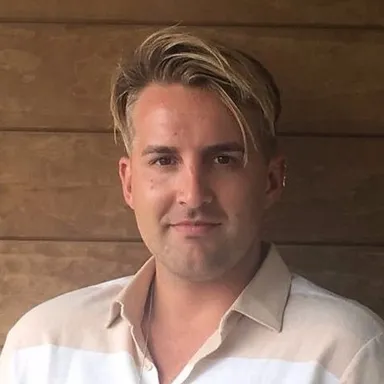
About the guest
Chris Hemmings
Chris is a BACP psychotherapist and coach who specialises in working with men and boys, focussing on helping them to develop their emotional well-being. He’s also a professional, public speaker and workshop facilitator who founded the M-Path programmes having worked in schools, universities and businesses across the UK and beyond ever since his book, ‘Be a man: How macho culture damages us and how to escape it’ was published in 2017.
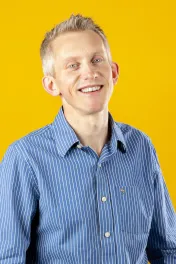
Hosted by Andrew Pain
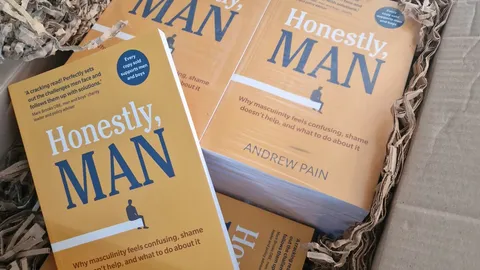
Andrew Pain is a Mental Health & Resilience Keynote Speaker who speaks from lived experience on resilience, burnout and workplace wellbeing. Host of the Men on Show podcast, author of the book Honestly, Man, and a TEDx speaker. Member, International Coaching Federation, and Mental Health First Aider trained.
Never miss an episode
Candid conversations with everyday heroes – ordinary men doing extraordinary things.