Men on Show · Episode 13
Men, Midlife Crisis and Hiking with Joe Horton
- 13 December 2023 .
- 36 min .
- Hosted by Andrew Pain .
Joe Horton is a Husband, Father, Podcast Host Coach and Business Owner, who helps men to live more meaningful lives by focussing on what is really important to them.
Andrew hosts this podcast. His own keynotes are on burnout, resilience, imposter syndrome and difficult conversations.
In this episode
About the conversation
Joe's own journey started after losing his Dad in 2015 which, whilst a time of great pain and confusion, caused him to reflect on his life up until that point and how he was living his life. He went on his own journey of self discovery (which still continues to this day). This meant embracing change, making tough decisions about what his priorities in life would be, and taking action to put them front and centre going forward.
And check out his fantastic podcast here
Key points of the episode
- How he set up the Guild of Dads podcast after a period of much change in his life.
- The people that inspired him in his early life.
- Why he started his own podcast .
- The success of his men's group.
- How on paper his life was good but he felt a lack of purpose.
- How and why a man should do what he enjoys and have other interests alongside responsibilities.
Men on Show shares lived experience and honest conversation – it is not medical or therapeutic advice. If you're struggling, you don't have to cope alone.
Samaritans: call 116 123 (free, 24/7) NHS: 111
Full transcript
Read the whole conversation
A complete, verbatim transcript of this episode – every word is the host's and guest's own; the topic headings are ours.
Welcome to Men on Show, the podcast, Candid Conversations with Everyday Heroes. Join Andrew Pain as he interviews fascinating guests, ordinary men doing extraordinary things. If you love the show and you think somebody could benefit from hearing it, why not tell them about it by giving it a share on social media? Oh, and at the end of the podcast, if you can leave us a five-star rating and a review, it really helps us more than you know, and it gets this important message out to more people that need to hear it the most. Right now, enjoy the next episode. The episode.
Hi, my name's Andrew Pain, and welcome to Men on Show. And today, I'm delighted to welcome Joe Horton to the podcast. Joe set up the Guild of Dads podcast and Brotherhood for Dads in 2020, after he went through a period of great personal change and upheaval in his life, after his father sadly passed away. He now coaches and mentors professional men and dads who are at a midway point of life, a point which we know from the data can be quite fragile in terms of men and suicide.
And something I absolutely love and I definitely want to hear more about today, Joe organises a monthly Dads Hike on the Ashdown Forest in Sussex called the Guild of Dads Hike. So Joe, it's brilliant to have you on the show. Thanks for coming along.
It's brilliant to be here and I'm looking forward to an exciting conversation with you this evening, Andrew.
Inspirations as a teenager, and his dad
Brilliant. So just tell me, Joe, so growing up as a teenage young man, who inspired you and what was life like for you?
So for me, when I was in my sort of early teens, I suppose I was into running and cycling and I came from a cycling family. So in terms of who inspired me, it was a lot of professional cyclists. So those were the days when you had, you know, like posters all over the bedroom wall of various different professional Tour de France winners and that kind of stuff. So in my kind of early teens, I would say, you know, athletes and people like that, particularly cyclists in particular, but also I would say in my sort of later teens, it was more kind of my first boss.
He was quite an inspiration to me. He was a lot older than me, so and a good influence and wise, a wise head on his shoulders to kind of mentor me through those first days, you know, my first job and stuff. But I really kind of looked off, looked up to kind of successful older men, I would say. But not just older men as well, because I had a, when I was at school, I was not too great in my first few years at school.
And I had an English teacher, fourth or fifth year, I suppose. And English was one of those subjects I was kind of really good at. She gave me a lot of confidence and that kind of filtered into a lot of my other subjects. So I had male role models, but I also had female role models as well as a young guy. And those are the people that sort of shaped me and gave me confidence as I grew through my teen years, I would say.
Sure. And tell me about your dad, your father. What was he like as a dad?
Read the rest of the transcript Collapse transcript
So my dad, he owned his own business, which is a second generation family business now. That both myself and my brother owned together. But he was a grafter, he worked hard. He wasn't someone that went to university. He kind of worked from the day he sort of left school. He left school without very many O levels at the time. So, and he built the business from the sort of ground up. But in terms of my old man, he understood human nature, he showed a great deal of empathy and compassion.
And one of the things that he always sort of instilled in me was that no matter how bad things are, there's always someone in the world who's in a worse situation than you are. And even as a young man, he would talk about places like Middle East and places where there was stuff going on, that was terrible for families to endure. Same as what's going on right now, in actual fact. It's amazing how things change very little over history.
But that gave me very much the same level of kind of compassion and empathy were instilled in me as values to take through into my adulthood. And my dad, he was certainly impacted by his own growing up as well, because his parents divorced when he was, I think he was in his late teens. So he was very keen to make sure that we had a stable upbringing and that kind of stuff, and him being around as much as he could be.
Because I think he'd seen other people in his industry build massive businesses, employing lots of people, and have the health issues, but also marital issues that often go along with that as well.
Yeah, so it sounds like an amazing guy, empathic, graft, wise, hands on dad, trying to make sure as well as building his business, which is obviously done with not many qualifications behind him, trying to make sure he finds that right balance. Sounds like an amazing guy.
His father's death in 2015, and what followed
Yeah, he was. And I think when he passed away in 2015, it was a shock to us because he looked after himself. He was very well read. And one of the things that he kind of took pride in was the fact that he was very well read and he kept himself kind of knowledgeable on what was going on in the world. And one of the things he was always kind of a bit paranoid about, I suppose, was he'd seen a lot of his peer group who had maybe taken early retirement sort of kind of lose their marbles.
Not in the sense of necessarily having dementia or stuff like that, but because they were not kind of keeping their mind occupied, they were a bit slow to respond to things and stuff. And so he never wanted to be that way. And in actual fact, within a few up to a few months before he passed away, he was still doing four or five hours on his bike. I mean, he was fitter than probably I was, objectively speaking, when you if you were to look at him a few months before he passed away.
So it was a big shock. It wasn't something that you were prepared for.
No, I mean, I got it. He had a chest infection over the winter. And we got a, he came in on to the office on the Monday and he said, look, I've been feeling really rough. The doctor's done blood tests. I really felt like death over the weekend, but I've got some stronger antibiotics and I think I'm going to be on the mend. And then on the Tuesday, we get a call to say that from my stepmom to say that he's had a stroke.
So we went into hospital and whenever someone has a stroke, they kind of the first, they know what they're going to know in the first few hours, you know, what the kind of prognosis is going to be, whether or not there's going to be a second stroke or not. So unfortunately for him, he had a second stroke on the Wednesday morning, about 24 hours afterwards. And, you know, we're called into a room to be given the news that, you know, it's a matter of if not when his body is going to start to shut down sort of thing.
So but we thought he was 70. I, in kind of my mind, I'd had down that he was probably going to go into his 80s. So that's why it was a shock. You know, he was a he lived to a good age, but I thought he was going to go into his 80s, definitely.
So, yeah, and how would you describe the impact? You obviously it was a shock, but in sort of the longer term impact, what was that like for you?
And for me, really, I mean, I was I was 36 at the time. So I had two young kids, and I was married, still am. And things really, again, objectively speaking, my life, things looked pretty good. But there was this kind of nagging feeling that I was kind of halfway through my life. And what was I going to do with my life? And what, you know, was this it? Is this what I was always going to do in terms of my job?
And, you know, and I think that my experience was that I'd maybe trodden a bit safely in terms of where my life had gone. My work was going well. I got all of the things objectively that we look to as measures of success, good job, house, wife, kids, all this kind of stuff. But there was still a little bit of an emptiness inside me. And it was not just grief and bereavement. There was something else there that made me feel that there was more for me to give, and that what I was doing up until now wasn't simply going to be the kind of legacy that I would leave behind.
And I think it must have been 18 months, two years after dad died, that I was listening to a podcast, coming back to podcast again. And I was listening to a podcast with a guy in the States, Ryan Mickler, he was being interviewed by a guy called Jordan Harbinger, who's a podcast I massively respect. And he was talking about this mastermind, like an online brotherhood for men that you could join. And I'd never experienced anything like that.
And it really opened my eyes as to what I could actually do, because in that brotherhood, you had like a plan and you were encouraged to make a vision for your life in terms of a number of different areas of your life. So like physical health, mental health, relationships, a contribution, not just your work contribution, but whether you wanted to actually make a, like a societal contribution, if you like, by doing something that impacted others. So, and that kind of really fired me up and gave my life a different trajectory in that period after dad passed away, really.
Reading Frankl and starting the Guild of Dads
I guess, I mean, that sounds like a really positive thing. I mean, sometimes on the media, you hear sort of stories of sort of online brotherhoods and not being so positive, but it clearly sounds from what you were involved with your experiences that that was a really positive thing with a long-term sort of positive outcome for you. Because was it after sort of being involved in that brotherhood that you've started to do the work that you do today, the Guild of Dads, your own podcast, is that what really got that going?
Yeah, most definitely, because I could see that there was, so kind of rewinding a little bit, I went on holiday, I think it was about 2018, 2019, and I read Victor Frankl's Man's Search for Meaning. And it was one of those books where I sort of put the book down as I was sitting on a balcony overlooking the Mediterranean Sea. And you know when you sometimes kind of reflect on what you've just read, and you're like, hang on a minute, my life is becoming a bit more meaningful now.
Why is that? And I realised that kind of reverse engineering it, I'd actually started to create a vision for my life in a number of different areas. I was taking action on the objectives I was putting forward in those different areas. And I think just the mere act of kind of taking action on these things was giving me a lot more confidence, a lot more self-belief. And I was around guys that were doing similar things as well in their own lives, not the same things as me, but they were doing things that were important to them in alignment with their values and their beliefs.
And I think when you're in that environment, you begin to kind of see the possibilities. I suppose it's a bit of a cliche that you see the possibilities of human improvement, but it's not necessarily about improvement. I think it's, as I get older now, I think it's more actually about going on a personal journey. And I think that, I think a lot of particularly men get stuck into this rut of, oh, I've got all these things that objectively should make me happy, but I'm not actually, that my life doesn't really have much purpose and meaning to it outside of my work and my family, which sounds like a really selfish thing to say, but I think that men have found themselves kind of stuck in this rut.
And I call it, over the last year or so, I've begun to sort of coin a phrase for it. It's what I would call the two-pronged life, where everything revolves around work and family, but there's no room for anything else. And I think it's in this kind of sort of vacuum and vortex that guys kind of end up losing themselves. And the paradox of it is, in the process of losing themselves, their wife and their kids lose a father and they lose a husband.
And often it ends up, as we know, it can end up in suicide, it can end up in a divorce as well, because you become a stranger to yourself and you're stranger to your wife and kids. And I think it's a very tragic sort of situation that kind of men are finding themselves in. And there's not really any blueprint for it. I mean, there's certain books that I've read. James Hollis finding meaning in midlife is a good one.
Richard Rohr, Falling Upwards is another good one. Steve Biddle, Manhood, that's again another good book, which kind of, it touches on this journey that men go through around about the midway point of life. But society is kind of, I think, really not giving guys any answers or blueprint or roadmap to find their way through this period in their own way, not a prescriptive way that you must do this, this, and this, and this. And it's the old cliche about a red sports car and, you know, or Harley Davidson motorbike, and people sort of laugh about it, but what underpins that is something a lot more serious and visceral, I think, for a lot of guys.
Men's communities and shrinking friendship groups
Sure. No, and maybe the blueprint is something around, you know, the men's communities and men really plugging into those communities. It sounds like The Brotherhood, for example, you're around other guys that wanted to find themselves. It sounds like the group was really positively run, and it sounds like that challenge of being in that space and maybe having that accountability was what was needed and what's needed perhaps for more guys. And at the very first guest I had on my podcast, Patrick Nyiyumbu, he heads at the, chairs the Jabali Network for Senior Male Nurses from ethnic minority backgrounds.
But he talks about that men's community, about the importance of these almost like campfire conversations that men need to have to check in with each other around their purpose and where they're going in life. And I wonder whether actually the way forward with this is stronger male communities reaching out for one another, challenging each other to find that purpose and holding each other to account.
Yeah, I think there is. And I think the crux of this also Andrew is that, like I've tweeted before that I feel that men deserve and they need compassion and empathy, but they also need a bloody good kick up the backside. And you have to be bold in making that statement. And guys who work, who have either been part of men's communities or run men's communities or work with men or work with dads or whatever, they get that statement because you see, part of the problem at the minute is that people are, and I think maybe it is the way the mental health discussion has gone in recent years, that people are so frightened about victim blaming all the time that they don't actually just come out and say, look, we should give guys empathy and compassion, but also sometimes we, in actual fact, a lot of the time, we need to give guys the tools, resources and support to actually get out of their own bloody way, because a lot of the time, and I'm gonna say we, because I think it's all of us suffered from this to a lesser or greater degree.
We self-sabotage ourselves and we get in our own way and we get into this mindset of, oh, we can't do this or because of what other people will think or because of this or because of that. And it just checks us further and further out of life and it becomes a very desperate situation like I've just mentioned previously.
Well, yeah, I think it's partly getting out of our own way. I think that's true. I think for me as well, I think men, you mentioned that you used the word stuck in a rut. We can easily get stuck in a rut, become creatures of habit. I know from some of the research from the Samaritans on suicide, the divorce is obviously a trigger for men and for women when it comes to suicide, but it's particularly a trigger for men because men, the argument of the Samaritans, tend to be more reliant on their partners for emotional support and more reliant on their partners' social circle for friends than having their own.
And I think again, coming back to men's communities, the kick up the ass, the getting out of each other's way and providing that kind of friendship circle that is their own thing that they went out and did for themselves is just so important.
Yeah, and I think you touched on a really important thing, particularly around marriage and relationships and men's friendship groups. Typically, men's friendship groups are shrinking and they shrink progressively over the course of their lives. And it's only something that I've realised recently is that their friendship groups shrink in direct proportion with the amount of responsibility they have in their life increasing. So if you can imagine like a graph where on one side you've got the friendship groups shrinking progressively as they get towards their 40s and 50s, and then the other side of the graph, their responsibilities as a man increasing over that time.
What you've got is this perfect storm of guys shouldering a massive amount of responsibility, worry, burden, upheaval in their lives. At the same time as the support structure that they had in place to cope with all of this is just falling away. And then people go, well, hang on a minute, why are guys suffering? Well, it's because they've actually not got anyone around them to bear this burden. And what typically happens as well is, what guys do is, okay, I've got together with this lady.
I wanna make this stick. I could see her be my future wife. So what I'll do is I'll stop seeing my friends so much. I'll stop doing the interests and hobbies that made me who I am, you know? So they make these kind of micro sacrifices to make the marriage work and make it stick, if that's the most accurate word to use. And then it goes up a level when you have kids. And then all of a sudden, they find themselves in a situation whereby they've got no friendship groups, they've kind of got no interests, they're not doing their hobbies anymore, and they've kind of lost, they're losing themselves like I alluded to earlier on.
But their wife and their kids are paradoxically losing them at the same time. So it's really getting guys into this mindset that it's not selfish to be selfless sometimes. And this is, I think, one of the biggest obstacles that I think everyone I speak to is doing men's work has to help guys overcome in some way, shape or form, I think.
The monthly hikes
Yeah, that's so insightful. So, for example, I play football every Friday and afterwards we go out for a couple of beers and it's really a beautiful way to wind the week down. And when the WhatsApp's getting going in the afternoon as we're getting ready to play, like it comes alive on a Friday afternoon. Loads of guys, you've got these guys just so excited about playing, about the pub and everything like that. And you know, but there's still a little part of me, some weeks where I feel really bad.
Like my wife doesn't make me feel bad. She's a wonderful woman. She's all about it. She's so supportive that I get out. She knows how important it is for my mental health. I do it to myself. I feel like, oh, you know, it's, and it's had to be, I have to really be, no, Andrew, this is really important for you. This is good for your mental health. But I think because we want as guys to be the best dads that we can be, the best partners that we can be, I think that's absolutely right.
We ourselves can sabotage all these things that we would otherwise do. And then, as you say, yeah, we can lose ourselves. And these things that make us who we are, the things that we used to do, they're so important for our emotional well-being. Really insightful. So tell me about your hikes, and what inspired you to do the first hike that you did, Joe? And just kind of explain to our listeners what they're all about.
So the hikes that I do are on the last Saturday of every month. They go out from the same point on the Ashdown Forest, in that kind of figure of eight format. And so we walk for like 45 minutes on the first kind of loop, and then it comes back to the car park, stop off and have a coffee or a tea or whatever tip or people want to bring with them, generally not alcoholic, and have a chit chat, and then we do about another loop again for about 45, 50 minutes.
So it's about two hours in total. And what inspired me to do it really was that I enjoy, I wouldn't say that I'm a big-timer hiker, but I do enjoy being outside in the fresh air, walking, and it clears my head. And that particular area of the Ashdown Forest, I've always, I don't know, you know when there's certain places that you go to in nature and you're like, this is one of those places that makes me feel instantly relaxed.
And I've been through there on my bike, I've walked around there, and it's just one of those places which is kind of, I don't want to say it's heaven on earth, but when you're there, you forget everything else that's kind of going on around. And I thought, well, hang on a minute, surely there must be other guys that would be interested in joining me on a walk once a month. So I started to kind of publicise it, and initially it was kind of slow going, getting guys to come out and stuff and that.
And it's gone through, you know, bearing out what we've just been spoken about. It's gone through some different incarnations and I've had to kind of clear out the WhatsApp group and stuff. Because again, some guys struggle with actually making that first step of actually, you know, coming out and going out for the hike and whatever. And so what often happens is in the, you know, last day or two before we're going out, it'll be, there'll be all these excuses come out of the bag sort of thing.
And one of the things I've accepted in what I do is that I can't help everyone. And sometimes you've got to cut people loose and then bring new people in and stuff. And it sounds kind of quite cutthroat in some respects, but you can't help someone that doesn't want to help themselves. And unfortunately, that's the reality of the situation sometimes with men, that you just can't, and you can invest a lot of time and effort in trying to help someone that doesn't want to be, kind of help, or doesn't want to involve themselves in getting out and whatever.
So it's gone for a few incarnations, but recently I've been promoting it on Facebook, and it's just taken off in the last month or so. So the group has swelled to like 40 members almost now. We've got BBC South East Today coming in, they're sending a reporter and a camera crew out to cover it this Saturday. This is the next walk this Saturday, and it's been featured in a local newspaper and stuff. So all of a sudden, I think it's because of Men's Mental Health Month in November, it seems to be getting quite a lot of coverage and stuff.
So it's, yeah, it's just gone from kind of strength to strength. And what inspired me to do it was I'm part of a few other in-person men's groups in the UK as well. And I can, again, coming back to the online thing, I like the online thing, but I like even more in-person events because I just think that it's, you know, you're looking into the whites of other guys' eyes, you can see them responding, you can see their confidence growing and stuff.
And what I find with in-person men's groups is you often see guys come along and they may have the weight of the world on their shoulders, or there might be something going on with work or their marriage or their kids, or something's going on that's weighing heavy on them. And you see it's palpable when they turn up, and particularly if it's the first time they've been along. But then after a few minutes, they start chatting to other guys.
It may well be that it's not mandatory for them to talk about what they're going through, but it may well be that they share what they're going through and another guy says, yeah, I've been through that. And all of a sudden, the analogy I use is that we all carry around rocks on our back. And if you can imagine like a rucksack that's filled up with rocks and guys turn up to men's events with all these rocks in their rucksack.
In talking to other chaps about it, gradually one rock gets taken out, another rock gets taken out, another rock gets taken out. And all of a sudden, this weight that they were carrying around on their back for all these weeks, months, maybe even years in some cases, begins to feel a little bit lighter. And all of a sudden, you can see their mood change, they become a lot more confident. And by the end of the, it might be an hour, it might be two hours, it might be three hours, it might be a day event.
But by the end of it, you can see that they're a lot lighter, you can see they feel more unburdened. And the other thing, they have that spring in their step. You know that, you know when you watch the old films and kind of people like Fred Astaire and that do that little kick as they walk away, and they kick their heels. It's like that. That's what you see happen to men when they begin to plug in to men's communities.
It's kind of like, it's like being plugged into a battery charger, and they return to their families, and their batteries are recharged, they feel refreshed. And like one thing that I often hear is, on the days that I've been along to an event, I feel so much more refreshed afterwards. My wife notices it, and I'm getting so much better with my kids and that. And it's just because they've had a bit of time away from the family to just refresh, be around other guys, and then return with a kind of clean slate, if you like.
Talking side to side, not face to face
Yeah, and we hear so much, don't we? Men don't talk, how do we get men to talk? And I have to say that as sort of a comment, it sort of irritates me slightly because I don't find that men don't talk. I mean, I find men talk very easily and naturally and in the right setting. And presumably that's what you find, that's what you're describing on your hikes.
Yeah, men talk, men talk without a doubt. And I think that when you really listen to men talk, not only do they talk deeply about subjects that they feel passionately about, but they talk about a wide breadth of subjects as well. You know, and people like to think, oh yeah, they're just talking about football and sports and cars and power tools and the typical things. But in actual fact, guys talk about stuff that's a lot deeper and broader than those topics.
And I think that there's a couple of elements to this. One, the first element is that often men don't stick their head above the parapet and say what they really think because they're frightened of being shot down right now. So that's one element. But also I think that guys are typically not interacting with one another in the way that women do. And so you've got this pressure on men to communicate with one another in the same way as women would.
And it's plain to see when you watch men interacting and when you watch women interacting, they interact in a completely different way. You know, the way they interact, the manner in which they interact. One of the things that I learned from, because I interview evolutionary biologists on my podcast, one of the things that I learned was that men often like to talk side to side rather than face to face. They, you know, from an evolutionary point of view, if you were squaring up to someone face to face, that's quite a threatening way to interact.
So it's no wonder that men like to walk when they, they like to talk when they're walking, when they're playing golf, when they're doing, when they're building stuff, when they're doing activities together. And, but we've got this idea in our heads that guys need to sit down face to face and talk. Well, they might do that in a pub maybe, but generally a lot of the time, they like to do it side to side during an activity or when they're doing something.
His podcast and its standout guests
That's interesting. I mean, tell me about your podcast, Bifi. What's your podcast called? How do we find it? Which is the guest that most stands out? Cause I might like to poach that guest, but yeah, on a serious note, what's your podcast and where can we find it?
So it used to be called The Guild of Dads podcast. I've recently changed it to The Joe Horton Show only because it reflects the kind of, the breadth of topics I like to speak about. But some of the guests I've had on include Steve Pressfield, Zuby, Robert Glover. I've interviewed Tracy Cox. I've interviewed, just trying to think, John Gray, the author of Men Are From Mars, Women Are From Venus. So there's tons of different people on there, from ex-military guys to ultra-athletes and stuff.
And there's been some fascinating conversations. Standout ones, I would say, Steve Pressfield. You know, that guy has done some amazing things. He's written some incredible books. He's been a Hollywood screenwriter, but he's also really down-to-earth, very wise, wise guy, and talks a lot of sense. The same as Robert Glover. I learned a massive amount from him, his book, No More Mr. Nice Guy. It's probably one of the books that I would recommend young men read when they leave school, because I think it... nice guy mentality and what Robert Glover talks about is very, very prevalent, and I think it's at the core of a lot of issues that young men face in this day and age, most definitely.
A two-sentence message for young men
And just to conclude, it's been an absolutely fascinating conversation. We've covered a lot of ground. Really interested in some of your insights around the hikes and what the men appear to be getting out of the hikes. I love the analogy of the rocks on your back and how much they feel so much lighter when they come away from that. And that Fred Astaire little skip, if ever I've had a few too many beers, I often kick one of those out when I'm wandering home from the pub.
So it can definitely resonate with that. If you had like a concise sort of two-sentence message that you could broadcast to the young men across the UK, what would that message be?
That is a good question. That is a very good question. I think in two sentences, it would be to really understand and learn about your relationship with thought, feeling and emotion, and understand how that dictates how you show up in your relationships.
Getting in touch on X and Facebook
I like that. That's great. That's very profound and a very good way to conclude this podcast. Really strong message. So thanks for that, Joe. Joe, it's been an absolute pleasure having you on the podcast. I'm so glad you could come along. You mentioned where people can find your podcast, your show, which is great. What's the best way of getting in contact with you online?
The best way to do so is on X or Twitter, as it used to be called. My handle is at Guild of Dads. I'm also on Instagram. I don't do too much on Instagram, but the Guild of Dads hike is most active at the moment on Facebook of all places, which I have a bit of a love-hate relationship with. But there you go. But it's active on there. There's a page shop there. And if anyone wants to join the hike, probably it would appeal to people from sort of London, Southeast, so Sussex, Surrey, Kent, maybe Hampshire, London.
Reach out to me on the Facebook page. We have a WhatsApp group, which is pretty active. And if it sounds like it's something that you would be interested in, then just shoot me a message, and we can get you into the group and welcome you on the next hike.
That's brilliant, Joe. And I wish you the very best tomorrow with the press showing up. I hope that goes really well. I'm sure you'll have an absolute blast. And yeah, thank you again for being on the show, Joe. It's been an absolute pleasure speaking to you.
Thanks very much for having me.
Thank you for listening to Andrew Pain's Men on Show. If you could leave us a five star rating and short review, it would be really, really appreciated. It helps us get this important message out to more people that need to hear it the most. See you on the next episode. Thank you for tuning in.
About the guest
Joe Horton
Joe Horton is a Husband, Father, Podcast Host Coach and Business Owner, who helps men to live more meaningful lives by focussing on what is really important to them. He hosts The Joe Horton Show, which is an interview show dedicated to equipping dads with all the tools, resources and ideas, to help them make improvements in their own lives. He interviews Psychologists, Athletes, Relationship Experts, Best Selling Authors, Stuntmen, Film Makers and BBC presenters, along with many other remarkable people at the top of their game.
Hosted by Andrew Pain
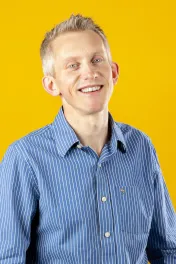
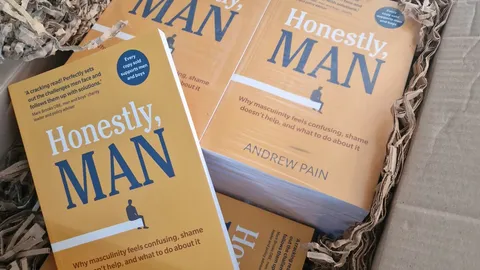
Andrew Pain is a Mental Health & Resilience Keynote Speaker who speaks from lived experience on resilience, burnout and workplace wellbeing. Host of the Men on Show podcast, author of the book Honestly, Man, and a TEDx speaker. Member, International Coaching Federation, and Mental Health First Aider trained.
Insights
Read next
Never miss an episode
Candid conversations with everyday heroes – ordinary men doing extraordinary things.