Men on Show · Episode 12
Men and the Testosterone Crisis with Ryan Parke
- 6 December 2023 .
- 44 min .
- Hosted by Andrew Pain .
Ryan Parke is The Men's Coach, a TEDx and international, award-winning public speaker.
Andrew hosts this podcast. His own keynotes are on burnout, resilience, imposter syndrome and difficult conversations.
In this episode
About the conversation
Ryan’s knowledge and ability, to present complexity in an accessible way, stands him out as a speaker and particularly on the subject of testosterone, Ryan is challenging outdated yet popular opinion. In so doing, he is opening up a whole new narrative in how we approach male mental and physical health. Ryan works with companies and charities that want to improve mental health for men by taking an evidence-based approach. His 90-day coaching programme helps men to overcome depression, beat procrastination and achieve their life goals.
Key points of the episode
- How he had a wonderful childhood… then an apprenticeship that showed him what he was not good at, but highlighted simultaneously what he was.
- How a peer of his "had it all" but was still mentally unwell… how he still took his life after doing all the "right" things .
- How the hormone testosterone is not the bad guy as first thought. It's the opposite.
- Some leading edge science on it. Techniques to increase testosterone.
- "Trying to be a man, kills a lot of men" .
- Why talking is absolutely necessary for men, but more is needed.
- How generic talking therapy is not sufficient to address suicidal ideation in men.
- How there are gender differences in stress triggers with men and women.
- The dangerous myths of men's mental health.
Men on Show shares lived experience and honest conversation – it is not medical or therapeutic advice. If you're struggling, you don't have to cope alone.
Samaritans: call 116 123 (free, 24/7) NHS: 111
Full transcript
Read the whole conversation
A complete, verbatim transcript of this episode – every word is the host's and guest's own; the topic headings are ours.
Welcome to Men on Show, the podcast, Candid Conversations with Everyday Heroes. Join Andrew Pain as he interviews fascinating guests, ordinary men doing extraordinary things. If you love the show and you think somebody could benefit from hearing it, why not tell them about it by giving it a share on social media? Oh, and at the end of the podcast, if you can leave us a five-star rating and a review, it really helps us more than you know, and it gets this important message out to more people that need to hear it the most. Right now, enjoy the next episode. The next episode.
Hi, my name's Andrew Pain, and welcome to Men on Show. And today, I'm delighted to welcome Ryan Parke to the show. In 2019, the most successful man that Ryan knew tragically took his own life, leaving behind a devastated family, two children and a distraught mother. His death was the catalyst for Ryan to pour his energy into learning and researching the science behind men's mental and physical health. And Ryan now is a TEDx international award-winning public speaker working with charities and companies wanting to improve the mental health of their male workforce. So Ryan, I'm delighted to have you on the show. Welcome to Men on Show.
Thank you so much, Andrew. I'm delighted to be here. And given the other guests that I've seen you had, I'm really honoured to be on here as well, to be in sort of the same group as them.
Growing up near St Albans
Cool. No, well, look, I'm really looking forward to hearing what you've got to say. Just so much interesting research work with so many important conclusions for us to draw when thinking about men's mental health. But first, tell me about your life growing up, Ryan. Who inspired you? What was your family life like?
That's a lovely question. So I live in St. Albans now, Andrew, which is a city just north of London. And I actually grew up about two miles away from where I live now. Although I've travelled far from where I grew up at points in my life, I've always found my way to come back here. And I had a really happy childhood. My family life was, I lived with my brother, my mum, my dad and my granddad.
So it's like a real intergenerational home with influences from English and Irish culture. And we had loads of animals. We didn't have much money, but we had loads of pets and a big garden. And I had a brilliant childhood. Spent lots of time outside. I learnt lots about life from being with the animals that we had. We had horses and sheep and chickens and dogs and rabbits. Yeah, it was really lovely. And you learn some good lessons from them, because actually, like, you know, no parents ever have to teach you about things like death or about sex or anything like that, because you've seen your animals doing it all the time.
You can't stop them having sex, and you definitely can't stop them dying. So, yeah, it gives some nice lessons for kids, I think. And growing up, and this might sometimes sound ridiculous to say now that I'm an adult man, but actually, my idols growing up were mainly fictional, really. You know, and sometimes when I speak to men, they can kind of identify with this, but I kind of really idolised lots of the guys that we see in popular culture.
And this could be any diverse as Spider-Man, action man growing up. And then eventually you kind of get to a stage where you start watching movies, then you want to be like the guys who are doing heroic things in those movies. And when I was about 11, there was a big change in my life because my parents split up. And I think 11 is quite a tricky age to be when your parents split up, because you're not old enough to understand you've never had a relationship yourself with your girlfriend.
You're probably at the stage where you might actually not see girls in that way yet. And yet, at the same time, you're old enough to be dragged into a lot of the conversations. You often have to choose how often do you see this parent versus that parent.
Yeah.
Read the rest of the transcript Collapse transcript
And so that's quite, I think that's a difficult area of life for lots of people if their parents get split up, especially if you're around that kind of age or even younger.
Did your parents get on post-split?
No, not at all. No, in fact, there's been years and years where they haven't really had any contact whatsoever. It was quite a sudden split in that way. And so there was a challenging period for a few years where my brother and I would go between our parents, you know, just doing that two-family thing. And that's quite difficult. Eventually, my brother coached a bit a lot better than I did. And I got to the stage, sort of between 11 and about 14, 15, really my opinion of myself and of life and my general mental health really deteriorated to the point where when I was 15, I dropped out of school.
And I didn't really go back at that point. So I'd kind of got gone from being this happy child, this happy boy who likes playing in the garden and likes being with the animals to suddenly getting to a point where by the time I was 15, I was very, very, we'd say now very anxious. At the time, I just felt that I was generally scared of lots of things in life. I didn't really see the point in life.
I wasn't socialising. And I really didn't have a purpose to my life. And as a result, I didn't really, I didn't have anything to work with. I didn't have a thing to motivate me and keep me happy.
Leaving school and finding work
Wow, that sounds really, really tough, really tough. So moving on, you dropped out of school. What did you start doing? Did you move into employment at any stage? What sort of got you going again?
Yeah, so the next thing that happened after I dropped out of school, at the time, I'm quite an obsessive person, as you'll gather when we start talking about men and mental health, I can talk about hormones for hours, and I've seen so many patterns from working with men and their mental health. But at the time, I was really into cars and guns. And this is quite a strange way to try and make a living, but don't worry, I didn't become a bankroll or anything.
But I was so into guns, I remember saying to a friend when I was at school that I wanted to get a job as a gunsmith, which was repairing guns, obviously legal guns, you know, nothing, you know, all licensed guns. And my friends said, well, good luck. And then when I was 15, I took a walk to a place where they repaired guns quite locally to me, the gunsmiths, and I knocked on the door and I said, I would love to work here.
I spend all my time learning about how guns work and how cars work. I want to become mechanical. I want to understand more about it. It's cheap to hire me. I've done the research. You know, you can pay me £3.30 an hour. And so, yeah, as soon as I was old enough to be hired, I had my first job lined up. I had no CV. And that was really transformational for me, Andrew, because it gave me a purpose and a team, and it gave me the opportunity to actually contribute towards something other than myself.
There was a really lovely study in 2020 by the Samaritans that looked at what are the most effective forms of mental health support for men, and it actually found that the common denominator is that in order to support men and in order for men to improve their mental health, men need to feel that they're making a contribution, feeling like part of a team and working towards shared goals. And I got all those things from my first job.
I was then in a manual job, so I did that job until I was about 19. And it quickly became clear. Have you ever worked with someone who's not good at their job?
Someone who's really not good? I've, no, to be, yes. No, I have to, actually, yes, no, I have. I have.
You have, yeah. Because there's often someone in a team who they're in the wrong job, or they're doing it for the wrong reason. Yeah, yeah, yeah. And what became apparent after a couple of years is that I was not very good at practical things. You know, and my family will joke about this now, that like, if you want to light a light bulb change or something, don't ask Ryan. That's not really my thing. What I found I really flourished at was actually talking to our customers and learning what their problems were and booking them in and selling them services.
And just general customer service, really, I've thrived on that. But the longer I stayed at this company, the more apparent it became that I was a terrible gunsmith. And this was, like, this is not the industry for me. I'm just not practical enough to make it up.
We share that in common, Ryan. I'm not very practical either.
And then eventually that took a change. I managed to walk my way into my first sales job accidentally. And then really the next sort of milestone in my life was when I was 23, I started a car finance company that sold car leasing deals. And I worked that job. You know, I was there, I was the sales director for six years, building the team, building the business, and really coaching my sales team every day. And that gave me an enormous sense of purpose in my life.
Brad's death in 2019
Yeah, yeah, amazing. And so because the man that you knew that tragically died in 2019, were you doing the car sales work just at that point that that happened? What were you doing at that point in time?
Yeah, I was. So, yeah, June 2019 was when I found out about Brad's death. And Brad, he grew up on my road. He was phenomenally successful. You know, I always thought of him as being the most successful person, definitely the most successful man that I knew. He had a fast car, beautiful house, you know, lovely wife, great job. And what struck me at the time was that I felt like before I got the news that I was chasing Brad.
I was on the same path as him. You know, we were both dedicated to our jobs. We were both in finance. You know, we were both really working hard to prove that we were the men that we wanted to be. And what really struck me about Brad's death was that Brad did all the things that we tell men to do when they're in crisis. So he went to the doctors, he attended talking therapy, he took antidepressants.
In fact, two months before he died, Brad's mum, Jenny, said, Brad, call me every night and tell me how you feel. And he did that. So he was also opening up, he was getting things off his chest, he was sharing his emotions. You know, it was really, he followed all the guidance we give to men in crisis, and yet it was a real punch in the gut that despite doing all the things we tell men to do, he wasn't hearing well.
And he's not alone, you know, I was looking at some research from the University of Manchester, something like two-thirds of men that died by suicide sought help in the three months before their death, you know. It appears that men do know that they need to seek help, but something's still not working.
Yeah, I'd completely agree with that. It's not that men aren't reaching out for help, it's that reaching out for help is not reducing the rates of suicide in the way that we would expect it to.
The science of testosterone
Yeah. So, which leads me then really beautifully to the next question. What would, therefore, what would make a difference given your research that you've been doing over the last four years?
Well, I think one thing that's nice to look at is what really got me into this, and then we can look at the... Let's look at some science that I find really, really relevant, and then let's turn it into some useful strategies.
Perfect, perfect.
After I heard about Brad's death, his mum Jenny said to me, Ryan, you should learn about this. You know Andrew, I know your listeners know, every five hours, four people die from suicide in the UK and Ireland. Three of them are men. In fact, one third of all suicides is a man aged 45 to 49. And I decided when I heard about Brad that I took what Jenny said really seriously, and I was going to set aside a day every week to learn what I could about my mental health.
I had no idea where to start, so I started just by asking the biggest questions of all, assuming I didn't know the answer, and just reading the scientific evidence that was available. And on my first day of learning, I was reading a study about life expectancy in men, and it just happened to mention there is one day every year where heart attacks in men jump up by as much as 30%, and on the same day of the year, heart attacks in women go down significantly, maybe by 30%, maybe even more.
So we've got this one day of the year where actually your biological sex makes a massive difference to how likely you are to have a heart attack much more than normal. And I know you've got a rough idea as to which day it is, haven't you, Andrew?
Well, if you'd have said, what's the day of the year when everybody's likelihood of having a heart attack increases, I would say the most obvious day would be the day where we lose an hour of sleep due to the clocks going, is it back or forward, whichever way around it is. But the way you've broken it down into gender there, that's what would throw me to say, well, actually, is that correct? Is there another day that I'm missing here?
Yeah, no, that's exactly right. So you've got the day right. It's the Monday after the clocks jump forward an hour. So it's going into daylight savings time. In the UK, that happens in March.
Right.
So that one hour's sleep missed, because we know when the clocks change, when we lose an hour because the clock's changing. In theory, we should go to bed an hour early. But does anyone do that?
Not a chance.
Exactly. I never did. So we got this really nice test of what happens when people miss an hour's sleep. And actually, the following Monday, heart attacks jump up in men and go down significantly in women. And when I learned that, I had to know why. It turns out that missing just one hour's sleep lowers a man's testosterone for days. And in a man's body, as testosterone goes down, his chances of having a heart attack jump up.
Which is quite extraordinary when you think about it, because I think often in society, when we look at testosterone, two blokes having a scrap in a pub, there's too much testosterone floating about in this pub. Too much gambling on Wall Street, gambling with our finances, causing banking crisis. Yes, all that testosterone. So I guess there's this kind of common belief that testosterone is bad. If we could all just have a little bit less testosterone, society would function much better. But I suppose you're saying something different to that.
Yeah, absolutely. And I think it's lovely you brought that up, because that was my impression of testosterone before I learned about this. I always thought, well, hold on a minute. I've heard that testosterone causes fights and all the problems that it causes to society, and now I'm reading that low testosterone causes heart attacks. So I decided that next week I wanted to learn about testosterone and find out why does a hormone that causes fights in pubs also protect men's hearts.
So the following week comes, my first question is, why is testosterone so bad? And it turns out it isn't. The myths around testosterone being associated with aggression are decades old, have been proven to be wrong, just unfortunately the PR hasn't caught up with the truth. So knowing that testosterone isn't bad, my next question is, why does it protect a man's heart? And it turns out that not only does testosterone protect a man's heart, but it protects his mental health.
Middle-aged men who are depressed have on average 30% less than middle-aged men who are not depressed. And I thought that's very interesting because that's the age group most associated with suicide in the UK. So I knew at the time that the biggest killer of men from the age of 18 to 45 in 2019 was suicide. Now, suicide is the biggest killer of men from 18 to 50 because it keeps going up. But at the time it was 18 to 45.
Suicide in men and depression in men are both linked to low testosterone. And especially in middle-aged men. The biggest killer of men from the age of 45 to 60 that year was heart disease. Now, heart disease, heart attack and heart failure in men are all linked to low levels of testosterone. So I just learned that the biggest killers of men from 18 to 45, 45 to 60 are linked to low testosterone. I had to know what are the biggest killers of men over the age of 60.
The biggest killer of men over the age of 60 is cancer. The most likely cancer that a man will be diagnosed with is prostate cancer. And can you guess what is the single biggest indicator that a man will be diagnosed with prostate cancer?
Well, testosterone, and he is interesting, maybe you can clarify this for me, because I don't have a medical background at all. But I feel like somewhere in the back of my brain somewhere, probably from something completely trivial that I was reading when I was on the loo and I was bored, is that I always thought when men have prostate cancer, they reduce testosterone to treat the cancer. But are you saying that the higher your levels of testosterone, the more it prevents the cancer in the first place? Am I right to think that?
Yeah, that's absolutely right. But it's also right what you've heard about testosterone once you have prostate cancer. So something that I didn't know, of course, I don't have a medical background either. This is just my area now of expertise. So something I didn't know at the time is when it comes to cancer, there's a difference between what causes the cancer and what fuels the cancer once you have it. And when it comes to prostate cancer, testosterone fuels prostate cancer, but it does not cause it.
In fact, until you get prostate cancer, a healthy level of testosterone prevents it. Testosterone is actually measured in lots of different ways, but there's a specific figure. It's actually 12.1 nanomoles per litre, but we don't really need that. Just think of it as a specific figure of relatively low levels of testosterone. The longer a man keeps his testosterone levels above that level in life, the less chance of him ever getting prostate cancer. And once your level of testosterone drops beneath that threshold, then your chances of getting prostate cancer go up by two and a half times.
In fact, there's a couple of studies that have said that rather than screening for other things like PSA, a really useful way to detect prostate cancer is just to more regularly check men's testosterone levels, and then those who have low levels screen them for prostate cancer.
Checking and raising testosterone
So of course, anybody listening to this who's a man will be thinking, right, that's it, I'm going to go and get my testosterone levels checked. Is it an easy thing to GPs check it if you ask them, can you buy it from Boots? How does a man check his testosterone levels? Yeah, cool.
So really, really good question. So I'm going to say two things about this. First thing I'm going to say, yes, it is quite easy, just not necessarily from your GP. I personally, after looking at all the different options that are available, I buy a test about every three months, and then I do it. But I don't have a real reason to do that, other than I'm just curious and I experiment with different things in my lifestyle to see how it affects it.
So it's relatively easy. I normally pay around 30 to 40 pounds to do a fingerprint test and then send it off. And there's a couple of different elements that you want to look for in that test. But at the risk of, I don't want it to get too complicated, the quick answer is, yeah, you can get it checked. It doesn't cost too much money. But I would add a caveat to that, which is that testosterone is quite easy to check, but it's also very easy to influence.
So rather than, if I suspected I had a low level of testosterone, rather than dedicating time to checking it at this stage, I would first dedicate time to putting things in my lifestyle that have proven to increase testosterone, because you'll probably get a very quick benefit from it. Shall we talk about what those things are?
Yeah. So, to hazard a guess, I'm going to guess right now that in order to increase testosterone, you're not going to advise us to eat more cake, drink more alcohol, get less sleep, party hard, put on several pounds of weight and eat more ultra-processed food. I'm presuming that's not going to be the advice I'm going to hear.
You absolutely nailed it. There's one thing that we didn't mention in there, really, but generally, and the way I phrase it is, your key ingredients for a healthy level of testosterone, number one is sleep. And the reason I put sleep first is because, just look at that study that we have about, well, not that study, but the findings that heart attacks jump up so significantly after one hour of sleep.
I have to say, in preparation for this, I read about a study where they took men that were sleeping eight hours a night, measured their testosterone, put them in a lab for a week where they're sleeping five hours a night, and their testosterone levels were down by about 10% or 15% because of that reduction of sleep. So it's quite a key thing, isn't it? How much sleep should we be aiming for, Ryan?
I would say for men, it's seven to eight hours of sleep a night. But having said that, we are all different. The key thing to know is that sleep is the most important factor when it comes to testosterone. As a general rule, don't worry about sleep. If you're going through the night on most nights, if you're not feeling tired during the day, and if you're not napping during the day and your energy is good, then you're getting enough sleep.
Yeah, okay, that's interesting. That's interesting. So sleep is a definite one. There was one as well, which I know when we were talking about the podcast, I shared with you that earlier this year, I was feeling a bit low, lost a sense of libido. No, I couldn't really put my finger out. Life was pretty good. And I went to the GP and found that my vitamin D levels were chronically low. And since being on the vitamin D, that has my...
All is absolutely fine and wonderful again. And we shouldn't be surprised that my vitamin D levels are low. A lot of my life is spent indoors. I'm a speaker, I'm a trainer. A lot of my time is on a webcam or in someone else's conference hall. How important is vitamin D for testosterone?
Yeah, so that's one of your big four. So your four things you need for a healthy level of testosterone is sleep, homemade food as opposed to processed food, exercise, you know, as sort of all signs point to at least 150 minutes a week. And then the fourth thing is vitamin D, which, you know, as you rightly said, we get from the sun. And in the summer, we really just need about eight minutes of midday sun for a healthy level of vitamin D. But in the winter, we cover up a lot more.
And so actually, we would need two hours of midday sun to get a healthy level of vitamin D in Europe. And you can't do that, can you? You're at speaking gigs and, you know, you're going to be working, you're going to be in your home office. So yeah, it is very hard. It's thought that most people in the UK actually have low levels of vitamin D. This probably contributes, is one of the factors to low levels of testosterone.
And when I saw this list of key things that men need for healthy level of vitamin D, I remember thinking, oh crap. Because honestly, like, I knew Brad, and I know that, yeah, he did all the things we tell men to do, reaching out for help, going to the therapy, taking the antidepressants, opening up about how he felt. But nobody that Brad spoke to knew enough about male mental health to realise that Brad was working so hard and work was such a focus for him, that actually I knew that sleep, homemade food, exercise and sunshine, they just weren't under the same priorities. They weren't on time. They weren't on mine. And trying to be a man is, I think, something that kills a lot of men.
Why talking alone is not enough for men
What a statement that is. Trying to be a man is something that kills so many men. You see, your work on testosterone has sparked a lot of my own thinking around my lifestyle. I presume what you're saying is, and your work around this is based on, is yes, as men, we do need to talk more. For some men, talking groups will be, we know Andy's Man Club, Andy's Man Gang. These are very successful groups. Others, there are like walking groups.
We've got the guy Scott Johnson coming up as a guest soon to be released, who's set at the Proper Blokes Network. So all of these things are important, speaking up, reaching out for help, but actually as well, if we want to make inroads into these tragic suicide numbers, we want to reduce male depression, we want to improve men's physical health, but so much of this actually rests on naturally building our levels of testosterone. That's probably the key point. Have I understood that right? Do correct me or answer that.
Yeah, so I think the first thing to say is, and the most important thing to say, is that talking is vital for everybody, but for men, it appears it is not sufficient. There are specific things that men need to do for their mental health. Now, it's absolutely brilliant that there is such a clear message that men need to talk. The facts surrounding the matter are that, according to the BACP, British Association for Counselling and Psychotherapy, 79% of men agree it's now more acceptable to talk than it was just five years ago.
That is a good thing. That's down to the fact that these brilliant organisations and brilliant people are standing up for being examples from men. So that's really good. 68% of men agree there is now less stigma surrounding mental health than it was just five years ago. That's another step in the right direction. And in fact, according to one data point, it looks like men in 2022 are now, not are now, were now, 50% more likely to go to talking therapy than they were back in 2010.
So men are making an enormous change, but the key thing, and the thing that I'm keeping my eye on, is that in the same time that men agree that, yes, it's more acceptable to talk, there's less stigma. And in the same time, between 2010 and 2022, when men have become 50% more likely to attend talking therapy, men in the UK have also become 11% more likely to die from suicide. And there are a couple of reasons why, well, there's a couple of interconnected reasons, why, yes, talking is vital, but it is not sufficient, and it's also not the single most effective way to reduce suicided men, according to the evidence.
Okay, cool. So do elaborate, do elaborate. We've got time. I want to hear this.
So one of the factors to know is that I was talking just then about what's happened between 2010 and 2022. Right at the beginning of that curve, the Samaritans, in a report called Men Suicide in Society, actually said that one of the reasons why, well, actually, one of the things that they found is that the age group of men most likely to reach out for help are also the age group of men most likely to die from suicide.
So it's not evident that the men that are dying the most aren't reaching out for help. It's actually almost the opposite way around. Now, don't get me wrong, of course, I've already said that talking is so vile for everyone, but what we need to do is go a layer deeper and look at what are the driving factors behind this so that we can help everyone with their mental health. So the Samaritans in that report said that one of the reasons for this is that at the moment generic talking therapy doesn't address the key factors associated with thoughts about suicide in men.
And that's because the things that lead men to have thoughts about suicide are different to the factors that lead women to have thoughts about suicide. And there's another big factor in this world, which was we spoke about testosterone. I don't want anyone to think that I believe testosterone is the answer to the challenges surrounding male mental health, but they are one part of it. And that story that I shared earlier was my first two days of learning.
I'm now like five years along in this journey, right? So it's very different. So there's another hormone though which we need to talk about, which is oxytocin. And oxytocin is a hormone that is released when we touch and cuddle, and in fact it's released when we have sex. It's also released when we talk to people about how we feel. And if you're female, oxytocin lowers your stress. This means that touching, cuddling, talking about how you feel, on its own, lowers your stress.
And this is really easy to demonstrate. There was a really nice study that I liked. It actually tested. It put couples through stressful situations, and it measured their stress before and after the stressful situation was hands in cold water answering difficult questions. And if they were embraced by their partner before the stressor, not only were their stress levels much, much lower, but all the stress had gone within 25 minutes. So, oxytocin is really powerful for women in reducing their stress.
So it's lots of women's lived experience that when I talk about how I feel, I feel so much better. My partner doesn't talk about how he feels, therefore that's the problem. And actually, what's been found is oxytocin does not lower stress for men. This means if you're male, touching, cuddling, talking about how you feel, yes, it's very useful and very important, but on its own, it doesn't lower your stress. In fact, that test that found that the cuddle ahead of the stressful event was really beneficial to women, actually found that men who had embraced their partner beforehand had much higher levels of stress than the men who didn't.
Plus, stress hormones in men are much more reactive, like much more reactive, especially certain ones like noradrenaline. So oxytocin actually, yes, it unites us in that it's all to do with bonding with your partner and with your friends, but also oxytocin kind of defies the sexes, and it leads to this really big misconception, which is because of oxytocin, it's many women's lived experience that talking makes them feel so much better, that women often think men just need to talk.
And because of oxytocin, it's men's lived experience that actually talking on its own is not the solution. And so it leads men to believe that women don't need to talk, and this can actually cause problems in our relationships. So understanding oxytocin, I believe, is part of that bigger question as to how come men find it more acceptable to talk with less stigma and are reaching out for help at a much higher rate, and are dying at a higher rate.
You know, that's an important question to ask, and I believe that oxytocin is part of that, that we're taking what's proven to work for women, and we're replying it to men.
Yeah. No, it's really, really interesting. Just even from my own limited lived experience, you know, what's made the difference for me this year, I've had a great year, was when I was struggling a bit at the beginning of the year, I was prepared to go to counselling. I wasn't quite sure what I would talk about because I'm all okay. But when I went to the GP, really easy issue to address, low vitamin D. Well, in the doctor's words, chronically low levels of vitamin D. For how long I've had that, I don't know.
A bit worrying from what you're saying. But yeah, that's now resolved. I didn't need to go to counselling. I needed to go to the GP. And I suppose that's probably the message, isn't it, that as well as talking, and men do appear to be talking, reaching out, actually practically there needs to be a wider discussion, I suppose, on testosterone. We didn't talk about that at school, do we, really? I mean, anything about testosterone at school, I imagine is wrapped up in tackling toxic masculinity and actually rethinking testosterone.
All of us doing our own research on it, thinking through practically how we increase our levels of testosterone naturally, that would appear, that could make quite a big difference to men's mental health.
Yeah, and none of what we're talking about is an alternative to talking therapy or for reaching out and talking to people how you feel. But at the same time, neither talking therapy nor telling people how you feel is an alternative to looking after yourself and understanding how you really work.
The myths about men's mental health
Yeah, no, no, 100%, 100%. That is, like I say, really fascinating. And sometimes, you see, with the podcast that we do for Men on Show, often I sort of start very much talking about the guests' story and background. They're very much more about their views on masculinity. In a way, you've answered so much of that already from a very sort of research background, which is really interesting. To clarify for you, we know that men and boys are struggling.
We know, for example, aside from suicide, you look at the number of male graduates. Now that's down to 43%, and it continues to fall. We know that teenage boys are three times more likely to be excluded from the classroom than girls. We know that when boys go through that, through male puberty, that their testosterone levels are going to be something like 30 times above that of the equivalent age girls. What can we do for our young men and boys? How do we help them? If you were sort of coming into the picture, what would be the first thing you would say?
Lovely question. Really, really practical. So there's three big challenges that we have that I believe are almost... I would go so far as to say these are causes for a lot of problems that men experience in terms of them not being able to get targeted, relevant, effective help when they do reach out. So the first big problem we have is the myths that are associated with male mental health. Male mental health is absolutely plagued by myths and misconceptions.
We've talked about some really fundamental ones like testosterone is bad. We know for decades it isn't bad, but that's not what people are taught. The other myth is, of course, men just need to talk. Of course, talking is vital for everyone, but it's not the most important thing for men to do for their mental health. So we need to really bust through those myths, and the way to do that is I believe, as a society, we need to take an evidence-based approach to male mental health, because there's a lot of evidence-based thinking in mental health in general, but as soon as we apply it to male mental health, that kind of goes out the window, and suddenly a lot of blame is placed on men, like, oh, well, it's their fault, they're not talking.
And actually the evidence is that, of course, men are talking. You go to a pub, it's full of men who are talking, and you hear that men don't express emotion. You go to a football game. After the loser is announced, you might see 30,000 men all crying together. But because they're expressing their emotion at a time that's different to when women do it, it's thought of as being wrong. And I believe it's different, but it's not wrong.
So the first thing is we need to address the myths. The next thing is that mental health is presented in a way that men believe is not relevant to them. So I'll give you a couple of examples of this. Like, for example, the word wellness is used all the time, when we refer to looking after yourself. And it's been found that men don't know what wellness is. It's too sort of vague a principle for them to feel it applies to them.
But actually, if you change the conversation from being one about wellness and self-care to a conversation about science and self-improvement, you can't stop men talking about male mental health. It's just men use different words for mental health. Rather than opening up and talking about emotions, actually men are very happy teaming up and talking about solutions. So if we change the terminology around it, I believe that there isn't a problem with men coming forward for help. The problem is how do we advertise the help that's available in a way that men understand?
Lastly, as I said, the Samaritans found 11 years ago, at the beginning of the upward trend that we spoke about in this podcast, the Samaritans found 11 years ago that the key factors associated with thoughts about suicide in men aren't actually addressed in the current approach to male mental health. And so what we need to do is we need to use all the evidence that's out there, and what I've done to try and help with this is in the last few years, I've combined the findings from 500 studies and from hundreds of different coaching calls, hundreds of different clients that I've worked with, I've put it all into one single framework, and that's the framework that I deliver in my talks and in my workshops as well.
And it actually serves as a really practical guide. It's used at the moment by mental health organisations. There's a police force who are really upping it and trying to roll it out more. And there's an NHS trust that are talking to me about using it as well. Plus lots of bigger corporations. And I think that these are the three things. Tackle the myths, make mental health seem more relevant to men, and make it more effective by focusing on the real issues that affect men.
Finding Ryan, and a last message
How do people find you, Ryan? You're doing some incredible work, and it's so pleased to hear that you're getting the take up on that work from large organisations buying into it. It's so important. It's inspired me. I know of other men in this field that it's inspiring, and we've got a lot of work to do, haven't we? There's a lot of men to help. How can people find you? What's the best way to get in touch with you and find out more about what you do, what you can offer?
Yeah, thanks, Andrew. So yeah, this is literally what I do. This is my job. So my job is to share the science of male mental health, and I do that through talks, through workshops, and my 90-day coaching programme. And I do that so that we don't have to lose as many of the men that we care about to suicide. And if any of the things that we've spoken about, that Andrew and I have spoken about today, have resonated with you and you want to reach out, head to themenscoach.co.uk.
Fill in the contact form on there. I'll call you back within one working day, and we can talk about maybe me coming into work and giving a talk. We can talk about working together. Or if there's a man in your life that you're worried about and you think this conversation would benefit him, then you can reach out through that website. And of course, there's lots of brilliant organisations out there that can help as well. You're not alone.
Fantastic, fantastic. And just as a final message of encouragement, if you had a massive group of young men in front of you and you had literally two sentences to encourage them, what are you going to say to them?
Okay, I would just drop this little bit of information that I found so useful, which is, if talking alone doesn't feel like the solution, there is nothing wrong with you. And lastly, I'll say that what we've found is that, in general, female mental health is all about emotions. It's about expressing yourself and feeling valid, but male mental health is about capability. It's about knowing where you want to be in life and then feeling progress towards being that man. So make changes in your life to become the man that you want to be.
Oh, what a message to end the podcast with. That's absolutely brilliant. Ryan, it's been an absolute pleasure talking to you. I could literally talk to you all day about this stuff. Really interesting. Thank you so much for sharing your insight with us.
Thank you, Andrew. Thank you for having me on.
Thank you for listening to Andrew Pain's Men on Show. If you could leave us a five-star rating and short review, it would be really, really appreciated. It helps us get this important message out to more people that need to hear it the most. See you on the next episode. Thank you for tuning in.
About the guest
Ryan Parke
Ryan Parke is The Men's Coach, a TEDx and international, award-winning public speaker. In 2019, the most successful man Ryan personally knew, died by suicide. Bewildered and devastated by his death, Ryan was sparked into undergoing detailed research on men’s health. Ryan is a men’s mental health coach. He helps men overcome depression and procrastination, and works with companies and charities to improve men’s mental health.

Hosted by Andrew Pain
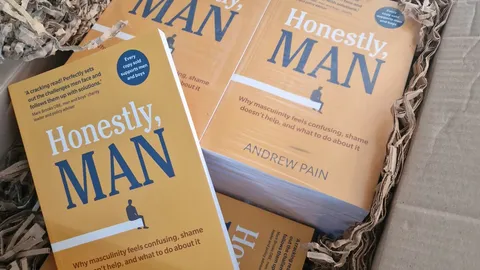
Andrew Pain is a Mental Health & Resilience Keynote Speaker who speaks from lived experience on resilience, burnout and workplace wellbeing. Host of the Men on Show podcast, author of the book Honestly, Man, and a TEDx speaker. Member, International Coaching Federation, and Mental Health First Aider trained.
Insights
Read next


Never miss an episode
Candid conversations with everyday heroes – ordinary men doing extraordinary things.