Men on Show · Episode 11
Men, Addiction and Recovery with Chris Thrall
- 29 November 2023 .
- 1h 1m .
- Hosted by Andrew Pain .
Chris has travelled to eighty countries across seven continents, run 999 miles the length of Britain unsupported, completed a quadruple ironman triathlon, is a qualified pilot, skydiver, bestselling author, Antarctic explorer and polar scuba diver (I’m feeling cold already) He’s also English Veteran of the Year and is bold enough (or bonkers) to have driven volunteer journalists to India and back in an old and unroadworthy school bus, to highlight global inequality and poverty!
Andrew hosts this podcast. His own keynotes are on burnout, resilience, imposter syndrome and difficult conversations.
In this episode
About the conversation
He was awarded the Second level commendation of the Finnish nation on the grounds of human generosity for his ability to inspire others.
Men on Show shares lived experience and honest conversation – it is not medical or therapeutic advice. If you're struggling, you don't have to cope alone.
Samaritans: call 116 123 (free, 24/7) NHS: 111
Full transcript
Read the whole conversation
A complete, verbatim transcript of this episode – every word is the host's and guest's own; the topic headings are ours.
Welcome to Men on Show, the podcast Candid Conversations with Everyday Heroes. Join Andrew Pain as he interviews fascinating guests, ordinary men doing extraordinary things. If you love the show and you think somebody could benefit from hearing it, why not tell them about it by giving it a share on social media? Oh, and at the end of the podcast, if you can leave us a five-star rating and a review, it really helps us more than you know, and it gets this important message out to more people that need to hear it the most. Right now, enjoy the next episode. The next episode.
Hi, my name's Andrew Pain, and welcome to Men on Show. And today, I am delighted to welcome Chris Thrall to the show. He has travelled to 80 countries across seven continents, run 999 miles, the length of Britain, unsupported, completed a quadruple Iron Man triathlon. He's a qualified pilot, skydiver, bestselling author, Antarctic explorer, and polar scuba diver. I am feeling cold already. He's the English Veteran of the Year, and one of the stories which I definitely will ask him about, he's driven volunteer journalists to India and back in an old school bus to highlight global inequality and poverty.
That sounds like a great story that I wanna dive into, which we'll do later. He was awarded the second level commendation of the Finnish nation on the grounds of human generosity for his ability to inspire others. Chris, welcome to the show.
How have you been doing?
Really good, really good. We've got a new puppy, actually. So hopefully she won't sort of howl and whimper too much on the podcast. She's sort of at my feet, gnawing my toe. Yeah, no, we're really good, actually. It's good to have her. I mean, just so you have an incredible action-packed adventuring lifestyle and a CV of stuff on it that so many of us would probably love to have on our own CVs. Who or what inspired you growing up? And has that sense of adventure always been in you for as long as you can remember?
Tarzan, and joining the Royal Marines
So my biggest inspiration in life was, is, was, and always will be Tarzan. I think we were so lucky as youngsters that we hit a sort of sweet spot in the mainstream media before it all turned turned quite sick and evil. And yeah, we had the pleasure of watching Tarzan on Saturday mornings. And it, yeah, I got a lot from that, Andrew, you know? I mean, first of all, Tarzan always looked after his boy. That to me has always been a, you know, the real sign of a real man.
And Tarzan wasn't afraid of anything. And Tarzan had ventured, and I'd watched my episode of Tarzan on Saturday morning. And I'd unzipped my tracksuit top down to the navel, grabbed my lasso, and I'd go down to the local river and lasso things. And yeah, in my mind, I'd escaped into Tarzan, and you know, I don't think I ever stopped.
Amazing. So, I mean, at some point, I imagine you sort of progressed from Tarzan, you start watching other stuff. Was there then a steady progression into the Marines, or was there a particular moment where you felt a calling?
Read the rest of the transcript Collapse transcript
No, I was homeless for the second time in my life at 17, which kind of gives your listeners an idea of what my childhood was like. Very, extremely turbulent, you could say, and, yeah, as a result, there I am living in a Renault 12. One of my friends came up and knocked on the window one day. His dad was in the Royal Marines, and was in the Falklands conflict. And he said, I've just been to Limston Commando, the Commando Training Centre, and I've done this three-day course.
It's called the Potential Recruits Course. And they put us through hell, and we had to do this, and we had to do that. And out of the 30 guys that started the course, only three of us got through. And he said, and now I'm in the Royal Marines. And then he looked at me and said, but of course, you could never do it. And it's not really a good idea to tell an angry young man who's been kicked from pillar to post all his life what he can and can't do.
So I took up his bet, and I joined the Royal Marines. It was that simple, really. And as someone who was completely lost in life, I tried to retake O levels in college and failed. I tried to become an electrician, and I just was despondent. You know, no disrespect to our wonderful electricians out there, but I just couldn't believe, is this going to be it my whole life, crawling through loft spaces, trying to root cables? And I ended up working in a higher centre.
Actually, I sort of quite enjoyed, but it obviously wasn't really going to go anywhere. And when I read through the recruiting literature, I wasn't thinking about fighting at that stage or killing people. It was more that you need to be able to do 50 press ups. You need to be able to do, you know, a certain amount of pull ups. You need to be able to run a mile and up. And you kind of take it that one stage at a time.
And it just, it suddenly opened up this avenue that I hadn't even considered I might be able to access anymore. And on top of that, I think they paid you, you know, £150 a week, which 35 years ago was, that was a decent old salary.
I mean, in that moment in that car, where you, as you say in your own words, you've been kicked from sort of pillar to post, homeless at 17. I mean, that's so incredibly tough to have had that kind of comment. I mean, that really could have gone either way. Was there something, do you think, in you that meant you went the way of joining the Commandos rather than just being kicked down even more?
Commando training, and the psychological barriers
So the funny thing was, before that, I'd been into the RAF recruitment office, and I was just looking to escape, Andrew, into any avenue that could provide me with a better life than the one that I had and some sense of direction and some money, of course. And the RAF recruitment officer, after giving me an interview, asked me what this plane was and what that plan. I had no idea, and he could tell immediately I wasn't invested in this.
And he said, no, we don't think the RAF is for you. And he said, we don't think you would stick out the training. So that was kind of looking back, made me smile. But no, the commandos doesn't make anyone. You've either got it or you haven't. Why some people have it and some don't, I honestly don't know. I can't obviously speak for everybody, but I can speak for a lot of people like me, and there's an awful lot of traumatised, there's an awful lot of service personnel in the elite forces that were traumatised as children.
And as you can see from my story, you know, when a golden paddle, what appears at the time, because, you know, I joined at 17. I mean, I went down to the recruiting office at 17. I was a child, you know. And it's, like I say, it seems a shining path for people that, you know, have got low self-esteem or... I don't know if I had low self-esteem, but I just had a sort of low self-image of what I was capable of, and then suddenly there's an opportunity in front of you, and for me it was not just an avenue to work, but also an opportunity to show all those people that I felt would put me down and kick me around and told me I was a loser and a failure.
And I'm not saying, you know, obviously now at 54 years old, that's not how we get our gratification in life. But it certainly was as that, you know, troubled 17-year-old. But when you're, you know, when you're in the forces, there's no psychological stuff as if you were to go to, say, you know, a coach in the gymnasium, he'd be saying, come on, Andrew, you can do this, come on, knock out, you know, give me some more press ups.
And they would realise that a lot of it is psychological, there are barriers in life. In the Marines, you've got nobody there saying, you know, you can all do this, fellows, there's millions of people who have done it before you, or, you know, hundreds of thousands. It's only 30 miles across Dartmoor. It's not, you know, you're not running an ultramarathon every day. The length of the United Kingdom for 36 days, I think I did later in life.
They don't do that. What they do is the opposite. At every moment, you're made to think you're the weak link, you're a failure. They don't really want you, and you have to prove that you've got what it takes to get in. And even that psychological process is everybody in your troupe. So we join with 55 people. Three people were too scared to get off the train. And obviously that 55 got whittled down somewhat over the next eight months.
And every one of those 53 people thought they were the weakest link, and that the training team had their eye on you. And I guess that's a good strategy in itself, because you've got to overcome that psychological fear that you're not wanted, or that you're not good enough, but you keep trying. And of course, by keep trying, you put a supreme amount of effort out of the bag. I remember running back from the endurance course on my commando tests.
That's a two and a half mile underwater course, a lot of it's submerged tunnels and dips that they push you through underwater. And then you have to run a four miles back to camp. And that's not to mention that you've already walked four miles in full equipment up to the beginning of the course, or certainly in your fighting equipment. And I remember running back and I was just spent. You come out of those water obstacles. We had to break the ice because it was February.
You literally feel like you've doubled in weight with the water inside all your kit and your clothes and your boots. And you've got to shift yourself up these steep inclines. And I came off that course, and I'm starting to run back to camp, and everything in me was just saying, give up, just give up, they don't want you. What are you even thinking? Why did you think a career like this was for you? You've failed everything.
And I just thought, I've come too far to give up now. I've just come. It would be crazy to give up now. And I just started putting one foot in front of the other. Again, there was no one there spurring me on. There was no corporal with his arm around me going, come on, fella, you got this, you know. You do get that at times, but on that one, I mean, it was just me, and I put one foot in front of the other, and then I put the other in front of the other, and the other, and the other, and before long, I was getting up quite a pace.
I was really even surprised myself, and I ran all the way back to camp as fast as, you know, my little legs were carrying me, you know. And that is, you know, this is what we need to put out of ourselves, and on top of that, we had a troop officer, and we're still friends to this day, chap called Jock, and he led from the front like a man should. And he, when we did that endurance course, even though he didn't have to, when we got, we were being shown around the obstacles, he's like, ah, I won't swear on your show, but he's like, right.
Down he gets, he just strips off his T-shirt, puts his combat jacket back on, jumps down in this, in this, in this pool, and the two corporal, or the corporal shoves him through this, this underground culvert, this is called the sheep dip, if I remember rightly. And I thought, you know, that's, that's what a hero looks like. But yes, it's, it's within us, Andrew, you know, it's within us. The military doesn't make any, anyone really, I don't think it gives you a great experience.
It presents you with the experience to learn some life skills. I mean, it, you know, they do teach you how to polish your boots, keep your bed space clean, and that stuff that we all, or most of us carry on into late later life. But it's almost like they provide you with the opportunity to do the work yourself. That's what I would say.
Addiction, and the years in Hong Kong
I love that story of leadership there, where, you know, never think that you're too sort of high and mighty to get down and do the things that you want other people to do and lead by example. It's just so important. You talk, in your second memoir, you talk about your challenges with addiction. What were those challenges? Did they surface during your time in the Marines, or was that something you faced when you came out the Marines?
Yes, so addiction, for the most part, not always, is symptomatic of unresolved childhood trauma. So, essentially, you start a behaviour, in this case, you know, it could be drinking, or it could be other drugs. And in that moment, because you get high, or tipsy, or whatever the case may be, you're falsely elevating your sense of self, so you're kind of burying that trauma while you're under the influence of this substance. And I always describe it as, I mean, the first time I took crystal meth, I thought I'd come home, I thought, this is what it's supposed to feel like to live life, I've got no...
I mean, I wouldn't have ever said that I had anxiety, but looking back, I think all traumatised kids have, grow up with a low level of anxiety, it's always there under the surface, it's always, you know, making you possibly slightly sort of, I don't know, insecure in every scenario that you come across in life. And when you take the drug that suddenly wipes that out and you feel utterly incredible, you feel invincible that you can nail anything on this planet, and you start learning about yourself and things that you're capable of, all the stuff they said you're a failure at in school, you find out, no, I'm actually, you know, I can turn my hand to this, I can be quite, I've just never been supported to do this.
And it's a powerful thing. And the problem, Andrew, is what happens is, not only is where there's a high, there's a come down. So you feel, you know, one minute you're feeling great and slowly, slowly, slowly, and suddenly you're in this miserable state of mind. So what do you naturally do? Well, you naturally chase that substance again because you want to get yourself back up high again. And then, of course, you have to take a little bit more because you're, you know, the chemicals in your brain have got a little bit, they've got a bit used to it now, so you've got to take a bit more to get that high.
And every time you crash, you go low, you go a bit lower, and your life starts to spiral out of control because you're not going to answer the mail that's on your door mat when you're feeling absolutely, you know, it's not even, I mean, having a hangover is bad enough. It can be even worse when you haven't slept for nine days on crystal meth and you've danced in a nightclub, you know, literally all night long until dawn, while you were high, on top of not eating, really hardly eating a morsel for nine days.
Sounds incredible, but it's true. And what happens is, it's like the rats in the cage that get given the food pellet, you know, laced with cocaine or whatever, you know, they tap that button, they get a food pellet, they tap the button, they get a food pellet, they tap the button, they get a food pellet. When you take those food pellets away, what does the rat in the cage do? Well, it taps the food, you know, it taps the button again, because it's a learned psychological condition, and addiction is the same.
You learn that to bury all your woes in life, you just take this substance, and it puts you back up, and you eventually end up in a state where you are afraid to come down, and you are afraid to come down, and your life turns to a shambles, because you are not going to be doing the washing up, or your hoovering, or functioning well at work when you want to come down, to the same extent when you get so high, you can get pretty... you know, you are not firing as well.
So that was it for me. And you asked, you know, when did it start? I had been out. We had all been to a few... well, not all of us, but there was quite a... they can say marines are out for males, so if there is a party, they are going to be there, shouting aloud, dancing the artist, consuming the most beer or whatever it is. And so, yeah, we used to go out dancing a lot.
And it was great, actually. Some of the guys I used to go out dancing with went on to achieve the highest, you know, accolades and medals and stuff in the Marines, which always makes me smile. All ended up as senior officers. But it was in Hong Kong after I left that things started to cave for me. I went out to Hong Kong to run a business that was turning over about $100,000 at one point. By the time I got out to Hong Kong to run the business properly, it all but collapsed for reasons that weren't really, you know, strictly my fault.
And yeah, it was a strange place to be. I was took a series of weird jobs, and I guess, you know, I just was isolated, probably lonely. And when someone said, hey, try this stuff here, and it was Crystal Mare, I thought, yeah, I'll try that. You know, I've done a few bits and bobs before. It's never been a problem. And like I say, that one's the key in the lock for me. It was just, oh my gosh, I've come home.
And before long, I just wanted to smoke that stuff every day of my life. I just didn't want to be normal. And it culminated with me ending up working in a nightclub run by the 14K, who are one of Hong Kong's biggest triad criminal family or crime families, or brotherhoods, I should say. And whilst working for them as a nightclub doorman, I started to experience severe psychosis. So I was, well, literally losing the plot, Andrew. You know, I was kind of hearing voices, you could say, albeit my own voice, but hearing it in a, you know, out of context.
And I was utterly convinced that there was some kind of deep dark conspiracy going on in Hong Kong that possibly led around the world. And it was weird. I was just living in this bizarre double world where people around me didn't, they knew I wasn't like my usual self or the way that I was when they'd met me, but they had no idea of the confusion I was in. And it culminated with me trying to crawl across a wire cable that was strung between two, I call them skyscrapers, but really they were tenement blocks.
So, you know, we're talking sort of 70 metres above the ground. I was just utterly convinced everything in my life, my commander training, everything had primed me for this moment to crawl across this cable. When I got to the other side, everything was going to come good. It was going to be like a, you know, a homecoming on steroids. There was going to be everybody that I had ever met there, and they were going to welcome me home from these challenges that I had had and said, you know, well, I'm Chris, you've come through this, you know.
And in a moment of clarity, I just suddenly realised what I... It wasn't so much that I realised what I was doing. I was staring down at the cars and the people down in the street. They just looked like ants, toy cars. And a thought came across my head, you know, who put this wire up here? It's not like in the Marines, where everything's checked, checked and double checked. And you know that the person that put this...
That would have put this wire up would have done a proper job, because everyone else in the company or the unit or the troop is relying on them. I was thinking, this could be some cowboy Hong Kong builder. And here I am, I'm just about to crawl across this chasm. And then I thought, well, why am I doing it? What am I trying to prove? And who am I trying to prove it to? Because I don't prove myself to nobody in this life, nobody except my kid brother.
And that was it. And in that moment the flood gates opened, and I just had this download of emotion, crying my eyes out. My tears were just dropping into this dark void. I was watching them disappear down to the street, and I went back to my room, and then I got really angry. I was living in this crummy apartment on the top floor of this tenement building. You wouldn't have got another white person to live in there.
By white, I mean, you know, Western expat, or Guilos, as the Chinese called us, you know, foreign, or ghost men, they would call us. And you wouldn't have got another expat living there, but I loved it. I loved being right in amongst the Chinese living. It was really, really old school, but I went back to that flat, and I just smashed everything up. Everything. I just smashed, I was just so angry at, you know, how did my life sink to this?
And that was it. And I came back to the UK, and I was still chronically addicted for another 18 months or so, certainly a year. Couldn't function on the drug, couldn't function off it. When I was off it, I just would sink into this deep depression. I had no money because I just, you know, I spent all my money on amphetamines, and I'd leave myself like £1.87 to shop for two weeks. Then I'd have to buy all this, you know, three kilo bag of porridge oats and two kilo bag of, you know, supermarket pasta.
Then I'd mix them together with 20, 20 spoons of white sugar, chuck a splash of milk in because that's all I could afford, fill it with water, chuck it in a microwave. And that's why I lived on for, for 80 months was just pasta and porridge, just to get some calories in me. I lost a tooth at that time because my body was just so, you know, my tissues were so acidic. And, and that was that.
And then one day, I saw the light. I saw the light and it was the, you could think of it as I'd set step foot on the road to enlightenment. It was my first step. I remember it so well. The light was shining through the blinds. I was shivering cold, unconscious on the floor in my boxer shorts where I just crashed out after a, probably a six or seven day binge or something. And I didn't know, I didn't know who I was.
I had to think, what's my name again? What's my name? Is it? Is it? Ah, Chris, Chris, Chris, Chris. Chris what? Just couldn't remember, you know, this is how, like, just frazzled I was. Anyway, I wanted to go down the shop and get a pasty, because I lived in Devon. I mean, I didn't want to go to the shop because I lived in Devon. I mean, pasties from Devon and Cornwall, right? Certainly from Cornwall. And I couldn't go outside.
I had just become too ashamed. I was dishevelled, the clothes I wore, I'd robbed them off a problematic heroin user, you know, dealer that I knew, because he'd ripped me off, and I couldn't go out. And then nervous breakdown number, probably about number two kicked in. And after crying my eyes out, I suddenly thought about that little boy that used to watch Tarzan. That little boy that, you know, went to six schools before the age of 11.
That little boy that had to fight all the bullies because he wasn't afraid of no one. That little boy that got split up from his kid brother at these schools because he was a little kid and I was a big kid. We weren't allowed in the same playground, so we used to sit on the steps and hold hands just so it wasn't so lonely with all that divorce stuff going on and thinking we're never going to see our daddy again.
And I thought about that kid, and I thought about the things that I went through as a child that, you know, you would think no child should go through. And it just crashed me. Massive, massive nervous breakdown again. And then I rose like a phoenix out of the ashes. I thought, do you know what, Chris? Adults might not have treated that little boy the way that they should have done, but you can't change that. That's all done and dusted.
It's made you the person that you are. And you're a good person. But moreover, who's abusing that little boy now? It's you, mate. You're literally shoving drugs in his arm. And you've got to stop. So I made a promise in that moment, Andrew. I'd cut down my drug use rather than spend 80 quid a fortnight, which was all my benefit money. I'd just spend a tenner, just to get it over and done with. I'd have my mad manic phase where I think I'd get stuff done, but I never actually did.
I just ended up smashing up my beautiful house that was pretty much brand new when I bought it. The only reason I kept the house is my dad and my uncle took over the mortgage payments while I was down and out and ended up homeless in Hong Kong. And when I made that decision that I'm going to stop being a victim and I'm going to start taking charge of my life and I saw that light shining through the blinds, I knew that I'd made a connection with a different realm in this universe. I knew that I connected with a higher form of energy and I knew that my life would never be the same again.
I mean, such incredible, eloquently put insights, descriptions of life, both sort of falling into addiction, what life's like within addiction, and coming out. I mean, there's just so much there. Really, really interesting. And do you, you know, the historic addictions that you once had with Crystal Mare, do those still impact you today, or now is it very much like, you know, when something happens in your life, you look back and it's almost like it was your life, but it wasn't, like it's so different today? Or do those addictions, do you still struggle with those addictions at all?
Drinking today, and the enlightenment journey
It depends what we define as struggle. If you mean have I voluntarily gone back down that road, not to the extent that I've just described to you, but I've probably drunk more beer than pretty much most people on this planet. I drank and I smoked weed and I party a week. Pretty much loaded every day for 30 years, but I could function because I wasn't off my head on crystal meth like I was back in the day.
And then something magic happened. A wonderful woman came into my life, and I realised I was in love. And I, you know, it came to me later on in life, and we started a relationship, and she was very extremely accepting. And one day she came around and she said, I'm pregnant. And again, just another seminal life changing moment. And the universe gave me the most beautiful, handsome little boy that I just can't believe he's mine, if I was honest.
He's the boy to my Tarzan that I always dreamed about. And it was at that point I realised I had to start making some changes. I'd lived an adventurous life. My addictions had never held me back from travelling, like you said, 85 countries across all seven continents, a qualified pilot, a qualified skydiver, taught street kids in Mozambique or Britain, I think, six books. I have an extremely popular YouTube channel. I have great life coaching clients. You know, life is what you make it, and I've never felt I have a role ever since those cold, dark days.
I will never play the victim, and I never feel sorry for myself. And what happened is, is I started to tread the esoteric journey even more. So this is the enlightenment journey, finding out the truth in life. And I started to listen to certain podcasts that I felt were giving me the answers and shedding light on, for example, you know, what are the scriptures, what really are they, not what the churches tell you, all this gobbledygook about, you know, people walking on water and all this nonsense.
What is the allegory behind that story? What are they trying to say? That led me on to alchemy. Alchemy is the understanding that we're all energy, vibration and frequency, essentially. This goes back to your Nikola Tesla. And then back even further to your sort of ancient Eastern philosophy and wisdom. And I started to learn that life is an energy field and that you can adapt that field to suit your purpose if you understand a certain set of rules.
And that if you understand those rules, you then control the chemicals that flow around your body, things like serotonin, dopamine, DMT, referred to in scripture as milk and honey, hence you enter paradise, the land of milk and honey. And that's the place I live now, Andrew. I wake up every day in paradise. I genuinely, I would say I'm the most luckiest man on this planet, and I've led one hell of a life, but I'd be a liar because the irony is that I don't exist, and the past doesn't exist.
We just have this present moment. I'm not me, and you are not you. We're the universe, experiencing itself subjectively through energy, vibration and frequency. And for anyone listening, if this is new to you, you're not supposed to understand a single thing I just said. That is absolutely fine. But what I will say is if you have niggles in your legs, if you have challenges, if you have mental health conditions, anxiety, depression, alcoholism, whatever it might be, if you're a jealous person, if you're materialistic, and you're starting to realise that it doesn't matter how fast a car you drive or how many bedrooms you, that literally, physically cannot make you, you know, cannot allow you to enter paradise, then these are concepts that you must understand, because it's not until you detach from what's known as the 3D realm, which is the, you know, the things you can see, feel, hear and touch, and you connect on the quantum realm, which is energy vibration and frequency, that you can start to change your life I think that's a good way to bring your life into the direction that you want it to.
His work today, and living in the past
So talk about your work. Tell me about your work today. What's sort of driving you and your work, and what's the main focus of your work today, Chris?
So my work today is twofold. My YouTube channel and my Bought the T-Shirt podcast have traditionally taken up an awful lot of energy and resources. Every year, I do a stunt for charity, so this year I ran the toughest foot race on the planet across the Sahara Desert to raise money for my friend's children's school in Africa. He rescues abused kids from the witch doctors, where they really haven't got much of a future. I haven't written a book for a while because of my YouTube channel, and I coach people who want more from their lives, and we look at where their life is, and then we look at what is holding them back from not just a material 3D perspective, but also what's holding them back on the quantum level, on the spiritual level.
So an example of that, Andrew, is we're hugely conditioned to live in the past, and as I just said, the past doesn't exist. If anyone out there thinks the past exists, go and try and get an apple from the fruit bowl when you were a kid. You're literally not going to be able to do it because it doesn't exist, and yet the irony is most people live in that past. They either live in that past thinking that's their identity and that has shaped them, or they live in the future and the future is anxiety. The future is not here either, it's not happened, so there's no point being anxious. You're squandering your precious divine energy.
Or I suppose there are some that live in the future where they have an impossible dream. They buy the lottery ticket each week, and the hope that one day their numbers roll in is what keeps them going. But they're fixated on a future that they're not really working towards. They're not putting the graft in to make it happen. But actually what matters is what you do today. That's what absolutely matters. I completely agree.
Yes, yes, you nailed it. And it's just a crazy thing if you'd said to me, you know, 20 years ago, 25 years ago, or whenever when I was still in the Royal Marines, that we'd be having this conversation now on such a scientific level, I would have just thought you're crazy. I wouldn't have understood what we're talking about. I would have thought it's some, I don't know, weird hippie stuff or something. And it's just the opposite.
It's just such a beautiful life when you break free of that, what we call the matrix, and you start being able to guide the course of your own life and own your own thoughts rather than having the BBC do it for you.
Driving a bus to India and back
So tell me, I want to talk about men, masculinity. But before I do that, I had promised our listeners, and I'm interested in myself, I'm quite nosy like this, but I've done 12 hours on a bus in Mexico, I've done 24 hours coming up from Chamonix to London in a bus which just felt like forever. But a bus to India, just like, how long did that take, and what was it like being on a bus for that long?
So, when I was working in Mozambique with the street children, the organisation, the charity that I worked for contacted me and said, Chris, would you drive a bus from Norway to India and back to take a team of people who were going to be writing articles about communities that live in poverty? So I thought, would I drive a bus to India and back? You are goddamn right I will drive a bus to India and back. Put my name down for that one, please.
And that was it. That was it. We had to fundraise for all of our finances and stuff. So we sold postcards on the streets of Scandinavia, just explaining what our mission was. And people were very generous and quite high standard living in Scandinavia. So they had a few quid to chuck at us. And we bought this knackered old British Leyland bus. In fact, to be honest, I think the school already owned it by the time I got there.
And it was a banger. It shouldn't really have been allowed on the road for the simple reason it broke down almost every day. I mean, we didn't even get out of Norway before. I think we got into Sweden when it first broke down. In fact, no, I remember driving along in Norway thinking, this steering isn't right. It's just all over the shop and stopping in Germany and realising that one of the back tyres had been punctured for weeks and weeks.
So, cut a long story short, yeah, we drove down through Norway, Sweden, Germany, Austria, Italy, Greece, Turkey, Iran, Pakistan, and then India. We had three weeks when we got there, and so I went to, it was a bit of a shame really, but I went to see my brother in Thailand because, you know, as you probably gathered, I miss my little brother. He was working in Bangkok at the time. And then we got back on board, and we drove back through the deserts and back through Europe to home.
And how, like, did everyone get on OK in the confines of a bus for the whole time?
It's probably not a good mix to have a kind of headstrong ex-marine with, let's just say, some more kind of hippie types who just seem to think that the washing up would do itself. And I was pretty driven, pretty determined. I mean, we drove back across. I drove from the Iranian border. I drove from the Iranian border into Istanbul. So that's, god knows, that's like 2,000 miles or something. It's quite a way. And I drove that non-stop.
It took 48 hours, just non-stop driving. I think we stopped once for a toilet break. I remember driving across the desert. Everyone on the bus was asleep in Pakistan, and there was a sandstorm, and the sand was blowing across the road. I was just driving along, listening to Massive Attack, smoking chain-smoking rollies and drinking coffee. And it was just one of the best moments of my life, best, best, best memories of, you know, we say the past doesn't exist, but you are allowed to take, you know, the good memories from it.
And that was amazing. We drove across the Balochistan desert, which I think it borders Pakistan. It doesn't really matter, but it's part of the desert in Pakistan. And we, a fellow bus driver sort of pulled us over, and he came on our bus, and he said, right, are you going across the Balochistan? And we were like, yes. It's sort of 200 miles of desert in front of us. He said, well, you know, what weapons have you got?
We're like, sorry. He's like, you know, this is bandit country. They're going to, you know, if you can't, if you can't fight, they're going to take everything. They'll take your women. They'll take all your valuables. They'll shoot you guys, and then they'll take your bus. I remember looking at the washing up bar and thinking, well, we've got a carving knife. So he said, don't worry. We're loaded up. You just follow us. So we hammered after this bus, and we're doing all right for the first five miles.
We got up to about 55 mile an hour, which was supersonic for our old banger. And then suddenly one of our diesel pipes cracked off the piston, off the cylinder block, off the cylinder it was on, and it starts spraying diesel everywhere. And we slowed down to about 12 mile an hour. So we had to drive across the most notorious bandit country in the Middle East. But yeah, that was what it was like.
Whether masculinity is toxic
So we hear about toxic masculinity today. We hear about men behaving badly, misogyny, Andrew Tate and his influences, a lot of worried parents. I mean, is masculinity inherently toxic? Do you think the phrase toxic masculinity is actually more of a wall builder than a bridge builder?
Oh, gosh. It's not really something, I think, that really needs to be discussed. I mean, I've got to 54 years old without ever having to use the word. I mean, I can tell you what's going on. If you understand the New World Order, there's a gender in place to divide everybody. Division is why you see groups like Black Lives Matter are funded, whereas once you understand the quantum nature of life, we are all one. We're essentially, you know, carbon molecules held together by energy.
So you are me, Andrew, and I'm you. We're just the universe experiencing itself subjectively. So the notion that I would go to war with you or fight you is so ridiculously, nonsensically stupid that any enlightened person understands this is the challenge that humanity has been set. It's like there was a god up there, sat on his bloody cloud, sat in his void, there was nothing. He decides to create this universe, and he just does it for the sole purpose of saying, look, this is going to evolve.
It's going to be this series of random evolutions and mutations. Will intelligent life ever form? Will that intelligent life ever get to a place where it understands that it is me? This is why you see Jesus, the only way to the Father is through me. We are made in the image of the Creator. I'm not being religious here, Andrew. I'm not religious in any way, shape or form, and never will be. I'm talking about quantum physics.
So that's why people are talking about masculinity and that kind of thing. Is it toxic? Well, it's toxic when it becomes abusive to other human beings. The notion of being a man's man, it's always done me all right. I always want to leave from the front. I'm in an aeroplane skydiving. I'm always going to be the first person out the door. I was always the first person in the stick to go out the Hercules when we parachuted in the military.
You know, I wouldn't say that. I'd say that's just maybe more bravado and getting experiences under your belt in life. Where it becomes toxic is, like I say, where it becomes abusive. But also, have you ever heard Andrew Tate talking about energy, vibration and frequency? Because to be a warrior, these are the concepts you've got to understand. It's just that simple. You know, somebody has to be understanding this, Andrew. The kids can't stick up for themselves against these psychopaths.
Anyone that's aware of what's been going on these last three years knows that for evil to flourish, good people do nothing. That's kind of what we saw, with the exception of very few of us, during this agenda. In order to really function there and make a difference and make the changes, like I say, you have to make them on the quantum level. And Andrew Tate prides himself on being against the Matrix, but he is really, even though I like a lot of what he says, there's also a big part of his character, which is essentially right in the Matrix.
Materialism, it's not going to make you happy. Smoke as many cigars as you like, all it's really going to do is toxify your body. It's a blocker. Anything you put between you and spirit, you and the universe, acts as a blocker. Religion is a blocker. Drugs and alcohol is a blocker. It literally prevents the chemicals in your body doing that which they need to do. And you don't hear Andrew Tate talking about this, and the fact that young men will look up to him and think that driving a fast car is in some way going to make them happy, or taking a stern hand in a relationship which really should be based on equality and love.
Because again, when you understand life at the quantum level, you know that there's the masculine and feminine, but both of those qualities lies within us. So we're only men in the 3D realm. Above that, you're masculine and feminine, you're the positive and negative, you're the yin and the yang. So yeah, I wouldn't be getting too happy about that when I just say get out, live your life, love all people, demand, never take second best for yourself, don't get involved in these nonsense, divisive arguments, because that's what they're there to do. And yeah, get out. I always say, you know, in this set of molecules, you get one life, and if you live it right, one is enough.
A final message of encouragement
And I think there's so much in that, and you've really answered the question I was going to ask in terms of helping men and boys. What you've just said is a wonderful concluding message, I think, to encourage men and boys. And whether you're someone listening to this that is in agreement, and you believe in quantum physics and that side of things, whether you see yourself as just someone that, well, I am religious and I'm spiritual, there's so much in what you've said that I think we can relate to.
I personally think that people are inherently good. I don't know if you've read Rutger Bregman's Humankind book that kind of makes the point that if you look back thousands of years, before we were settling down, when we were more nomadic, you go back beyond sort of 5,000 years BC, looking at the bones that are dug up, there seems to be no evidence of warfare. That's the main premise of the book that actually has civilisation created a life that actually people don't suit so well.
Why has war been a relatively recent phenomenon? Which is an interesting way of looking at it actually, an interesting thought. But I think the way you've sort of responded to the Andrew Tate question is really insightful. I think men and boys look up to him because they think he's this big, tough chap. He's got this bling lifestyle. He seems to speak to them, many men who are sort of disaffected and feel like society is against them.
But of course, so much of what Andrew Tate says himself is abusive and not helpful in any way, shape or form. So, just to conclude, a final message of encouragement to the men and boys listening to this podcast. If you could give them, sort of, encapsulate that in a couple of sentences, what would you say?
I'd say, remember, you are massively loved, way more than you probably realise. I love you unconditionally. My crew massively loves you. And the universe loves you because you are the universe. And the sooner you realise that and rise above life's petty nonsense and stop living in the past because it doesn't exist, if you don't believe me, try and get the apple from that fruit bowl. You won't be able to do it. Don't live in the future.
You live in a moment. You live in a now. And that's when you make your peace, when you can shut your eyes, switch on your pineal gland, you make that connection with the divine. And that's what's going to bring you your answers in life. Get out there. Dream. Dream big. Always dream. I dreamt to be Tarzan. Lo and behold, at 35 years old, I'm living in the Amazon rainforest. I'm catching piranhas out the Amazon River to eat.
I'm walking around with a machete. You know, I chose that life. I chose never to let anybody steal my dream. I watched the Elvis movies as a kid, the year Elvis died. One of them was called, I think it was called Loco in Acapulco or something where Elvis went down to Acapulco and he did the infamous dive off the Acapulco cliff. And I thought watching that as a kid, I'm going to do that one day. I'm going to be a hero like Elvis.
And lo and behold, one day I rocked up in Acapulco. The first place I went was down to that cliff. The first person I met was actually one of the cliff divers because I was having a nosy around their changing room. And I introduced myself. I spoke a bit of a... I've been in Africa speaking Portuguese, so I had a bit of... changed it to a bit of fractured Spanish. And he looked at me and said, He said, let's go for a swim.
Does he mean in the local hotel swimming pool, I suppose? So I thought he was going to lead me to the swimming pool. No, he starts heading down to the cliff, peels off his shirt, dives into this tidal lagoon and a sort of cove. I don't have anyone that knows this experience, knows what I mean. And that was it. I'm peeling off my shirt and I'm diving into that lagoon, the lagoon I've dreamt of since I was, I think I was seven years old when Elvis died.
I've been dreaming of this for, you know, 28 years. I swam across the lagoon. It's a monster tide coming in and out, or monster waves, but I just bided my time and a wave lifted me up. I grabbed the cliff and I climbed up it, just like Elvis had done. I won't say I climbed all the way to the top. I wasn't bothered about that. Plus, I probably would have killed myself. But I climbed up as high as I dared, and then I turned around and I did the perfect swallow dive. And this is why no one can ever tell me life is just not absolutely brilliant. And it's the life there for anyone to choose.
So life is brilliant. Never stop dreaming, but do live in the present to make it happen. And the past doesn't really exist because it's gone.
Perfect.
Chris, it's been an absolute pleasure. I have so enjoyed having you on the podcast today. So much in there. It's just so interesting. I feel like I could talk to you and listen to your life story for literally hours. But I need to wrap it up. Thanks so much for being a guest. We wish you the best.
No problem. Much love to you, Andrew, and to all of your listeners.
Thank Thank you for listening to Andrew Pain's Men on Show. If you could leave us a five-star rating and short review, it would be really, really appreciated. It helps us get this important message out to more people that need to hear it the most. See you on the next episode. Thank you for tuning in.
About the guest
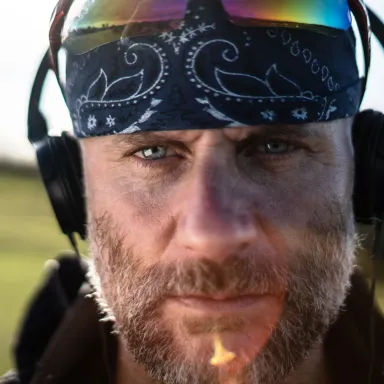
Chris Thrall
Chris has travelled to eighty countries across seven continents, run 999 miles the length of Britain unsupported, completed a quadruple ironman triathlon, is a qualified pilot, skydiver, bestselling author, Antarctic explorer and polar scuba diver (I’m feeling cold already)
He’s also English Veteran of the Year and is bold enough (or bonkers) to have driven volunteer journalists to India and back in an old and unroadworthy school bus, to highlight global inequality and poverty!
Hosted by Andrew Pain
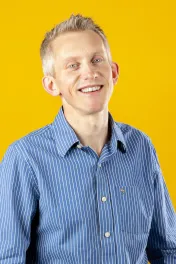
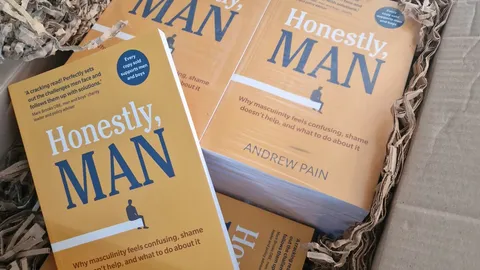
Andrew Pain is a Mental Health & Resilience Keynote Speaker who speaks from lived experience on resilience, burnout and workplace wellbeing. Host of the Men on Show podcast, author of the book Honestly, Man, and a TEDx speaker. Member, International Coaching Federation, and Mental Health First Aider trained.

Never miss an episode
Candid conversations with everyday heroes – ordinary men doing extraordinary things.