Men on Show · Episode 44
Can Football Really Save a Man’s Life? These Guys Say Yes with Matt Hudson
- 2 April 2025 .
- 42 min .
- Hosted by Andrew Pain .
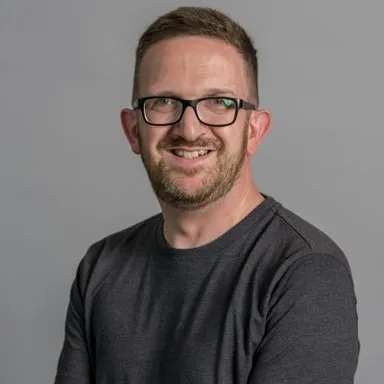
Matt Hudson, Associate Director of MAN v FAT Matt has been involved in sport, community, health and wellbeing for his whole career, firstly at Colchester United Football Club and latterly Thrive Tribe and MAN v FAT.
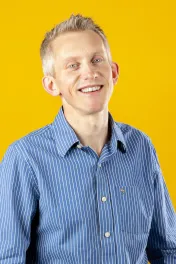
Andrew hosts this podcast. His own keynotes are on burnout, resilience, imposter syndrome and difficult conversations.
In this episode
About the conversation
Born in Colchester, Matt remains an ardent U’s fan and continues to follow their fortunes closely whilst looking after his two daughters.
You can find out more about MAN v FAT on their website and connect with Matt directly on Linkedin
Key points of the episode
- How a lady inspired him.
- How he lost his Mum somewhat young, and how it affected the family.
- The need for female influence in his life.
- What he did in his 18 years at Colchester, and his thoughts on the positive change in masculinity.
- The importance of mental health awareness in sport.
- The financial pressure in the game and in teams.
- The 2 kinds of intelligence that football managers need for most effect.
- The value of family support.
- Man V Fat - what it is?
- His last 5 and a half years there.
- The main challenges the men they serve face.
- Andrew's threat to wear Speedos!
- How men worry about showing vulnerability.
- The simple criteria needed to join.
Men on Show shares lived experience and honest conversation – it is not medical or therapeutic advice. If you're struggling, you don't have to cope alone.
Samaritans: call 116 123 (free, 24/7) NHS: 111
Full transcript
Read the whole conversation
A complete, verbatim transcript of this episode – every word is the host's and guest's own; the topic headings are ours.
Welcome to Men on Show, the podcast, Candid Conversations with Everyday Heroes. Join Andrew Pain as he interviews fascinating guests, ordinary men doing extraordinary things. If you love the show and you think somebody could benefit from hearing it, why not tell them about it by giving it a share on social media? Oh, and at the end of the podcast, if you can leave us a five-star rating and a review, it really helps us more than you know, and it gets this important message out to more people that need to hear it the most. Right now, enjoy the next episode.
Hi, my name's Andrew Pain, and welcome to Men on Show. I'm delighted to have Matt Hudson here from MAN v FAT. He is one of the marketing gurus at MAN v FAT, and I'm just so excited to really get into this topic, understand more about the community, what started it, what men are saying, what it achieves. It's something that I just, it's whole outlook from what I've read about it is so inspiring, and I'm really excited to unpack that. Matt himself has many years in football. Was it about 18 years at Colchester United, working within the media for Colchester? Is that right, Matt?
It was, yes. I started probably March 2001, and left September 2019. So yeah, kind of, I've been a very young man, to one with plenty of grey hairs by the time I was done.
Female role models, and losing his mum
Amazing. I mean, you were a proper football fan, I figure, being involved with a proper football club. Whereas I'm one of these glory hunters. I mean, a long life Arsenal fan, although I was brainwashed as a kid, my father's an Arsenal fan. I grew up in Birmingham, but we, my family from, originally from London. So we've got no problems between us. I have had on this podcast, a few Spurs fans, and we got on okay, to be fair, but there's no obvious rivalry between us.
But listen, welcome to the show. It's great to have you here. And just sort of to get started, growing up as a guy, I mean, we're going to get into MAN v FAT. I really want to explore that. But just in terms of you as a man, Matt, was there anybody that really inspired you growing up that you can recall?
To be fair, and I think we've spoken about football a couple of times in the introduction. I think one of the people that really inspired me early on was the lady who was chief executive at Colchester United, a lady called Marie Partner. And obviously, we're speaking about masculinity and being a male here, but she was one of the forerunners in the world of football in terms of females in a senior position and making her way in that male-dominated world.
And even now, quite a few years on since she left the position, she's still spoken up very highly. She made her way to a senior position in that male-dominated world. She did a really good piece of work in her time there to make sure the club was at the heart of the community. And obviously, we'll go on to speak about my time at the club a bit later on in the podcast, but her attitude to making the fans a part of that equation and making sure that every decision was based around the community that surrounded the club was really inspiring.
I think once I joined the club and in every role I've kind of had since, you know, put in the community at the heart, I think it's been really important to me.
So the way that she inspired you was her real sort of community focus, you would say, and the way she was able to draw the community into the work of the football club.
Read the rest of the transcript Collapse transcript
Absolutely. And I think, you know, it's something in the position I'm in at MAN v FAT at the moment. And, you know, I've recently kind of taken over the line management of our customer service team. And it's kind of like, well, how do we continue to make the community feel valued? How do you continue to make them feel like they've got some really positive buy-in into what we do? I think football is in itself is a unique industry, in so much as that as stakeholders or as customers of the business, football fans are really invested in what goes on, probably more so than they would be in their car insurance or their supermarket or, you know, the TV provider.
I think that they feel like they've got a real stake in what goes on in the football club. And I think the MAN v FAT community is very much the same. So, yeah, Marie's approach at kind of being customer centric or being community centric was really important to me. And it's kind of shaped a lot of my decision-making as I've got along in my career through the years as well.
I'm growing up as a guy, so I suppose before you were involved at Colchester, do you recall any particular challenges that you faced? The looking back now you could put down, so it was to do with masculinity, it was to do with growing up as a guy.
And again, kind of not to make this the Marie part of the podcast, but she probably features in this answer for me a little bit as well. And not so much when I was a youngster as such, but I lost my mum when I was 28 to illness and it kind of left the three of us, my dad, my brother, and myself. And whilst I wasn't living at home at the time, in the home where I grew up in, it did sort of throw us as a family a bit up in the air.
I went to an all-boys school, a secondary school. So my mum was my first main female role model. And without her, there wasn't really that female to lean on to guide us through that process. And I think sometimes guys find processing grief and empathising with that situation quite tough. And I think for me personally, again, I kind of think about things in my life that shaped who I am now. I think that whole process over that kind of next couple of years really gave me a bedrock of how to be empathetic and kind of made me mature emotionally quite quickly and kind of gave me a viewpoint on life that perhaps I might not otherwise would have done.
I think probably from there, it's given me a real strength in terms of being able to manage stress and manage tough situations because you've got a benchmark there where that's a real extreme and everything else compared to that is probably not so much of a problem. So yeah, I think looking back, that was something that's really kind of shaped how I treat people and kind of how I treat certain situations as I've gone along in my life.
Changes in masculinity at Colchester
Okay, and so just coming to Colchester United, you're there for 18 years. So in that 18 years, do you feel you saw any particular changes when it comes to masculinity, mental wellbeing? Did you see anything there that you thought, actually, it's different now to how it was?
I'd say so. I'd say so. And, you know, the dressing room that I inherited as such, you know, the squad of players that I joined in were very welcoming and very accommodating, but it was still very much, you're in that circle or you're not, I guess. You know, you're kind of, you're welcoming into that environment. Very, as you say, very masculine, very kind of power driven, you know, physical kind of elite athletes and so on. But I think probably over the course of that time, and you know, this was kind of powered from the EFL as a governing body downwards and kind of into each individual club.
I think there was very much a growing awareness to kind of try and redress the balance in terms of how sport the sport was to make it kind of inclusive to everybody, to make sure that it acts as a vehicle to support not only those within the club, but those that followed the club with their mental health and kind of their well-being because you know, football is a real powerful voice, it can be a real leader in that environment, I guess.
I do think that as time went on, that kind of came against the backdrop of a growing prevalence of social media. You know, kind of makes me laugh now, how much of the football media is driven through social media channels. When I first started, it was, we were just launching the club website. There wasn't one before I joined there. Yeah, it was now digital. It's kind of digital first in a lot of everything that football clubs do.
And that's good and that's bad. I think, you know, kind of we see it in all walks of life. I think football is a prime example of it, is that you're trying to create this more inclusive environment. You're trying to create an environment that's supportive of mental health, that is equal in terms of gender, access and kind of safety for people to go to games. But it's against the backdrop of social media, where some of these aspects are really politicised or operating in the real extremes.
So while there's a growing body of people acting in good faith and kind of trying to make these things happen, I do think equally there's a body of people within the world of football, more so in the fan bases perhaps than those working within the clubs, that this sort of stuff is never going to appeal to them, they're never going to buy into it. I think the good thing and something that I was really heavily involved in when I was at Colchester was making the football environment safer for families to come to.
I did a lot of work with the Fan Experience Company and Mark Bradley in particular, who's done amazing work alongside the EFL and the FA to improve the family experience at games. You look at some of the older football stadiums, the environments that they were in were, and the stands were just not welcome into young supporters. Whereas I think a lot of football clubs are kind of positioning young supporters and families at the heart of what they do, because they know that that's the next generation of fans, I guess.
Probably the one big final change I've noticed in football, and I definitely don't think it's for the better, is obviously the game is becoming increasingly polarised based on the money that a club does or doesn't have. More so than ever, your positions in the league table and your success on the pitch really is built on how much money the owners or the club has got. There are very, very few clubs that break that mould. And that in itself kind of creates that environment where supporters want really short term success.
They're not on about sustainability, they're not about how can we bring through young players. They want to see trophies on the table. And you mentioned you're an Arsenal fan. I think that's probably a good example. You know, that Arteta has built things slowly and steadily over time, but chances are they could have ended the season with no trophies again. And that kind of creates pressure on him, even though they've finished second or third most seasons, because he's been in charge.
Mental health and player care in football
Yeah, because I suppose as a fan, not someone that's at the heart of any particular club, but as a fan, for me, it feels like some of the changes I've seen, I often hear people within social media, within my field talking about men's well-being, men's health, saying, you know, we're still really stuck in the dark, you know, boys have to button it all up, they can't let their emotions out, they're still where we are today. And for me, I feel like we have evolved, you know, if you imagine the princes, Harry and William, at Lady Diana's funeral, having to walk, separated, nobody had their arms around them as young boys, it was absolutely harrowing, it was awful.
And I can't see that that would happen today, even if that was royal protocol. You see, football players called Gascoigne's Tears at the 1990 World Cup made national news. There's a Walker's Crisps advert based on it, it was so unusual. And yet today, players are crying all the time when they win, when they lose. And it's really normalised. But I wonder whether behind the scenes, mental health is much more open and normalised. What you seem to be saying is, it is, do you think it is, or do you think it's pretty much as it was?
You've described a more welcoming environment perhaps, you've seen that change. Do you feel that there is just this much more embracing of mental health, well-being, tears? Is there a much more accepting culture now, behind the scenes, behind what a fan would see?
I think so. I think probably more so at the top level, where they've got the resources to do so, but there's a growing kind of community of staff involved in player care and well-being. Not so much, it's obviously historically football clubs have people that help the players move house and put the kids into schools and support them with, get themselves set up at a new club. I think there's a genuine kind of player care pathway developing for staff in football clubs now.
I think when I was at the football club, we were really heavily involved in looking after the youth team players, so the ones that stepped out of high school, 16, 17 coming into youth team and that very masculine environment, helping them make that transition. And I think kind of all the way through now, probably to that first team environment, there's different touch points for the players that if they need that support, they can get it. And I think you look up and down the divisions.
The best football managers are the ones that also have not only that tactical skill set, but also the ones that have got that emotional intelligence. It's kind of really important that they understand what makes their individual players tick off the pitch as well as on it, and kind of making sure they treat them as human beings rather than just assets to the football club as such.
Yeah, because they're young lads. So they're young lads. They've got a lot of potential money, a lot of potential pressure. They probably invested a lot in where they want to go. Of course, 30 years ago, if they went and misbehaved in a nightclub, they might have the misfortune of a local reporter catching it. But today, with everyone's mobile phones, they've got their mental well-being and their behaviour as Godawada really has in it today.
Yeah, definitely. And I think that's increasingly something that clubs have to support in the guys to make sure that they don't make those missteps, because even within the world of football, different clubs will talk. And not only will they have a profile of players in terms of their physical attributes and their technical skillsets on the pitch, but they'll also be very aware of their characters and personalities and their behaviour traits, because managers want to settle dressing room and they want good eggs in their dressing room.
So footballers do have to be much more switched on in terms of what's around them now. And for me, the players that did that best were the ones that did have really supportive families as well. Obviously, that's not possible for everybody. But if you've got good parental support, as well as the support that the clubs are providing for you, then you've got a real stable bedrock to then concentrate on your footballing attributes as well. Yeah.
Joining MAN v FAT and what it does
So tell me about MAN v FAT. What prompted you to join that initiative? Where did that all get started for you?
Yeah, I think a very good friend of mine was working for MAN v FAT at the time. So we'd always spoken about how that was evolving and growing. And I think, as we touched on a couple of times, I was at Colchester for 18 years. So from 21 to, I'm cranky, 39, to do my sums. But you almost reach the end of a natural life cycle sometimes with things, and have half an eye on those new challenges that might be out there.
There comes a point where travelling to the other end of the country on a Saturday or a Tuesday evening starts to lose its appeal a little bit, particularly when Colchester are a great football club, and are doing incredibly well this season. But it's hard sometimes when the team aren't performing, and as the person doing the media and PR, you're the front face of that sometimes. My personal circumstances change at a time. I met my now wife a couple of years before I left the football club.
We were keen to start a family, and I think again, being at the other end of the country on a Saturday afternoon, is not conducive to looking after and supporting a family. So the stars aligned a little bit, I guess, the job came up at MAN v FAT and its parent company, Thrive Tribe. I went for the interview and the opportunity came up, and it felt like the right time to jump. And I guess MAN v FAT worked for me at the time, because it's still got that sporting edge to it, that football touch point.
It took me out of the weekend working and the midweeks, where you're working late as well, kind of a more steady nine to five job. And I think the five and a half years I've been there, it's definitely been the right decision. Obviously, you've had to kind of navigate COVID, as has everybody else, in that time, and kind of the challenges that provided to the business. But by and large, it's been really good for me personally and professionally to have made that jump.
So what's the purpose of MAN v FAT? Describe to me what MAN v FAT is and what its purpose is.
All right. So it started off as a weight loss programme. The founder, Andrew Shanahan, went to one of the more established slimming clubs, and I think in one of his first sessions there, the topic was how your menstrual cycle affects your weight loss. And he's kind of thinking, well, probably as one of the few guys in the room, that's not particularly pertinent to myself. So he kind of explored different avenues as to how to support guys like him.
It started off in a very similar format, I guess, in terms of sessions in libraries or in sports halls kind of helping guys to do so. But it wasn't a point of difference. It was more of the same. So they kind of got some funding to start a club in Solihull and test the concept of MAN v FAT as it stands today. Guys flocked to be involved. The weight loss was excellent. The community built very quickly.
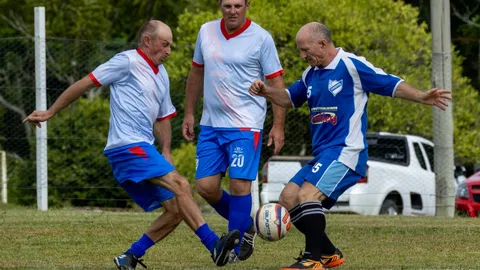
So we wind the club on 10 years. We've got 156 football clubs. Probably about eight or nine rugby clubs with more to come this year. And seven or eight soccer clubs in the States with more to come as well. And I think, to summarise it, it's a weight loss community powered by football and friendship, rather than coming to play in a football league that might help you lose weight. So it's really important to us that we're weight loss first.
And with the way the scoring works, the guys can score a bundle of weight loss related goals, which if the programme is working as it should, when they're combined to the on the pitch score, the weight loss goals are really important and would tend to determine the result. Our best MAN v FAT clubs around the country have developed some really incredible communities. They do some great stuff, not only on their club nights, but a whole world of extracurricular stuff as well.
And we'll probably touch on that a bit later on as well, but it's that community, it's that peer-to-peer support. So they're losing weight collectively as a team rather than as individuals. And you've got that accountability to your friends in the team. The majority of people join on their own or with a friend rather than as a whole team. And I think it really helps them build friendships and a new support network to help them tackle those weight loss and well-being issues, I guess.
Team names, and how the leagues work
And what are the best names for the football clubs? Because there's some really creative names, aren't there, based on sort of food puns and overweight puns. What are your personal favourites?
Yeah, I think there are some incredible ones. And I think, you know, when I saw that question on your list, I had a scout through some of them, and we could be speaking for the whole podcast just about the team names, I think. But the German teams, for whatever reason, seem to help create good MAN v FAT team names. You've got KFC Schofenheim instead of Hoffenheim, Goethe Berlin instead of Hertha Berlin. Then we've got Kababadien up in Scotland.
Obviously, we've started the rugby programme recently. We've got Harlequinloir rather than Harlequins up in MAN v FAT Leicester Rugby Club as well. So yeah, there's no shortage of novelty in terms of the team names. There's some that probably have skirted a little bit close to being able to be being used, but we've kind of just about sailed the right side of that line, I think. So yeah, I think that that in itself kind of epitomises the community and the team spirit that the guys have built up because they can come up with some really clever ideas on that one.
My boys were chatting about this not so long ago, and they came up with Eat Ham United. They came up with Wolverhampton Wobblers and they came up with Chelsea Buns, which I thought, that's pretty, pretty inspiring.
Yeah, definitely.
I'm sure we could do something around Arsenal, but maybe we won't go there just...
Yeah, I think the word FAT might appear just in front of some of those letters there as well. We had one in our Leighton Club as well, and obviously the postcode there is E10, and the team name was E10 Less, so Eaton Less, instead of Eaton Mess. So it's like, yeah, there's some really kind of clever puns and plays on words there.
I saw Porkvale. I liked Porkvale. I liked Real Madras. And one of my personal favourites was Un Athletico Madrid, which I thought was good. So the guys meet to play football in a league. How does it work then? Is there like a league for football, and then sort of a league that runs aside that for the best team to lose weight? Or how does it work?
Exactly that. So they turn up ahead of their half an hour match. They have a session on the scales with the coach, so they weigh in, they talk about their food and drink input during the course of the previous week, what exercise they might have done, a bit of a touch point about their mental health and well-being over the past week to see how that might have implicated it. So all of our coaches in our MAN v FAT clubs tend to be either kind of PTs or health and well-being coaches, you know, with that kind of behaviour change background.
Probably about a third of our coaches up and down the UK are guys that have almost graduated from their own weight loss journey with us to become kind of advocates as coaches. So that kind of personal understanding of what's required, makes for some really good coaches. They build some incredible communities based on their own success they love to advocate for us. Then they say they play their match, and the scores are kind of combined. And as you say, there's a couple of tables that they can compete in.
So it's the mixed table, so the weight loss and on the pitch score, and then there's the weight loss only table as well. And then the guys can beat individually, so obviously they can score their own points during the course of the season for weight loss, for tracking, for hitting 5 and 10% weight loss increments, and also kind of hitting hat tricks. Every time they hit three lots of weight loss during the course of the season, they score bonus goals as well.
So there's that individual league table as well. And what we're trying to do now as part of our next situation is to try and take some of that individual success into not only their own club, but how they're doing across the country so they can kind of see how they're comparing against the rest of our community, which is sort of about 8,600 strong at the minute.
Why men join and the challenges they face
Amazing. I mean, amazing numbers. And what are men saying to you? What are the challenges that those men are facing? What are they saying to you? What are the general trends coming through from the men that you serve?
And I think if I wind the clock back five years, I probably had some brief conceptions about what they'd be joining the programme for. You know, a lot of them have that sort of overall theme of wanting to look better and feel better. And you know, to have a better choice of clothes in the shop so they're not just wearing baggy clothes, kind of almost hide themselves a little bit. But I think there's a whole gamut of reasons that we kind of see beyond that.
As I mentioned myself, I became a dad myself a couple of years ago and I kind of can empathise with these a little bit more is that, you know, they want to be able to spend quality time with their families so that if they're toddler or young kids running around the garden, they can keep up without being out of breath. They want to go back a stage further on that. So a lot of guys join because they want to be able to improve their chances of conception and starts in a family.
Whilst we kind of focus on the weight loss, I think increasingly we're a well-being programme and we do a whole lot of work around supporting that. I think, you know, guys find themselves in some pretty dark places by the time they get over to the extent that they're overweight as they are. That obviously has its impact on their physical and mental well-being. So, yeah, they're looking to kind of improve their just general sense of self. I've been reading a lot recently about, you know, the male friendship recession.
I think probably as you go into your 30s and 40s and even your 50s, your kind of social network thins out. You know, people start families, people move away for jobs, people's lives get busy and, you know, a lot of these guys join us because they just want to build a new community. They want to find a like minded group of people that are like them. They want to build new friendship networks. They want to kind of get off the sofa and watch Intelli with a fast food in front of them to have an active social life.
And I think, again, our best communities in up and down the country, MAN v FAT do that really well. And one thing we've probably three or four years ago now, but within clubs on occasion, it was becoming quite tribal. If you were on the Reds or the Blues or Schofenheim or Real Madrid, that was you and that was your identity. You didn't identify as a MAN v FAT Leeds or a MAN v FAT Liverpool player. And that sometimes affected the support and community feel we had in some of the clubs.
So we introduced a three season draft cycle. So every third season, we'd redraft the teams. Put the best footballers, spread them out, get the guys who needed to lose the most weight, spread them out, put the goalies on each team and try and create some equitable teams to basically make the games more competitive to make sure the weight loss goals stayed important. But equally, just you start to speak to different people. You won't just speak to the same 10 guys in your team.
You were part of that community of 60 or 80. And you had more supportive voices that might help you along. And we've been running the programme for four or five years without that concept in place. I think it's fair to say it caused some friction initially. But once guys have been through a couple of these cycles and got to meet 30 or 40 guys from their club, rather than just the 10, I think everyone generally sees the benefit. And obviously, everyone who joins now, that's kind of all they ever know is that's how we do it.
Male loneliness, and women as referrers
I think that's so important, and that's really clever, that you keep stretching guys out of their comfort zones by almost forcing that mixing socially. And actually, as a footballer myself, actually thrashing a team 12-0 is not actually that much fun. I'd rather it was five, six, three, four, whatever, one, all, whatever. So I think keeping those teams fair, keeping the teams changing, that sounds, and like you say, reducing this sense of tribalism is really important. I mean, you referred to the male loneliness crisis.
I was reading some research that actually, this really interested me, actually. I think it's really relevant for MAN v FAT and just how we think about men. It suggested that actually, when you take loneliness levels post-retirement, actually women initially report higher levels of loneliness than men. But in terms of a longitudinal study of those same people in that survey, a few years later, when the same people are surveyed, it's swapped that now men are reporting higher levels of loneliness than women, although it was initially women.
But what was felt was that women are just a bit more skilled and equipped, maybe, to reach out to and plug into social networks so that when they do feel lonely, they're more like to go and actually do something about it, whereas men possibly need that little bit of help. And so for me, it's particularly important that we have a variety of initiatives like MAN v FAT, Men in Sheds and his Man Club and more, the grieving pint.
There's so many of these communities. We need to spread awareness and make them really forefront of people's minds for men and women, because I'm presuming women are a big referrer of men that come to you. But it's so important that men are helped to connect to these groups because the research would suggest that men struggle. Is that something that you found?
I'd say so. And I think increasingly as I've explored this space both from a personal and professional perspective, I think one of the best books I've read for a little while was Billy No-Mate by Max Dickens. I don't know if you've personally read that yourself, but he touches on exactly that, that women just seem to be more equipped and more capable to build their village as such, to build that support network around them. Whereas for guys almost acknowledging they need to do that and showing that vulnerability to do that, that's a step in itself and for them almost a barrier to entry for them to try and find that support network.
So again, we touched on it within the football environment, but I think men generally are getting better at it, but you almost need to have that advocate or that kind of person willing to start the movement as such to kind of help guys to find that. And you touched on women as referrers, definitely see that a lot in our groups. I was just dealing with some of our Facebook inquiries from the weekend just before I came on this call and there were several messages from partners and wives going on, my husband's thinking about joining this club or can you tell us a bit more about that?
And if we're out doing face to face promo, it tends to be you see the partners grabbing their partner by the hand and taking them over to the stand and talk to us rather than the guys being willing to do it themselves. And even when guys find up and have the confidence to do so, we've also heard of their wives coming with them to the first session and making sure they go through the door to have that first night because it's kind of an acknowledgement to themselves they need to do something about it.
And again, it comes to that male friendship recession. Again, women and partners pick up a lot of that mental load in terms of supporting their male partners in decision making and when they're feeling low and when they've got problems to deal with because guys do have a shortage of friends potentially. So women play a huge part in that. And I think probably just before we move on as well, it's important to me that we give both the female members of our HQ team and also a lot of our health and well-being coaches up and down the country are females as well.
They lead some brilliant communities for us. They set the standard in terms of supporting the guys around that whole well-being piece and making sure they're looked after. So there's no surprise we have some really good female coaches that are building some strong communities. They have to have some strong personalities as well to stand up to some of the guys in the leagues. But I think they get the respect to the guys in their clubs and put them along with them and their weight loss outcomes and their community growth tells its own story. Yeah.
Embarrassment and showing vulnerability
I think that's absolutely right. I feel like there is a term allyship, one of these modern buzzwords, and your men are often called to be allies for women and the challenges they face and support them and understand those. Of course, we should, absolutely 100 percent. But I do feel that as a term, I've got a podcast about to be aired, actually, on this very term. It's a shame because actually, we need to be allies for each other and you can see women being fantastic advocates for their partners and we need to encourage that.
We can all look out for one another. I do wonder though, with men finding it difficult to reach out, and I'm just processing it here, I wonder whether there's an embarrassment factor because we just don't want to feel embarrassed as guys because we feel like we should have the solutions. We feel like we shouldn't be in this state or we just don't want to be in a position of weakness. I mean, I have diving lessons off the diving boards.
We got a fantastic dive facility near us. My very first lesson, I can dive, just not that well off the side. I am by far, even a year later, the worst diver in that group by some level. And sometimes the guys are like a bit concerned for me because they're like really good. I mean, I don't even wear Speedos. I wear shorts, which maybe I should wear Speedos, but I think my wife's forbidden me. I'm also the oldest by about 15 years, but I literally don't care.
But I think that's unusual. I wonder whether there's like an embarrassment factor for guys that makes it tricky. And I wonder whether that's wrapped up in masculinity and feeling like we need to have solutions, we've got it sorted, admitting that we don't is perhaps a step too far. Do you think that's part of it? Or do you think there's more to it than that?
No, I think you're right. I think showing vulnerability is something a lot of guys worry about, whether it's within their close circle of friends or more publicly. And I think you and I spoke about this once before, but that's been a real, for me in terms of being the person who's in charge of the marketing of MAN v FAT, it's been a real interesting journey that I'm very fortunate that MAN v FAT as a brand can pretty much, within reason, get away with saying anything.
We're not constrained by too many tight guidelines, and we can be confident, we can be brash, and we can be a bit cheeky at times. But we've also got to acknowledge that for a lot of the guys, when they join us, there is that massive degree of vulnerability in terms of the first time they've admitted to themselves that I need to do something about my health here, otherwise I'm in a bit of trouble. And so we have to make sure that our confident, MAN v FAT, MAN down the pub kind of tone still needs to be underpinned by actually, yeah, we get it guys, you're feeling a bit worried here, and stepping through the door on the first night, it's gonna be a bit of a problem.
And so we're trying to take all those points of friction out of our process and give the guys the confidence that when they step through the door, there's 50, 60 guys who have been in exactly that same position, whether it's a month before or a year before, and know exactly how you feel. So by and large, we use it myself and Alec to work in the marketing team. We talk about the right guys in the right places.
And so the right places are making sure that we as a marketing team are filling up our clubs where it's needed. But the right guys is making sure it's guys with the right motivations and the right kind of MAN v FAT vibe to come in and improve our community rather than cause any problems within it. And I think by and large, we tend to get that right. But yeah, I do think guys have spoken about it for years, something about guys always a bit reticent to go to the doctors or go and check, get their health checked out before it's too late sometimes.
And a lot of the messaging around various health aspects are around that. They shouldn't be afraid to do so. And guys are getting better, but I think there's still more to do and perhaps, you know, our generation is the first one that's starting to be open to it. And yeah, the next generation along with the ones that are probably the first are really kind of attuned to it and have come through an education system that makes them realise it's okay to be vulnerable as well.
Worries about joining, and talking openly
Yeah, because I know when I invite guys, I play football on a Friday with a load of other dads, mostly sort of 30s to 50s is the age group. And I'm always inviting other guys into that network of players. And we go for a beer afterwards, and it's a really beautiful community on so many levels. But one of the resistance, bits of resistance I get from guys where there's not like a weight issue, but like there's real concern, how good is everybody?
Because like nobody, and I'm kind of the same, I suppose. I'm unusual in that I don't mind being the worst, but nobody wants to be the worst player on the pitch. And I suppose if someone coming in to MAN v FAT, you've got that sense as a guy of, hang on, how good is everyone else? And you've then got the added baggage of weight issue, which is why you join MAN v FAT, and possibly loneliness. And so it's quite a big step to take for some guys to come along.
For a lot of them, it will probably be, so we hear it a lot, oh, it's the first time I've kicked a football since the left secondary school. And for a lot of the guys, there probably will be some flashbacks to be in the last picks at the lunchtime game, or that kind of, certainly at an age where you're in high school, you're just starting to spread your wings and try and find who you are as a person.
A lot of our community do have those bad memories, I guess, of the youth, and they don't want to be exposed to that again and find that they're kind of on the margins again. So, yeah, definitely that, that guys have got multiple challenges before they kind of come through the door with us. And the first success is doing so sometimes, you know, and quite often as a community, we celebrate the guys that lost 20, 25% of their body weight, and that's an incredible achievement. But for a lot of guys, just regularly participating in physical activity and stepping out of their comfort zone to join us is really important.
Yeah. And do you find that I find this in my football community, that any sense that men, oh yeah, the problem is men don't talk. Men just need to talk. If only men would, I find that's absolute bunkum, when men are in a safe place, doing stuff with the guys. We like, we do talk all banter in the pub, but we talk about deep stuff as well and reach out. Like, do you find that MAN v FAT, that there's no issue, once men are there, there's no issue in men talking openly and being vulnerable, or do you find it's quite a challenge?
No, I think you're right. I think once they've just found their feet, and once they've got a sense of, you know, who the people most like them are, or even within that peer group, I think there's some really powerful conversations that happen. And because they happen pit side, and because they happen while they're watching a game of football, that they almost drop in their guard around realising it. But it's not like you're in a really kind of formal environment.
You know, you're watching a game of football, you're laughing at someone having to put an easy shot just wide. But then you also talk about what a terrible week you've had. And actually, you know, my mate's just lost his job, and I'm worried I'm going to lose my job. And it's kind of, they have those conversations almost without realising it. And yeah, there's some incredible support stuff that happens. And, you know, we've spoken about it a couple of times during the course of this, but our best MAN v FAT communities offer those additional opportunities.
So MAN v FAT Newport in Wales, which is one of our best communities. They were one of the first to almost go out, to our club nights on a Friday. If any of you are out on a Saturday morning, we're going to meet in this coffee shop, and it's going to be a mental health kind of conversation. If you've got any stresses and pressures going on, come and join us for an hour there. And, you know, the ones that are really willing to do it, kind of, they create some really powerful conversations.
And I have no doubt in my mind whatsoever, we've saved lives in that sense, not from a physical outcome, but from a mental will be an outcome as well.
The BMI benchmark, and getting in touch
No, absolutely, absolutely. So just as we sort of come to the end of this podcast, and for anybody thinking, wow, this is amazing, love to take part, or maybe some people are listening to this thinking, I really know that I should take part. I have every intention of taking part. Is there a minimum weight or BMI that you have to be, or if you just want to lose some weight, give you a call?
So the benchmark we've put in place is a BMI of 27.5 or higher, which actually, if you were to walk down the street and see a range of people with that BMI, you don't have to be hugely overweight to start participating with us. The average BMI of the start, I think, at the moment is about 34, 35. So we are obviously attracting those slightly bigger guys, but we've got the whole range of 27.6, all the way through to guys with BMI in the 40s and often 50s.
So, yeah, that's the only crisis. You're 18 plus, be a male and BMI of 27.5 or higher. And after that, we're kind of welcome, keen to welcome anyone who's interested.
Yeah. And you talk about rugby's up next. Are you likely to go into any other sports at the moment? MAN v FAT, do you think it's just football and rugby? You're two that you're going to focus on?
I think so, probably. I think, you know, to say rugby, we've only launched the first half a dozen clubs since September, October time onwards. So we've got a whole big footprint in the UK to kind of build out for that one. Actually, we touched on soccer earlier. So we started in Florida last year. We've just confirmed clubs in New York and Texas. So as you can imagine, there's huge growth potential in the States, both in terms of the number of States and the number of guys you might qualify.
And then I think potentially after that, it would probably be more just general male health and a male, you know, so supporting guys who want to improve their health and well-being, but don't necessarily want the vehicle of sport to do so. So it might be more that kind of more holistic health and well-being outside of a sports environment potentially.
Brilliant. How do people find you, Matt? What's the best way to get in touch? Anybody listening to this thinking, yeah, this is for me. I want to inquire more. Where should they go?
So manvfat.com is always a good starting point in the top navigation of that website. There's pop out links to each of our three different sports. So on the basis you might have as American listeners, the soccer page is on there as well. And they can kind of follow the relevant sport from there and kind of get signed up. As I mentioned, with rugby and football in the UK, we're pushing towards 170 clubs. So hopefully, regardless of where people are listening in from, there might be something nearby to them.
So yeah, we'd love to welcome people aboard really. We kind of feel like we've got a great community. And whilst I would say that, working for the company, I think we're really proud of the people that participate, the successes that they're having, and whether that's their first 5% or something that's kind of us being part of our community to help them have that child they craved. I think we've got some brilliant blokes in there. We'd love to welcome more.
Fantastic. And thank you so much for your time on this podcast. Just to finish yourself, Matt, a message of encouragement. If you could create a two-sentence message to encourage the guys listening to this podcast, what would you say?
Thank you. So I think regardless of your position in life, I guess there's a tribe out there for you. You're definitely not alone. Whatever the problems you might be facing, there's definitely others tackling those same things. So take some time to reach out, take some time to find out what's out there. And I think we've touched on it more than once in this podcast. I personally believe that showing a vulnerability is a strength in itself, so don't be afraid to do so.
That's fantastic. That's a really nice message to take away from this podcast. Matt, it's been an absolute pleasure having you on the show. Thank you so much for your time, and I wish you the very best moving forward with MAN v FAT.
Yeah, amazing. Thank you for having us. And again, thanks for reaching out in the first place.
Thank you for listening to Andrew Pain's Men on Show. If you could leave us a five star rating and short review, it would be really, really appreciated. It helps us get this important message out to more people that need to hear it the most. See you on the next episode. Thank you for tuning in.
About the guest
Matt Hudson
Matt Hudson, Associate Director of MAN v FAT
Matt has been involved in sport, community, health and wellbeing for his whole career, firstly at Colchester United Football Club and latterly Thrive Tribe and MAN v FAT.
As Associate Director of Marketing for MAN v FAT, Matt is part of the HQ team that has built a programme that supports over 8,500 men every week to improve their health and wellbeing as part of an incredible national community. And, with MAN v FAT Soccer going live last year, that community is transatlantic too!
Matt also oversees the MAN v FAT customer service team as part of his role and retains his interest in putting the customer at the heart of all of his decision making.
Hosted by Andrew Pain
Andrew Pain is a Mental Health & Resilience Keynote Speaker who speaks from lived experience on resilience, burnout and workplace wellbeing. Host of the Men on Show podcast, author of the book Honestly, Man, and a TEDx speaker. Member, International Coaching Federation, and Mental Health First Aider trained.
Never miss an episode
Candid conversations with everyday heroes – ordinary men doing extraordinary things.