Men on Show · Episode 40
Masculinity, Burnout, and the Cost of Never Slowing Down with Daniel Glyde
- 13 November 2024 .
- 50 min .
- Hosted by Andrew Pain .
Dan Glyde is a transformational coach specialising in men’s mental strength and emotional resilience.
Andrew hosts this podcast. His own keynotes are on burnout, resilience, imposter syndrome and difficult conversations.
Key points of the episode
- What inspired him in his early years.
- How his desire to "love everyone" was knocked out of him.
- What he was told about his preferred thinking style in his early years - Hint: - not healthy!
- His thoughts on bullying and how it has changed.
- Why and how he got into media.
- His thoughts on current media and why he left.
- How he "woke up" and realised his inner life was not healthy- as a "man" was trained to do.
Men on Show shares lived experience and honest conversation – it is not medical or therapeutic advice. If you're struggling, you don't have to cope alone.
Samaritans: call 116 123 (free, 24/7) NHS: 111
Full transcript
Read the whole conversation
A complete, verbatim transcript of this episode – every word is the host's and guest's own; the topic headings are ours.
Welcome to Men on Show, the podcast, Candid Conversations with Everyday Heroes. Join Andrew Pain as he interviews fascinating guests, ordinary men doing extraordinary things. If you love the show, and you think somebody could benefit from hearing it, why not tell them about it by giving it a share on social media? Oh, and at the end of the podcast, if you can leave us a five-star rating and a review, it really helps us more than you know, and it gets this important message out to more people that need to hear it the most. And right now, enjoy the next episode.
Hi, my name is Andrew Pain, host of the podcast Men on Show, and I'm delighted to have Daniel Glyde with us today. Daniel is a personal transformation coach, but working predominantly with men. And I really want to-
Exclusively, Andrew, at the moment.
Exclusively with men, there you go, exclusively. So all the more reasons to have you on Men on Show, Daniel, and just to get your sense of what those men are saying to you, what are some of the common themes that you're seeing, how do you deal with those? I'm really looking forward to getting into that. So Daniel, welcome to the show.
Thank you very much for having me on, Andrew. I'm delighted to be here.
His dad, and being told boys don't cry
Great. So just get me started. Growing up, Daniel, was there somebody, something that you feel completely inspired you that you recall?
Read the rest of the transcript Collapse transcript
So my dad's a very inspirational character, Andrew. He was my hero growing up. He's a very kind and generous man. He taught me not to take life on myself too seriously. He always puts other people first. His life was always all about other people, in fact. And he taught me how to be generous. He taught me how to look after people. He taught me how to use humour to build rapport. My dad's the sort of character that can change the energy in a room just by walking. And I've seen how he has made people feel better just by being himself. And I found that incredibly inspirational as a youngster.
What did he do work wise?
So my dad is a chartered accountant, Andrew, but his dream was always to buy a business, build it up and sell it. That's always what he wanted to do. So I think he worked for an auditing firm for a long time. The first business he built and tried to buy and sell was a media company that used to put the adverts on London taxis. That didn't quite come off. So then he got involved with a London bus company, bought that from its Chinese owners, built it up and then sold it to First Group, the big transport company, and then retired, made a lot of money.
Fair play, fair play. Now that's really encouraging to hear. And growing up as a guy, do you recall any particular challenges that you think you faced because you're a guy?
Yeah, definitely, Andrew, absolutely I do. So when I was younger, as a child, all I wanted to do was love everybody and everything as much as I could. That's all I wanted to do. And that got knocked out of me from a very early age. I was told constantly to concentrate on my own work and stop caring about others, because that's what I wanted to do. I wanted to help others. I wanted to bring other people up.
I was told, no, no, can't do that. Concentrate on your own work. I was taught that I wasn't allowed to be upset. I wasn't allowed to be sad. Big boys don't cry. I remember all that very well. I remember resolving at about eight years old, never to cry publicly again, because I felt so humiliated by something that happened to me. I think it's a really funny story. So I was in the playground, we were playing football and I was wearing some brand new cords, I think, or something new anyway, that my mum had, and don't you dare get those dirty.
And of course, the minimal of playing football did this massive sly tackle and I've ruined these trousers. And I was inconsolable. And everybody thought found it hilarious, absolutely hilarious. And I had the chronic Mickey taken out me for a long time after it. And I thought to myself, that's it. I'm never ever crying in public again. I'm not putting myself in this position where I get ridiculed, where I get made to feel shame. And that became even more prevalent when I went to a Catholic all-boys school for high school, because that was a dog-eat-dog world.
And you could not show vulnerability because you've got eaten alive. And so when I sort of progressed into high school, this man up and internalising everything and not showing any emotion became, that's how you had to operate. So I decided I couldn't be myself. I couldn't be this kind, generous chap who just wanted to love everyone and everything as much as he could, because I'd get eaten alive. So I hid any vulnerability because I thought of it as weakness.
I buried any emotion because I was told they weren't useful to me. This was woolly thinking. This was irrational. And that, you know, rationality and logic and that's where it's all at. And you're allowed to be angry. We'll let you be angry. You can be righteously indignant, but that's it. That's the only emotion you're allowed. No sadness, thank you. No grief. No upset. No crying. Big boys don't cry.
Yeah, that's so interesting. And how old are you? Because, I mean, I recall that kind of dynamic in my schools. I mean, I was a late developer, quite skinny, quite runtish as a boy, as a teenager. And as the skinny sort of runt, I was never physically bullied because I always, I learned from early on, keep my mouth shut, keep my head down. Don't rock the boat with anybody. Just put up with whatever anybody says and just shut up and get on with it.
And then you won't get battered, was generally the lesson that I learned, which didn't serve me well because I grew up with that very much in mind. I capitulate to anything and everything for the sake of peace, which is probably why I fell into an abusive relationship and just completely unable to stand up for myself. But I do recall very much that growing up. How old, if you mind me asking, I mean, I'm 50 and that's very clear to me.
Yeah, I'm 48, so we're off the same generation.
A Catholic boys' school, and standing up for himself
Do you think that's changed today? Would you think it is changing in school level?
I hope so. I don't know Andrew, to be honest. My son is 25 and hasn't been at school for a long time. From what I can gather, it's better. I mean, he is certainly completely different to me. He's much more open. He's much more prepared to be vulnerable. He's much more aware of himself. He's much more aware of his emotions and how he feels than I was at his age and certainly growing up. I mean, I don't really know, but yes, I think it is better, but I think there are different problems for this generation.
Yeah, different problems. No, no, I completely agree. Because on the one hand, you've got this slight contradiction. I know I've had with other guests, we've discussed this on the show how when I was, I mean, I grew up in a Christian home, my dad was a vicar. If in our church youth group when I was a kid, so back in the eighties, late eighties through the eighties, if someone had come out and said that they were, as a guy, he liked guys, a woman, she liked women.
If someone had come out, it would have been an absolute scandal. It would have been like the biggest news ever in what was a big church with plenty going on. It's not like nothing ever happened. It would have been the biggest news, they would have trumped everything.
I went to a Catholic boy school. So there's hundreds of boys. So how many of those boys will have been gay? A good, you know, a good many of them. Did anybody ever come out as gay at school? Hell no. No, because they would have been ridiculed. They would have been derided. They would have been made to feel shame. And in fact, in Christianity, we were told it was wrong. It was a perversion. So I was at a Catholic school. So there's just no way on earth anybody could step out and say that they were anything other than just hetronormative, as they call it.
Whereas I feel like today, like my boys are now 11, 8, 5, they wouldn't even bat on it. They'd be like, oh, okay. And even with the young people that I know in their teens, I work with young people in a more of a voluntary setting, it just wouldn't be like, oh.
Yeah, it means nothing to them, does it? There's no stigma attached to it.
No stigma.
There's much more understanding of that we're all on spectrums. That's what people seem to understand now, that we're not easily definable or easily labelled as this or that, black or white. Life isn't like that. It's nuanced. It's complicated. It's grey areas. And I think this generation, they get that.
They get that. And yet, the judgement, the bullying, the online bullying, the competitiveness, I don't feel that... Maybe it's changed. I don't think it's eased off. You know, we have a mental health crisis within our young people.
It's different now, Andrew, isn't it, because we're constantly contactable. So, you know, now that we're also connected digitally, there's no escape anymore, is there? So, I remember I got... I never really got particularly bullied. I was pretty good at standing up for myself. I learned to get on the front foot. I learned to dish out the first punch. And I hate violence, Andrew. So it was horrible for me to have to do that. But that's what I learned to do in order to survive and to not get bullied.
But I could go home at the end of the day. Once I'd got off the bus and gone home, I was, you know, people couldn't get to me anymore. I could just get on with my life. But whereas nowadays, with social media and all other digital, you know, the fact we have mobile phones and we carry them and take them everywhere with us, there's no escape anymore. And it's different, I think, to how it was in our day.
It's more psychological than it was in our day, I think. And there are different things and different reasons why people get bullied and are bullies to when we were youngsters. It's a very different world that we live in.
Media work, and demonising men
Yeah, no, definitely. So you sort of went into the world of media, initially, in your work. Was that sort of a natural step for you? Is there something that...
Yeah, so I've been a storyteller all my life, Andrew. I love telling stories. I always have since being tiny. And so I think probably in my mid-teens, I decided I wanted to be a journalist. So I won the Media Studies Prize at school. I ran the school newspaper. I loved it. I loved talking to people. I loved interviewing people. I love writing stories. And so that was my plan. That's why I did the A levels. I did, and I went off to university and did communication.
So it was always what I wanted to do. But when I left university, I decided I wanted to travel, but it didn't ever really happen. I think mainly because I met a woman. I ended up working for my dad's company. Actually, you know, I was telling you the bus company, I worked for him for a while. And it took me until my late 20s to actually do anything about that, launching that career. And by then I become fascinated by broadcasting.
I was very intrigued by personalities like Chris Evans in the late 90s, early noughties. I liked his sense of fun. I liked how he didn't take himself too seriously. And what I want to do is I wanted to hold the powerful to account, to tell everybody the truth, and to do so in a fun and engaging way. So that's what I wanted to do. So I did my masters in broadcast journalism and then went to work for the BBC. I started off in news and current affairs and then made my way into sports broadcasting, which is what I did for the last decade.
And what do you see about gender within the media? See, when I look at the media, to me, it feels like when sort of a man does something utterly dreadful, which men do from time to time, it's massive front-page news. The man's branded as a monster. We've got to tackle misogyny. We've got this. We need to step up on our resource into the violence gets women and girls strategy, which of course we should be addressing that and continue to address that.
But it's a massive thing. Whereas when women do dreadful things, it feels like it's not such a scandal. The article is more measured. Often mental health concerns will be cited. There won't be some call to sort of explore actually what is the perpetration rates of female violence. There won't be a big political point made about that. Do you see that in the media? Did you feel there was a bias when you were there in terms of demonising men? Or do you think actually it was pretty 50-50 from what you saw?
I don't consume much media these days, Andrew, to be honest. I don't find it helpful. And having worked in that world, I'm glad to be out of it. But yeah, we stigmatise all kinds of people, and it depends what the current, which way the wind's blowing, what the current paradigm is. And yes, I think there is a lot of men bashing that goes on at the moment. And I think that when it comes to debates and discussions about things like violence against women and girls, I think that's really unhelpful because it puts men on the defensive.
It means instead of getting on the front foot and rolling their sleeves up, and it's all getting together, women and men, and saying, right, what can we do about this? This is a problem. We're creating these people. How can we stop it? What can we do? How can we change the conversation? How can we make women feel safe? How can we get boys and men to understand what consent means and what boundaries are and what respect is without demonising men and saying it's because of their masculinity that these things are happening?
Because that is just unhelpful, and it's probably not true. And the way we report about men and women is different, and it shouldn't be, and it's unhelpful. And, you know, it's not just unhelpful to men, it's unhelpful to women too. You know, you cited a couple of examples there. I'm certain there are examples where men get away with murder in comparison to what women are pulled up for and hold to account to. And it's not helpful to do that, but we do it because we don't deal in reporting events so much anymore, we're dealing outrage. We deal in emotional outrage and righteous indignation, and that's what we sell. So if we're bashing men up, that's righteous indignation, isn't it?
Leaving news, and how he ruined his health
Yeah, righteous indignation. And is that partly what caused you to leave the media?
No, not at all, not at all. I left because I realised it wasn't my path, it wasn't what I was meant to be doing. Very early on in my news career, I realised that how I wanted to report the news, I couldn't do. There was a very fixed paradigm of what news was, and you fit into that or you buggered off, basically. And I didn't like it. I worked for Breakfast TV for a while because I could do fun stuff with Breakfast TV because they're on air for three hours a day and they don't just do hard, serious news.
Don't get me wrong, I like hard, serious news. I had dreams of going out to war zones and things. But I found news incredibly depressing as well because we're so focused on the negative. I worked on two stories, which were the straw that broke the camel's back. One was the Israel-Lebanon War where my job was to cleanse the pictures that the agencies were sending back. Pictures of blown up bodies and dead children. I had to make sure they didn't make it on air in Breakfast TV.
Four hours, I did that for Andrew. It was soul-destroying. And then a couple of days later, I worked on the Madeleine McCann story. She'd been gone missing two years. And I was asked to ring all of her relatives. I was given a list of phone numbers and asked to ring her relatives. And I had to. And it was horrible. And from that point, I was like, no, this is not for me. This news is hard. So I thought, I'm going to go and work in sports news where I can report on who the England captain is or who's injured this week.
Wow. And yeah, so no. And then I worked at the cutting edge for a while in digital broadcasting and live video streaming and stuff like that. Because that's something else I really enjoyed was new technology and doing news, especially at a place like the BBC, because it can be a bit of a dinosaur. And so pushing that organisation forward was something I enjoyed. But I sadly ruined my health because of the mindset I had at the time.
How did you almost ruin your health? In what way?
So my mindset at the time, and I didn't realise it was my career was everything. That was my number one priority, and it came at the expense of anything else. So of my relationships, of my mental, emotional, physical, spiritual health. I worked way too long hours. I never switched off. I internalised how I felt and never told anybody I was struggling. I never told anybody if I was finding things difficult. I became a people pleaser because I thought that was how to get ahead.
So I never said no. I always went above and beyond. I was always the one who picked up the overtime and did the extra shifts, and would stay on for an extra couple of hours. And I just didn't know how to look after, especially my mental and emotional health. I was physically always in pretty good shape. I love sport. I've always been pretty active. I've always played football, gone running. I used to swim every day. And I like the outdoors.
So I've always been a hiker and a walker. And so physically, I've always been in fairly good shape. But mentally and emotionally, I was shocked to pieces. And that then affected me physically because I just didn't know how to look after myself properly. I didn't understand that I was suffering with stress and anxiety and occasional bouts of depression. And I thought being resilient meant pushing on through. So even though I was struggling and feeling bad and I had bouts of insomnia as well, because of lots of stress, I just pushed on through.
I kept going. I never took time off. I never rested and recuperated properly. I didn't understand what my mental health was. I didn't understand that I was suffering with chronic anxiety. I didn't understand. I didn't realise. I didn't realise that sleeping two hours a night was going to be detrimental to my health. I didn't realise it was going to come a point where I couldn't take anymore.
So what was that point? Was it a gradual thing? Did you just have a...
It was. So, I mean, life gave me many subtle messages that I needed to stop and to change and do things differently. But I internalised it all, Andrew, because again, that's what I was taught to do as a man. You don't show vulnerability. You don't tell people you're struggling because that's weakness. And, you know, you shoulder all your burdens. You keep calm and carry on. You have a stiff upper lip. You deal with it. You wear stress like a badge of honour.
Yeah, I work in live TV. It's stressful, but yeah, I'm a tough guy. I can push on through. I can do it. Yeah, I had two hours kip last night and five beers, but here I am again doing live TV. Look at me. Aren't I strong? Aren't I clever? Aren't I brilliant? No.
A panic attack on his doorstep
So what was the moment where you realised?
A panic attack, Andrew, sat on my doorstep after I think an evening shift. And I thought I was going to die. My heart was pounding. I couldn't breathe. I thought I was having a heart attack. And at the time, what bought me, so I've always been, I'm quite good in a crisis. I'm good at remaining calm. So here I am having a heart attack. I thought, on my doorstep thinking, shit, I better ring 999 or my wife's going to get up in the morning and walk down on my son and find me here dead on the doorstep.
And literally I'm having these thoughts. So I thought, right, getting a calm headspace, ring 999 and tell them you're having a heart attack. So calm myself down and went, hang on, I'm fine. Heart rate returned to normal. Took a couple of deep breaths. I was all right. But I mean, that was a horrible experience. And I've never experienced anything before, before that like it or since. And that was life hit me in the face with a brick and telling me that I need to look at some stuff that I couldn't carry on the way I was doing things.
So that kind of sparked a journey of self-development, of working on my self-awareness, of turning my attention inward to find out, to get to know myself, I guess, Andrew, from being that young lad, who decided that he couldn't be himself, because he wasn't allowed to love everybody as much as, and everything as much as he wanted to, who had to pretend to be tough, who had to pretend not to be vulnerable, and never to show weakness, and not to be upset, and never to cry.
Ever since then, I've not been myself. And until that panic attack, I've gradually built all these thought processes to try and keep me safe, all these ways of doing things, confusing resilience with endurance, pushing on through all the time. And yeah, I started to unpick it all, find out why I was doing it, started to peel back the layers to get to know, who am I? What do I really care about? Why do I really care about it?
What sort of world do I want to live in? How can I create that world? What can I do to make the world a better place? How can I have more impact? And my conclusion was by working on me, by turning my attention inwards, by understanding what drove me, understanding what it meant to be a man, understanding what my masculine drives were, understanding that I have a strong feminine energy that doesn't make me less of a man.
It's not soft and it's not weak, which is what the world and the culture had told me all my life. And we even still call these more feminine things soft skills, and it drives me up the wall. Because they're not soft. It takes immense strength to love people. It actually, it takes less strength and weakness to give into fear and hate people.
Soft skills, and whether burnout is worse
I see the term. I mean, I've been working in sort of learning development, coaching, HR for quite a number of years. Obviously, now I'm a speaker. That's what I do. And obviously, I'm very active on social media. But I do think the term soft skills is much less common as a phrase, and it used to be sort of 15, 20 years ago. For me, it was the phrase that you would see to describe resilience, emotional skills, time management skills, self-organisation, grit, communication skills, influencing skills.
It was all soft skills. But I don't think I see that term soft skills so much anymore. And I still work very much in learning and development event circles. I think we moved on largely from that. I refer to them as core skills. They are your core skills. For me, there's nothing particularly feminine about resilience or masculine about resilience. It's just a trait, a skill that we can all learn. We can all develop.
I think previously, Andrew, when we were growing up, those things were very much considered masculine and feminine. And we lived in a command and control environment, didn't we? Because the generations before us had been at war. So we needed tough, ruthless, uncompromising leaders who were command and control, because we were literally defending our freedom. And, you know, times have changed now. And actually, strong leadership is all about vulnerability and openness and honesty and caring and nurturing. And those things would have previously been described as feminine in the past. So I think our generation still does struggle to embrace those things.
So how do you see it? I mean, you work today as a personal transformation coach. Burnout is a big thing for you. It's a big topic for me as well. Do you think burnout... Do you think it's actually worse today than it was 30 years ago? Do you think 30 years ago, actually, it was just as bad, but we just dealt, we just got on with it. We just... That's what we had to do.
I don't know about 30 years ago, Andrew. So I don't have any... I don't know, is the honest answer. I think today's world where we are always on, because we are always contactable, we never switch off, we can always be on our emails and on our phone. So I think burnout possibly is more prevalent because there's no escape anymore. There's no escape from work. And if you have that mentality where you're driven to do well, it might be that you don't switch off.
I know that's what happened to me. I got to a point where I never switched off. I never had any rest or time really away from my work. Because even when I wasn't physically at work, I was still online, I was still on my emails, I was still taking phone calls. I was still thinking very much thinking about work. And not switching off. So I think that's the major difference between now and 30 years ago. And the other thing is, even though we're more connected than ever, we're actually more disconnected than we've ever been to.
30 years ago, we had stronger family units. We had bigger families. We had communities. So we were more supported. We had more people that knew us. We had a family doctor that knew us well. We didn't just, you know, these days you can't even get an appointment, let alone have a family doctor actually knows you, knows your family history, and can treat you that way. So I think there's less, I think there's less support now than there's ever been.
We're more isolated than we've ever been. We're more disconnected from each other than we've ever been, weirdly, because, you know, we're actually more, you know, digitally we're more connected than we've ever been. So I think it's different, Andrew. I think, yeah, I think burnout was a thing, but we, you know, guys would have ended up keeling over with heart attacks or strokes, and we'd have the medical paradigm in which we existed at that time, we'd have just said, that's a physical problem.
We wouldn't have said, that's burnout, that's caused, that's led to that, with that stress that's led to that. We have more knowledge now, I think, about our nervous systems and the, how, you know, mental disorders can create physical problems. We have a lot more knowledge of that now, so we're much more aware that cardiovascular disease is often caused by stress and not just by environmental factors. Whereas, I think, 30 years ago, we were probably less aware of that. But yeah, I think, I think burnout is probably worse because of the always on culture now. It wasn't like that 30 years ago.
Why men internalise problems and feel isolated
And do you think that, because obviously you work, you made the point at the beginning, exclusively now with men, burnout is one of the big things, one of the driving topics in terms of your niche and the things that you specialise in. So what are you seeing for men particularly? Are the primary causes of burnout? You mentioned the always on culture. I can see that. Is there anything else that stands out to you? Yeah, I mean, it really is about men and burnout.
Yeah, what particularly happens to men is internalising. I mean, and this is what my problem was, was dealing with all my problems myself. So never asking for help, never putting my hand up and saying, I've got a problem here, I'm struggling. Because of the shame that surrounded that, Andrew. I couldn't do that because that's weakness, right? And I can't be seen to be weak because I want to get ahead. I want to get things done. Or I'm a leader, you know, when I stepped up into leadership position.
So I can't be shown any. So I internalise everything. And I think that's what men do. So they don't want to be a burden to anybody else. So they don't share these things, even with the people that they have intimate relationships with, their partners, with their good pals. I think we're getting better at that. But I think that's one of the biggest problems for men. And shame is such a corrosive emotion that it stops men from being vulnerable.
And I think that is another big cause of burnout, because we just keep pushing on through. And still to this day, there's stigma around actually, you know, putting our eyes up and saying, you know what, I'm struggling here. I don't have all the answers. I need some help. I need somebody. I need somebody. I need an expert here. I need somebody to stand alongside me and help me here. I need some advice on what action I can take to feel differently.
And I think men just accept feeling like shite. And like that we have this. I think what I find with a lot of my clients, when they first come to talk to me, is they don't believe that they can have genuine balance in their lives. They don't believe they can prioritise themselves and their well-being and also be successful. They think that success comes with sacrifice. And the first thing that men always sacrifice is their own well-being. Yeah.
I think that's absolutely right. I think... I was looking at some research around men that don't go to the doctor and how often we assume it's because they're scared of going to the doctor. It's toxic masculinity. They don't want to talk about it. But actually, of all the men that are employed, over, I think, 85% are full-time employed. Only sort of 13% of men employed are part-time. And so you've got a problem that men are working longer hours, which they are, not wanting to burden anyone.
Definitely, I think that is key, not wanting to be a nuisance. I think the thing with internalising, that affects loneliness. Certainly, we know from the loneliness data that within countries that are more individualistic, sort of autonomous, that's what they champion. Then we find that loneliness is even higher rates for men in those countries.
And I think the two words you've used there, Andrew, that are key with men and when it comes to their well-being, is loneliness and isolation. And again, something I did, right, in my career, was I decided I couldn't have friends at work because it was a very competitive environment I worked in and I didn't want to compete with my friends for jobs and opportunities. And again, this persona I created, this ruthless persona of trying to get ahead, I'm not like that way at all.
So that didn't sit well with me either. And I isolated myself from the people around me. I deliberately kept them at arm's length. That was a deliberate conscious choice. And it was just a ridiculous thing to do. Because outside of that world, so my friends and family, they don't get it. They don't understand what it's like to work in live TV. They don't understand the pressures. They don't understand what goes on in that world and how difficult it is.
So they can't relate to it. So I've got no outlet. I've got nobody I can speak to. Because I've isolated myself from the people at work, the people that could understand and would get it and would talk to me and I could offload to. So and this just it builds up and builds up. I've got no outlet for this. So of course, one day it goes pop. And I think that happens a lot to to men, especially men in leadership position. They end up feeling isolated and lonely and they're there supporting everybody else and and leading the way. Who's looking after them?
Pale male leadership and innate drives
Yeah, I think I think some of the dialogue as well. So not only do you have men isolating themselves, I do think, so I was in on a conversation, I was listening in on a conversation, I was at a networking event, and there were two women delighted that the organisation down the road, they were diversity, equality and inclusion sort of consultants, that was their business, sort of what they're all about, delighted that the organisation down the road is rolling away its pale male leadership.
They use this word pale male leadership. And so it interested me, I think, can you imagine guys talking about women or maybe women of colour in that way? And I think on top of these pressures, there are external pressures that men feel will, if I feel cross about the way something is or not, I can't speak out in case I get cancelled. There are external pressures as well that make being open, you can be open, you should be open, but only about certain things.
Yeah, I totally understand that. And yeah, a lot of the men I talk to feel that, they say things that I don't know what I can say anymore. And the culture has changed and changed rapidly. And we don't have traditional defined gender roles anymore, but men have these inbuilt drives. Masculinity is not a cultural concept or a social construct, as a lot of people will have you believe. You know, we are mammals. We have male and female, we have masculine and feminine, and we have for a reason, because it brings balance, right?
So men have drives that are innate, that are in our DNA, drives to protect, drives to provide, drives to be bold and create and take risks, because that's what men have always done for humanity. That was their role. That's what they brought to the table. Now, we live in a world now where men have been told, we don't want that from you anymore, men. Drop this protect and provide business. We don't want that. Like we can.
Like we can just go, oh yeah, all right then, everyone. Yes, sod it. We'll just put that aside, these innate drives and desires that are inbuilt in our DNA. Yeah, it's a social construct, we'll drop it. And that sort of talk is really, really dangerous, and especially for youngsters coming through. And yeah, men aren't sure of the, they aren't sure of the world at the moment. They aren't sure what they are and aren't allowed to say and do and be.
You know, fellas, you are not going to get cancelled unless you rape somebody or abuse them. So don't worry about being cancelled. They're the people that get cancelled, abusers. If you're not an abuser and you don't do anyone any harm and you have pure intentions, you're not going to get cancelled. So don't worry about that. But I get it. I get why men feel like there's a war against them, that sort of language that you said there, where we wouldn't for one second use that sort of way to describe any other section of society.
So why is it okay to describe men in that way? Let's face it, it's not, right? And it's not helpful. Yes, things are changing. We're removing barriers. We want more women in leadership positions. We want more women in the workplace. We want more diversity of thought. Of course we do. It makes complete sense. But we don't throw the baby out with the bathwater, right? Yeah, okay. We've lived in a world that's been dominated by one section of society.
And there's a lot wrong with that. But actually, when you look around at some of the structures that have been created, some of the good things in the world, they were created also by pale male leaders, right? Okay. Let's remember that. It's not all fucking bad. Sorry, I swore. It's not all bad. Yeah.
Why politics needs more balance on men
Yeah. And I think, so I work with, do a lot of work in domestic abuse sector. It's part of my previous life. And there's just this sense of, we want men to speak out and be open and vulnerable. But actually, if you've been abused or badly bullied by a woman and you want to make a point about that, then don't speak out actually, because then it's, what about her? Then what about men? What about men? And so for me, at a political level, there needs to be more balance.
We don't have a men's health strategy. We don't have a violence against men and boys strategy. We don't have a minister for men. There's a lot of things, I think, at a political level that need to change. I think, I mean, it'll be interesting to see, obviously, this is quite topical with Trump's victory in America. It'll be interesting to see how we move that conversation forward and really engage men. I mean, men, women, gender discussions shouldn't be politicised, and yet, seemingly, we have the sort of the party, the Democrats of women and the party of Republicans of men.
Although, actually, if you look at the Democrats' policies for working class men, I would say, looking at them, that they're probably a better fit for working class men, but the Democrats would never say they were the party for men. And for me, there's a lot of... Some of the issues get wrapped up in ideology, and men, women, it should be non-politicised.
Ideology is the problem, and divisiveness, and we seem to me, and again, I don't have any facts or figures around this, but we seem to be more divided than ever. And actually, we're not going to solve our problems by stigmatising each other and by doing each other down and using words like pale male leadership. That it's just not helpful going forward. And because you are diminishing a section of society, diminishing division, stigma, that's just not helpful.
Yeah, we want to make change. We want things to be different. Great, absolutely we do. But let's do that in a positive way, not by deriding one section of society or the other, not by leaving men out of the conversation, not by discounting men's experience, not by shutting them down, not by not letting them have a voice. Oh, but masculinity is a privilege. You're in a privileged position. Oh, is it? So masculinity is both privileged and toxic at the same time.
Is that possible? Really? Really? Can that be the case? Do you know what I mean? It can't. It absolutely is not. And just because we decided to organise ourselves in a certain way for the last few hundred years, doesn't mean that now we have to leave that section of society that were the ruling class, that were the leaders. We can't just leave them out of the conversation. We can't just decide that their experience isn't valid. And this is the big problem.
We have a habit of humans, and particularly in Western culture, of swinging from the sublime to the ridiculous. So we go from one extreme to another, and we fail to find a medium ground. And there are some massive problems we need to tackle, but we need to do it together. Men and women together, all ethnicities together. We need to solve these problems together, and we can't solve problems with the same thinking that created them. Yeah.
No, absolutely.
I like that.
What helps men recover from burnout
So, coming back to burnout, what do you feel when you work with the people you serve? What are the things that have been really successful in helping men either recover from burnout or avoid burnout? You know, they were burning out, they came to you, you worked with them, they're no longer burning out, or they're now in a better place. What are the things that have worked? If we're thinking about the men in our lives, men, women listening to this show, that maybe know a guy that they think is burning out, what's working for you as a personal transformation coach?
Okay, Andrew, is increased self-awareness, right? And what that means, I'm not talking about awareness of the created egoic self, your personality, your job title, your name, not that self, right? When all is said and done, we are human beings. We're not human doings, we're not human havings, we're not human thinkings, we are beings. So the key is to strip everything right back to who you are as a human being. What are your needs? What do you value?
What do you want to prioritise in your life? Not what do you think you have to, must, should, or ought to prioritise in your life? What do you really desire to prioritise in your life? How can you prioritise your wellbeing? How can that be your number one concern? Because if you're running on empty, you cannot serve and help the people around you. You can't be a good dad. You can't be a good husband. You can't be a good son.
You can't be a good leader because you have nothing to give. So that's the first thing really is to get really clear on your values and your priorities, and then have a vision for the person that you want to be. Not that society has told you to be, not that your education and your upbringing has told you to be. The person you want to be, the person you feel, right? Now, as human beings, what we're all chasing is ways of feeling.
Nobody ever tells us that. We all think we want stuff. We all think we want the latest car, a nicer house, and a million quid in the bank. We don't. We want the way of feeling that brings us. We want the freedom that brings us. We want the feeling of control that that brings us. So when we start understanding that that's what we're really chasing, we can say to ourselves, well, how can I get more of that in my life right now?
How can I get more freedom in my life? And bizarrely, often freedom comes from having more structure, more routine, looking at your daily habits. For what purpose? Why do I do these things every day? Because I think I should or I ought to or I must, or because I want to, because this is a conscious decision to make me a better person. How can I be, make sure I'm always, or as often as possible, at 100%?
How much Western recuperation do I need? How much sleep do I need? What should I be eating? How much physical exercise should I be doing? Am I managing stress by beating up my body, which is one of the most ridiculous things I ever hear from men? Oh, how do you manage stress? I go to the gym. So you're already stressed, you go to the gym and you put your body under even more stress. That's stress management, is it?
No, that's not stress management. This is this ridiculous, yeah, I feel better after I've been to the gym. Yeah, of course you do. There's a load of endorphins released, but your body doesn't feel better because you've just smashed the hell out of it when it was already in a stress state. So what helps men is understanding that it's okay to put themselves first. It's okay to say no to certain things. It's okay to rest. You'll be sat there and having a bit of time to yourself and your mind's going to be selling you.
You should be mowing the lawn, mate. You should be washing the car, mate. You should, should, should, should, we shoulding all over ourselves. Cut all that back. Interact with that negative voice, that talk, that critic and say, no, mate, I don't need you right now. I'm resting in order that I can be really there for my kids when they need me to be. So I can go and kick the football out around with them and leave my phone indoors and not actually be on the phone.
And I can really be present with them because that's not only going to bring them joy and be great for them, that's going to be great for me. It's going to bring me great joy. That's going to make me feel better because we all want to be the best dads we can, right? And if we're running on empty and if we're working 70, 80, 90, 100 hours a week, we can't do that. We can't be the best dads we want to be.
We can't be the best husbands and partners that we want to be. We've got to look after our own oxygen mask on first. That's what they tell you on the plane, Andrew, isn't it? Put your oxygen mask on because how the hell can you look after anybody else if you haven't got any oxygen?
So to summarise, and there's many parts to the answer that you've just given for helping people, particularly men with burnout. There's self-awareness to being aware, presumably, of feelings, thoughts, what's going on in your body, trying to create a bit more awareness of self. There's creating a vision for yourself, which I like that, getting a sense of their thought.
That's very important, Andrew. The vision bit is very important. That's what gives you your direction of travel. That's what's going to pull you forward. You know, life is tough. Don't get me wrong. Life is tough and life is not fair. Yeah. So they're going to be they're going to. And life has a habit of throwing everything at you all at once. So if you get yourself in a position where you understand yourself and you've got that bit of rest of recuperation built in, when life does inevitably chuck the kerbals out and you've got a vision, you know where you're going and it excites you. You can deal much easier with the losses and the horrible stuff that life often throws at you all at once.
So there's self-awareness. You mentioned creating a vision. I agree. Really important. Taking, actually taking a moment to take a step back so you can create a vision, because we're all so consumed by stuff. We expose, we're accessible the whole time. We never switch off. But taking a moment to switch off so that you can start thinking about that vision. And then crucially, you mentioned, which I think is so important, in order to create that vision, then what are the habits?
How do I do life at the moment? And what are some of the tweaks that I can make, whether that be sleep, whether that be creating time for yourself? But how do I start making tweaks and changing habits so that I can make this vision a reality? So that the vision is real and isn't just wishful thinking that I'm constantly putting off. How do I start taking steps today so I can start moving towards that vision? To me, that's what came across from your answer. Is that a fair summary?
It's all about who we're being, Andrew, isn't it? It's not about what we're doing. It's not about what we have. It's not about what we're thinking. It's who we're being. And as I've mentioned before, we are human beings. So that's what's important here is who we are being. And that's that's what our daily habits and our routines, that's who we are being, not what we are doing. So yeah, work out from that vision, what sort of person you need to be in order to make that vision into a reality.
And then be that person and be every day and be disciplined about it and be committed about it and make you your number one priority. It's not selfish to do that. In fact, it's the most selfless thing you can do. It's not selfish to care for yourself, to be kind to yourself, to be compassionate, to not beat yourself up with your inner talk all the time and tell yourself constantly what an idiot you are and how rubbish you are.
You wouldn't talk to anyone else like that. Don't talk to yourself like that. Be kind to yourself, be kind to other people. And you'll find life is a lot simpler and a lot easier. Yeah.
Finding Dan, and a last message
Dan, it's been a pleasure speaking to you. I always like to finish the show with two things. One is, how can people get hold of you? What's the best way of getting in touch?
So my website is danglydecoach.co.uk. LinkedIn is my only social media network. That's where I am all day, every day. So you can find me on LinkedIn. Yeah, they're probably the best two places, I would say.
Okay. And that's helpful. And give us a message of hope. For the people listening to this podcast, what would your sort of two sentence message of hope be to anyone, any man that's maybe struggling with burnout, that's struggling with life in general, what would your message of hope be?
It doesn't have to be this way, Andrew. It doesn't have to be this way. Success doesn't equal sacrifice and certainly not sacrifice in your well-being. You don't have to feel like shit. You deserve to feel better. You deserve joy and love in your life, and you can do something about it.
Brilliant. Dan, it's been a pleasure speaking to you. Thanks so much for being a guest on Men on Show.
Thanks for having me on, Andrew. Delighted.
Thank you for listening to Andrew Pain's Men on Show. If you could leave us a five-star rating and short review, it would be really, really appreciated. It helps us get this important message out to more people that need to hear it the most. See you on the next episode. Thank you for tuning in.
About the guest
Daniel Glyde
Dan Glyde is a transformational coach specialising in men’s mental strength and emotional resilience. Through his unique Power Shift method and the Positive Masculinity approach (A New Way for Men to Thrive) Dan guides men in taking control of their lives. He works with those who feel stuck, overwhelmed, or disconnected, helping them gain clarity, build confidence, and find purpose. By addressing relationship challenges, self-doubt, and life’s pressures, Dan equips men with the tools they need to thrive and live with calm confidence, connection, and direction.
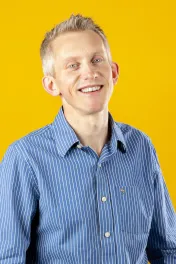
Hosted by Andrew Pain
Andrew Pain is a Mental Health & Resilience Keynote Speaker who speaks from lived experience on resilience, burnout and workplace wellbeing. Host of the Men on Show podcast, author of the book Honestly, Man, and a TEDx speaker. Member, International Coaching Federation, and Mental Health First Aider trained.
Insights
Read next

Never miss an episode
Candid conversations with everyday heroes – ordinary men doing extraordinary things.