Why my man code kept me silently stuck in domestic abuse (and how I changed it)
Hey Andy, what’s up with your face?
It was a fair question. There were cuts and bruises I just couldn’t hide. So out came the excuses - shaving accidents - falling over whilst drunk - scratched by the baby.
I couldn’t have told my colleagues that my wife was responsible for the marks on my face. It was the late 90s and in a fast-paced sales environment, you got on with stuff, you didn’t make a fuss, you hit your targets at all costs. To make matters worse, I had a man code to protect: a series of unwritten rules about what it takes to be a man:
Rules like:
- Good men do not reveal weakness – good men are strong, wise and stoical.
- Good men wear the trousers in their relationships. They’re generous, loyal, and sensitive of course, but they’re definitely in the driving seat (unless they’re a wuss).
- Good men have it all sorted. They don’t struggle and if they are struggling, they certainly don’t advertise it. Feelings talk / deep talk is for weirdos - good men don’t go there.
- Good men are physically strong, fit, active, muscly. They are the protectors and providers. They’re knights in shining armour and rescue damsels in distress (and if they have the time and energy, they might rescue a fellow gentleman, but damsels are the definite priority)
- Good men don’t back down. Good men are decisive, they know their worth and have the answers. They know what they’re talking about.
I can’t blame anyone for these old-school masculinity norms, they were shaped by society, media, culture over decades and centuries, but they were partly why I fell into domestic abuse. When I met my now ex-wife, I wanted to be the knight who rescued his damsel, by supporting her through her issues, and when I kept failing to be the noble knight, I couldn’t admit I was struggling. After all, a brave knight would be able to sort things out for himself, and without bothering other people for support. It was a mark of my stupidity that I couldn’t make my marriage work. That’s how I saw it.
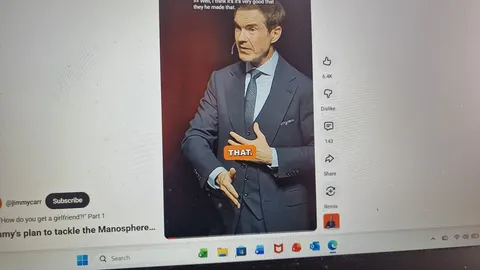
There’s so much conversation today about how we redefine masculinity, thanks in part to the popular programmes you’ve probably watched, like Louis Theroux’s documentary on the manosphere, or the fictional Netflix phenomenon, Adolescence. There’s also a wonderful group of men and women who have been banging the drum on these issues for years, and finally, they’re now being listened to. So across social media, we see posts about ‘positive masculinity’, ‘progressive masculinity’, ‘the gentleman’s code’, ‘masculinity unplugged’, ‘masculinity redefined’, all of them exploring what it means to be a man in the 21st century, whilst steering clear of the dreadful words, ‘toxic masculinity’.
I talk about my approach to masculinity in my forthcoming book, ‘Honestly, Man’. In fact the closing chapter is all about how we could think about masculinity, but given it’s not released until August 6th, this is how I’ve altered how I think about masculinity (my life is better for it - and I’m happily married today, this time to a wonderful women!)
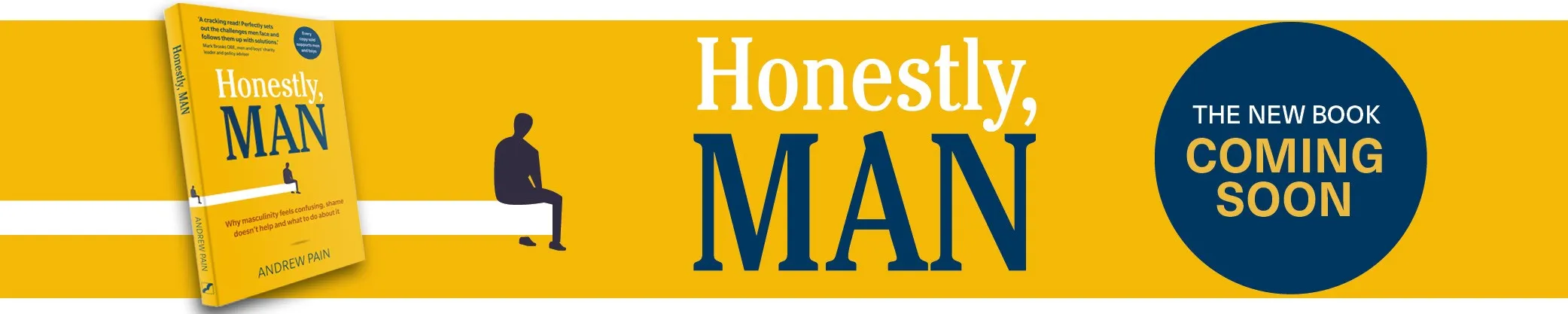 Available NOW in paperback and Kindle
Redefining masculinity is not about changing masculinity itself, its about exploring how we think about what it is to be a man today. I’ve made shifts in my thinking which have helped me to to retain the essence of how I see myself as a man, whilst taking off the pressure which came with my former approach. I see it as my new Andy’s man code.
Andy’s man code:
- Masculinity is broad not narrow: on the one hand, in my spare time, all I want to do is play football, watch football, jump off stuff, eat rare steak, drink beer (and be with the family of course). On the other hand, if a tear-jerker movie is on, I’ll be first to be shedding those tears (with bloody steak still dripping in my mouth). I’m very emotional although quite slow to anger. I’m rubbish at DIY, I’m musical, I’m more people-orientated and less object orientated. I don’t care about cars or gadgets, but football, history and politics? I could talk about them all day. I could go on. We’re all different, we’re individuals and our expressions of who we are as men is broad, so we should embrace the breadth of masculinity rather than confine it to a rigid set of expectations:
(And on that note, it doesn’t help that masculine traits are seen as dominant, aggressive and decisive, whereas feminine traits are seen as collaborative and empathic. How is a male teenager supposed to process that?)
2) Masculinity is not a series of Do’s and Don’ts. It’s about what kind of man do I want to be. I don’t see myself as THE provider anymore. It’s all well and good if you earn a fortune, but most of us don’t and the pressure which comes with the provider expectation simply sets men up to fail. I see myself as A provider, understanding that provision comes in many forms (time, attention, material resource, love, duty etc).
I don’t see myself as THE protector. I see myself as A protector. Yes, I’m physically stronger than my wife, but for example, she takes the lead on the online safety stuff with the kids because she’s tech savvy and I’m not. Thank god she is tech savvy! (She’s also a much better parker than me - although don’t tell her I said so)
-
It’s about people, not just damsels in distress. I strive to be a gentleman with ‘people’ so I’m just as likely to give up my seat for a man as a woman, or open a door for a man or woman, or feel sympathy for a man as I do a woman. Chivalry is about courtesy, decent manners and extending those manners to ALL people, even those people you don’t like.
-
Strength / Courage isn’t just about rescuing people. It’s about saying how you feel, even if you know it will be unpopular. It’s about speaking up for the disadvantaged and those who don’t have a voice. It’s about apologising when you got it wrong, it’s about walking away from a trivial fight which you could probably win, but it’s trivial. It’s admitting you don’t know an answer or that you feel out of your depth. Of course it’s also about rescuing people too, but there are many ways in which we can show courage.
How have you redefined how you think about masculinity?
Do you have your own man code?
If you want to bring the topic of men’s wellbeing to life, either as part of an away day, or as part of a wellbeing week initiative, or as part of men’s health week (June) or International Men’s Day (November) then get in touch and let’s talk.
I’m a CPD accredited and TEDx speaker, podcaster and author, delivering entertaining, inspirational and relatable keynote talks, grounded in lived experience and global research.
Connect with me at: https://www.andrewpain.co.uk/
And/ Or let’s connect on Linkedin and DM me to book an exploratory conversation
A version of this article was first shared with Andrew's newsletter subscribers on LinkedIn .
Get the next one straight to your inbox
Andrew writes regularly on men's mental health, burnout and resilience. No spam, unsubscribe any time.
Subscriptions open shortly – the mailing list isn't connected yet.
Booking a speaker instead? Let's talk .