Men and therapy: why it's not your fault if it didn't help - and what to do instead.
“I tried counselling, but just didn’t feel a connection”
This is a statement I’ve heard many times over. It breaks my heart when men then question themselves because counselling/therapy didn’t work, convinced there’s something deeply wrong with them … it obviously works for everyone else, right?
If you resonate with this, you’re not alone - and you’re not stupid or a luddite either. You’re actually pretty normal.
During my former marriage, which was violent and abusive, I was in counselling for several years, because I wanted to know how to be a better man. I hoped counselling would help me mature into the wise and lovable husband I wanted to be. I’d became conditioned to believe that the responsibility for the abuse lay entirely with me, that I kept provoking my wife, so her reaction was justified.
Having never had counselling/therapy, I had no reservations about the process. I embraced it fully, hoping it would give me answers, but it was ineffective. After two years of regular sessions, I didn’t find the secret to a happy marriage, nor did I experience any profound insights. It was just more evidence to underpin the notion that I was an idiot.
But why was it so ineffective?
This is a question I unpack in my forthcoming book:
‘Honestly, Man: why masculinity feels confusing, shame doesn’t help and what to do about it’.
(As a side note, 100% of the profits made from the sales of this book will be donated to charities supporting men and boys. That’s a long term commitment, not a cheap PR stunt and it’s due for publication in paperback and as an e-book on August 6th. I’d be honoured if you felt able to check out the pre-sale link and order your copy by checking out the link below)
But I thought it only fair to give you a few pointers in this article, given you’ve got this far … but please, do still buy the book!
So why is counselling/therapy ineffective for so many men?
1) Report communication v Rapport communication:
In Deborah Tannen’s book from the 1990s, ‘You Just Don’t Understand’, she proposes that women and men communicate differently, with women, on average, more likely to use communication for connection, expressing emotions and building relationships, whereas men are more likely to use communication for an exchange of information and/or problem solving.
She describes it in her book as ‘rapport talk’ (women) vs ‘report talk’ (men). Academics caution about treating her work as hard science (and of course, her work is increasingly dated) but if we can agree that as a trend, there may be small differences between how men and women may communicate, then Tannen’s work might help to explain why the activity element within men’s communities today, such as UK Men’s Sheds Association Menfulness MAN v FAT Well Run Brum CIC and Outta Puff Daddys are so important in helping men to bond and talk more easily as they feel increasingly ‘safe’ to do so. The activity is the hook, behind which the conversation can naturally unfold over time, and move beyond ‘report’ talk to ‘rapport’ talk. It’s not that men can’t talk openly and will only ever revert to ‘report’, it’s just that it may take time for men to feel comfortable to move from ‘report’ to ‘rapport’.
2) Testosterone
The Swiss neuroscientist and psychologist Chris Eisenegger has spent much of his career studying how hormones affect social behaviour, motivation and decision making. In 2011, he co-authored an influential review, ‘The role of testosterone in social interaction’, where he reframed testosterone as less of a ‘violence hormone’ and more of a ‘status regulation hormone’. Whilst a lot has happened since 2011, in general, his main points have stood the test of time. With significantly more testosterone in our systems than equivalent-age women, men are likely to have a heightened sensitivity to social threat, particularly threats that signal a potential loss of standing or respect.
So, if we want men to avoid bottling things up, to go against years of parental and societal conditioning and talk comfortably about our struggles, then we must also recognise that on a biological level, it may feel harder and more unnatural for us to do that than for women – not because we’re emotionally illiterate cavemen, but because of biology and, more specifically, testosterone.
It may be something to bear in mind if you’re thinking about starting your own men’s community. It’s also something to bear in mind if as a bloke, you’ve previously tried counselling and got nothing from it.
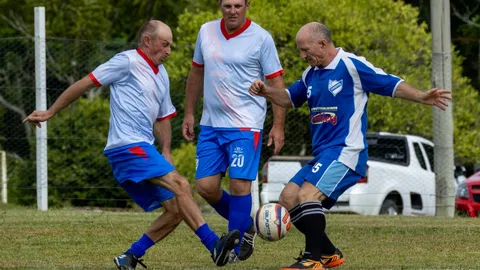
My Friday football network has a primary purpose (football), but then in the pub after the game, talking about feelings happens – not always, but sometimes. The deeper stuff, if and when it happens, is a natural outworking of being part of a group who are open for friendship that extends beyond the game and beer. The more we trust each other, and people start opening up, the more we can be increasingly open without fearing a loss of social status.
I don’t say to my wife on a Friday evening, ‘I’m off to therapy’, but on reflection, maybe the football community is a form of therapy for me, but without the label.
3) Ratio of male counsellors
It might help if we had more male counsellors. Currently roughly only 20-25% of counsellors/therapists identify as male. My counsellor was female with sessions undertaken in her counselling room. Would it have helped had I engaged with a man? We’ll never know, but increasing the number of male counsellors, and accessibility to male friendly therapy, is a big step forward.
There is an emerging network of male counsellors and the work of Chris Hemmings in launching the Men’s Therapy Hub is a fantastic initiative - a major shout-out too, to Christian Chalfont MBACP and Stephen Hall MNCPS (Acc.) who are doing great work in this space.
- If counselling didn’t work for you, it’s not your fault, nor is it the fault of the patriarchy.
- If counselling didn’t work, it might be a combination of factors including testosterone, communication styles, the lack of male counsellors and trying to find a connection with a counsellor (sometimes it can take a few attempts with different people to find the right match)
- If you’ve tried various counsellors, either connect with Chris Hemmings and his network of counsellors, or get stuck into one of the emerging male communities in your area - they’re literally springing up everywhere, different activities with different aims, catering for more and more men.
If you want to bring the topic of men’s wellbeing to life, either as part of an away day, or as part of a wellbeing week initiative, or as part of men’s health week (June) or International Men’s Day (November) then get in touch and let’s talk.
I’m a CPD accredited and TEDx speaker, podcaster and author, delivering entertaining, inspirational and relatable keynote talks, grounded in lived experience and global research.
Connect with me at: https://www.andrewpain.co.uk/
And/ Or let’s connect on Linkedin and DM me to book an exploratory conversation
Lastly - that book link - available for presale, I’d be honoured if you could order a copy
A version of this article was first shared with Andrew's newsletter subscribers on LinkedIn .
Get the next one straight to your inbox
Andrew writes regularly on men's mental health, burnout and resilience. No spam, unsubscribe any time.
Subscriptions open shortly – the mailing list isn't connected yet.
Booking a speaker instead? Let's talk .