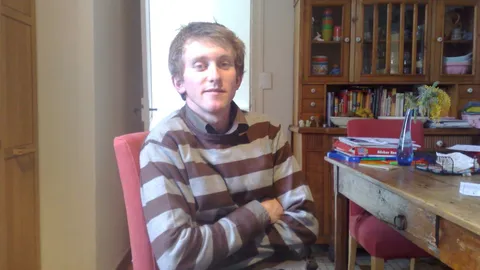
Why the housing crisis is a missing piece for men's mental health - but not an easy one to fit in place
You can’t blame feminism or the patriarchy, nor can you blame the manosphere: it’s happened because of decisions made years ago.
It’s bad news for most people on lower and mid-level incomes, but the data suggests it might be worse for young men.
THE HOUSING CRISIS!
I explore it in my forthcoming book:
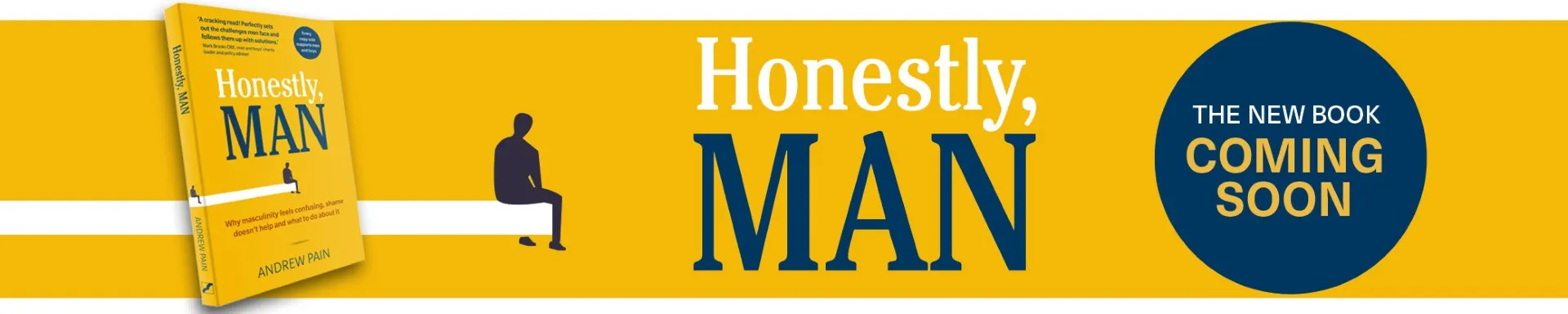 (Available NOW in paperback and Kindle - All profits raised will be invested in charities serving men and boys)
But as my book is not released until August 6th, I’ll answer three questions NOW about the housing crisis and men.
Question 1) Why the link between the housing crisis and men?
I was asked this question whilst guesting on a podcast last year:
- Was there a stand-out moment when you felt you became a man?
I had to think about it, but realised that actually, there was a stand-out moment in my early 20. It wasn’t when I lost my virginity, nor when I passed my driving test. It was the moment I held those keys. I’d recently moved to London and with a mate, we started to rent an ex-council flat.
The feeling when we walked in, that we were responsible for this place, it did something to me. It was our pad - my pad. I felt a foot taller and that I’d entered a new adult world. I would need to deliver at work if I was to pay for this. I was 23. Renting by the age of 23 was normal. I wasn’t surprised, but I was definitely proud of myself. I had no doubts that a property purchase would follow at some point, and of course it did, 5 years later.
The feeling of that key in my hand - it did something to me!
Maybe it played into my need to be a provider, because back in the 90s, that’s what I thought real men were supposed to be, and for sure, you could argue today that such a sentiment is dated and unhelpful, but there was nothing unhelpful about the maturity which independence brought. I’d properly left my childhood home. The evidence was in that set of keys. I was a man. That’s how I saw it.
Property ownership and renting a pad: an achievable milestone for me back in the 90s, but for many of our young people today, these milestones are fantasy land. They’re not reasonable expectations to have in return for getting on and working hard. What a tragedy that at the point in life when young people are ready to leave home and forge their path, their options in terms of housing are extremely limited (unless they have a bank of mum and dad)
When I transitioned from renting at the age of 23, to owning a home at 28, I borrowed just 4 times my annual salary to purchase my house in 2002 (it was a 105% loan with the 5% bit on top to pay off some debts). To clarify, the cost of the house I bought, was just 4 times my annual salary, whereas today, it’s anywhere from 7-8-9 times someone’s annual salary. Renting and buying a property were straight forward for me, but they’re not today and it seems that young men fare particularly badly.
According to 2024 data from the Office for National Statistics, 1/3 of men aged between 20 - 34 years’ old, still lived in their parent/carer’s property, in comparison with just under a quarter of women of similar age. You may think, so what? And that’s a fair question (so what?) So here’s another question to consider.
- Is there a link between poor mental health and being stuck in your parent/carer’s home as a male adult?
There’s not a lot of research on this specifically and there really should be. But looking at a study from 2022, where 151 men identified as incels and 378 men as non-incels, just over 50% of incel men still lived in their parent/carer’s home, whereas only 27% of non-incel men did.
Thus as an adult male, you’re more likely to be an incel, if you live in your parent/carer’s home, than if you live independently.
In order to prove a link (that you’re more at risk of being drawn into the negative parts of the manosphere if you’re stuck in your parent/carer’s home) you’d obviously need a much bigger, and international data set, which also explored other groups within the manosphere rather than just the incels.
That said, looking at this one isolated study, there might be an increased risk of falling into the incel movement if as a man, you still live with a parent/carer. Its an interesting hypothesis and I’m a firm believer that the housing crisis is a contributory factor to the mental health crisis which so many men are grappling with today, and particularly those men at the lower end of the socio-economic ladder.
Question 2) What’s caused the housing crisis?
We should consider this question because once we know the ‘why?’, we can start to rectify it. We need intelligent debate on this, rather than populist politics, finger pointing and knee-jerk reactions. In most developed countries there is a housing crisis and within the UK at least, varied factors include:
-
The Right to Buy scheme under Margaret Thatcher in the 1980s, which increased homeownership but reduced the stock of social housing, because replacements were not built at the same pace. To make things worse, reduced public investment in council housing increasingly shifted reliance onto the private sector.
-
New housing construction consistently lags behind demand, especially in high-growth areas like London. Planning restrictions, including green belt protections and slow local approval processes, have limited the building rates.
-
Rising demand has compounded the problem and rising demand is due to; population growth, increased life expectancy, and smaller household sizes, low interest rates and property’s attractiveness as an investment, and of course the subsequent growth of the second/multiple-home owner. Estimates vary, but it seems that over 1 million people in the UK own more than one home - over 1 million! And many of them will own multiple homes.
As you can see - we can’t blame any one person or group for the housing predicament people face today. We can’t blame asylum seekers or councils gone woke, or the super-rich, but we can recognise it’s a problem, its complex and that solving it is part of how we create better outcomes for people, especially men.
Question 3) How do we solve the issue?
There is no ONE magic solution, but each of these points below may help.
A) Male Targeted Action:
- Include the housing crisis as a key topic within conversations about men’s mental health. If we’re serious about improving men’s mental health and the mental health of our young people, the housing issue needs to be addressed. On one level, it’s been 40 years in the making, so resolving it won’t be easy, but it’s a piece of the puzzle we must talk about if we want to help young men to experience better life outcomes. It affects women, people and men of course, but it seems that men struggle in greater numbers.
- Initiate research, comparing the outcomes of those men who remain stuck in their parent’s homes in their late 20s and 30s, and those who live independently. Currently, there isn’t much of it about. We need to understand just how significantly being stuck in your parent/carer’s house as a man, impacts your life experiences / outcomes.
- Lobby for a Minister for Men at Parliament. There’s been a Minister for Women and Girls for years, but not one for men. A Minister for Men would help to join the dots, shape policy for men and boys and create a wider, cohesive strategy to support the wellbeing of men and boys.
B) Action for people (but which also helps men):
- Build significantly more homes (especially where demand is highest). This would involve relaxing parts of the planning system, particularly around low-quality green belt land and incentivise local authorities to approve development.
- Restart large-scale social housebuilding. Councils and housing associations need long-term funding to build genuinely affordable homes. Reversing the legacy of Right to Buy – or at least replacing homes sold – might stabilise the rental sector.
- Support renters and first-time buyers. Focus less on demand-boosting schemes (which can inflate prices) and more on long-term fixed-rate mortgages, stronger tenant protections, and institutional rental supply.
- Skills Development in the trades. With the greatest of respect to our fine country, if the government made the necessary legislative changes and tried to kickstart a house-building boom, do we genuinely have the skills to match it? At the moment - probably not!
If you want to bring the topic of men’s wellbeing to life, either as part of an away day, or as part of a wellbeing week initiative, or as part of men’s health week (June) or International Men’s Day (November) then get in touch and let’s talk.
I’m a CPD accredited and TEDx speaker, podcaster and author, delivering entertaining, inspirational and relatable keynote talks, grounded in lived experience and global research.
Connect with me at: https://www.andrewpain.co.uk/
And/ Or let’s connect on Linkedin and DM me to book an exploratory conversation
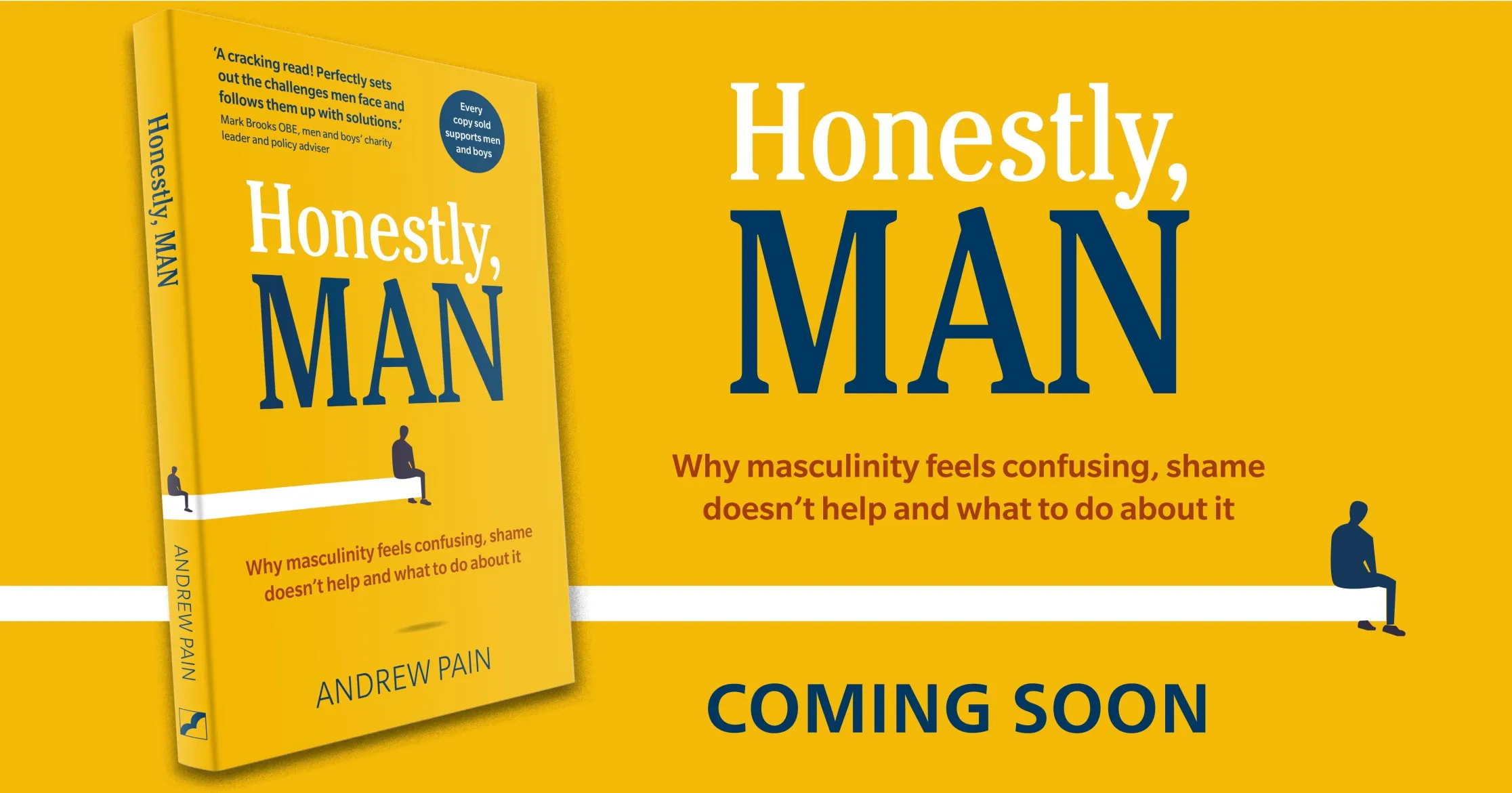 (Available NOW in paperback and Kindle - All profits raised will be invested in charities serving men and boys)
A version of this article was first shared with Andrew's newsletter subscribers on LinkedIn .
Get the next one straight to your inbox
Andrew writes regularly on men's mental health, burnout and resilience. No spam, unsubscribe any time.
Subscriptions open shortly – the mailing list isn't connected yet.
Booking a speaker instead? Let's talk .