Men's networks: it's a no-brainer, right?
It’s not new news - we’ve known it for a while - it really is quite straight forward.
We men need connection, belonging and purpose, because many of us are struggling, and whilst there is always a way forward, it can be difficult to see it when you’re stuck in a rut. Some of us of course are not struggling, but connection, belonging and purpose are just as important, because we’d soon be struggling without them!
I’m excited to see organisations across the UK, creating and developing men’s networks, providing a safe space for male employees to build relationships, thrive and safely seek help. I’m heartened to see as much enthusiasm for growing a men’s network, as there is for growing a women’s network.
But how do you get a men’s network up and running?
Through my podcast, Men on Show, I’ve interviewed some of the UK’s finest - men who have started a men’s community. It seems clear from these interviews that community building is not plain sailing. You may have the biggest heart for your male colleagues, and a clear vision of what you want to develop, but as you start putting out the feelers and ask a key question:
- “Who else is up for this?”
There’ll be plenty of people who’ll say they’re excited too and they’re jumping onboard, but actually getting them on deck to roll up their sleeves and make the ship sail, is easier said than done. Even if you can get your ship out of harbour with a few loyal sailors, once its sailing, it can feel like you’re going round in circles. Common complaints I hear include:
- We have 60 members, but only 10-12 of them are active and even fewer actually do anything for the group. Technically, the other 50 people are ‘members’ but they’re not active. What’s going on? How do we make them active?
- We have more interest from women in joining the men’s network than the men! What is wrong with men?
- Two years in now and still the numbers are struggling – it feels a bit flat. What did we miss?
If this sounds familiar, you’re in the right place. You can check out my full interviews from the Men on Show podcast with community building legends such as: Matt Grisedale Patrick Nyarumbu Richard Loftus Ben Mason Scott Johnson Matt Hudson Christian Chalfont MBACP Dr Jack Woodhams but if you’re struggling for time and want quick answers, I’ve included below, 5 key things I’ve learned from hosting such fine guests!
- Community building takes time.
We want immediate results, or at the very least, some indicators that our efforts won’t be in vain.
But to grow a community, it really does take time for word to get out, for messaging to have been received and processed a number of times (most of us don’t take action the first time we hear of a new initiative) for messaging to be improved as we get a sense of what works and what doesn’t.
It really does take time for people to warm up to the prospect of joining and many of us are toe dippers. We’re happy to join something on a low-key basis (just dipping our toes), but we’d like to just observe for now. We’re already busy or maybe we don’t want others to think we’re trying to take over, so we join cautiously, and there is no chance of anything more than our toes going into the water at this stage. We have to be patient with toe dippers. We’d probably follow the same approach in other areas of our lives. It can literally be years until a community really starts to get off the ground.
2) The direct ask.
Wouldn’t it be great if people could sense that help was needed, so they volunteered straight away. No one asked them. They just saw the value, stepped up and gave willingly. But let’s get back into the real world.
We’re all overwhelmed by a fast-paced world with far too much information floating around. We won’t magically sense that a community needs us. Maybe, if someone personally invited us to get involved because they’d value our skills and insight, it might change how we felt. The compliment itself would warm us up. If you want people to help, it requires more than a round robin email, it’s about a direct, warm, invitation, given several times over.
3) If community matters, prove it!
We sort of know that community is important, but many of us are not consciously aware of how vital a thriving community spirit is for innovation, wellbeing and resilience. In a busy, highly demanding role, community can feel like a nice-to-have - one of those softer things in life which shouldn’t take up too much time.
As community builders, we need stories and evidence to bring the concept of community to life (like the stories I tell in my keynote talks and collaborative mini podcast series) From Harvard to Netflix, Silicon Valley to strange experiments from University of Virginia, community is NOT a nice-to-have but most of us don’t consciously know just how important it is, nor could we prove it if put on the spot.
- Variety is the spice of life.
What works for one guy may not work for another. I’m not interested in a talk group. If your men’s network was mostly blokes talking over coffee, it wouldn’t do much for me. I might toe-dip to tick a box, but I wouldn’t be too excited by it.
I may have a vague interest in a hiking group I suppose, but …
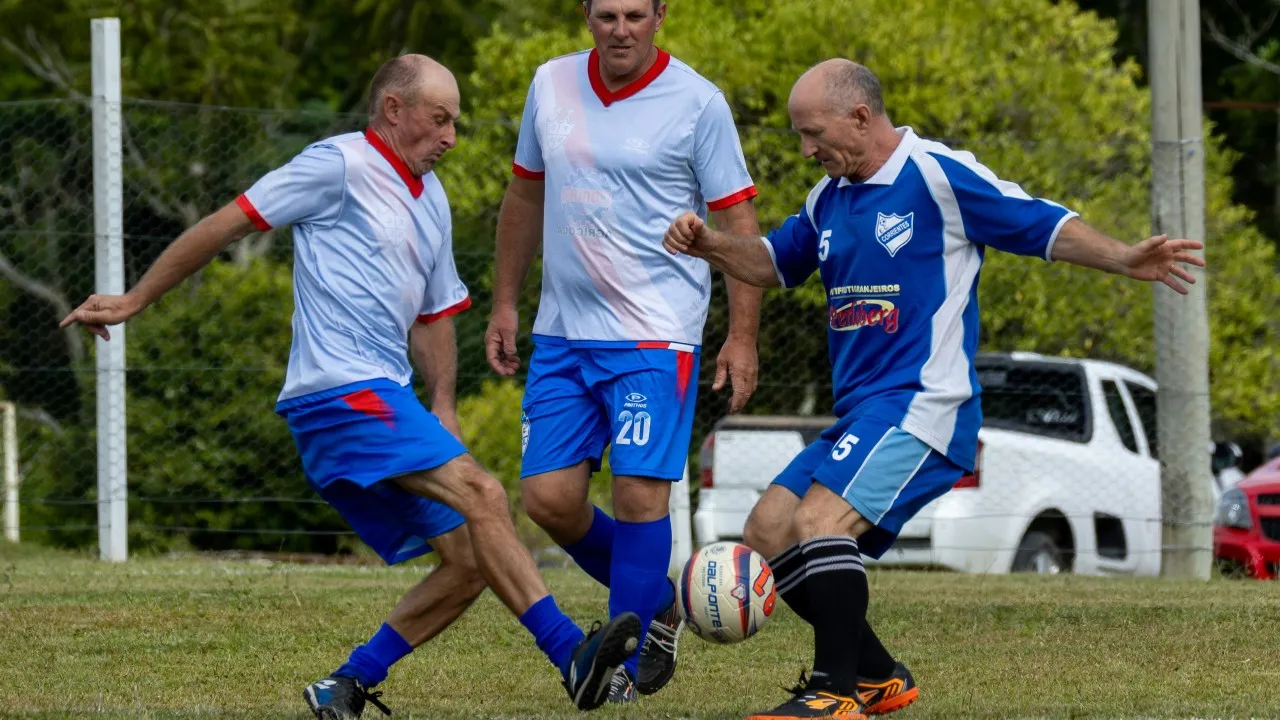
Five/six a-side football followed by a beer? (HELL YEAH! I’d be all over it)
Pub crawls and curry? (Where do I sign?)
An annual snowboarding/ski weekend away? (I’m in dreamland)
When we create community, be open to how it may evolve, give it room to have sub groups, embrace options, give people freedom, variety and responsibility.
- You can’t own a community.
Be ready to hand your community over, even if you’re the founder. Step back. Enable others to step up. Share the glory. Make sure that your group has multiple faces in the papers/press/newsletters, not just yours. At some point, it’s healthy to pass on the thing you started and allow/empower someone else to run with it. Communities are dynamic and forever evolving. You can’t constrain/own a community.
Most founders know this when they start out, but they sometimes forget it once they’ve got it off the ground and they’re proud of their ‘baby’.
A community is not your baby - or anyone else’s. It is it’s own thing with multiple moving parts
If you want to bring the topic of men’s wellbeing to life, either as part of an away day, or as part of a wellbeing week initiative, or as part of men’s health week (June) or International Men’s Day (November) then get in touch and let’s talk. I’m a CPD accredited and TEDx speaker, delivering entertaining, inspirational and relatable keynote talks, grounded in lived experience and global research.
Connect with me at: https://www.andrewpain.co.uk/
And/ Or let’s connect on Linkedin and DM me to book an exploratory conversation
A version of this article was first shared with Andrew's newsletter subscribers on LinkedIn .
Get the next one straight to your inbox
Andrew writes regularly on men's mental health, burnout and resilience. No spam, unsubscribe any time.
Subscriptions open shortly – the mailing list isn't connected yet.
Booking a speaker instead? Let's talk .