Andrew Pain
andrewpain.co.uk
The Two Imposters
Confidence
Why 85% Battle a Syndrome 'Fake It Till You Make It' Won't Fix
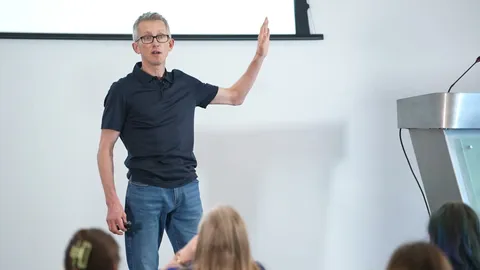
A research-backed keynote that unpacks why Imposter Syndrome affects so many professionals and gives attendees a practical toolkit – not platitudes – to quieten self-doubt and process setbacks with confidence.
What this session covers
- Why there are two types of Imposter Syndrome and how they're both different and similar.
- The ten most common causes of imposter syndrome.
- The Imposter Syndrome survival kit: your own toolbox of techniques and insights to send imposter syndrome packing.
- The everyday habits which most people are unaware they do, but which undermine our self-worth.
- The most common thinking errors which skew our judgement of ourselves and others.
- The four emotional stages of receiving negative feedback.
- How to process negative feedback, so you're not consumed by it and can separate the helpful stuff from the unhelpful stuff.
- How to deal effectively with setbacks when your actions were partially to blame, using techniques such as SetBack Square and T.E.S.T.
What your people leave with
- Understand the two distinct types of Imposter Syndrome and how each shows up at work.
- Identify the ten most common causes driving self-doubt.
- Walk away with a personal Imposter Syndrome survival kit of techniques and insights.
- Recognise the everyday habits that quietly undermine self-worth.
- Spot the thinking errors that skew judgement of self and others.
- Navigate the four emotional stages of receiving negative feedback.
- Use tools such as SetBack Square and T.E.S.T. to handle setbacks constructively.
Who it's for
Teams, leaders and professionals in any sector who want to move beyond 'fake it till you make it' and build genuine, grounded confidence
Formats & logistics
- Talk length
- Keynotes usually run 45 minutes to an hour, sometimes 90. Around two hours it becomes a workshop; longer than that is rare.
- Audience size
- From an intimate group of 8–12 to a main-stage audience of 200–250. Interactive workshops usually sit around 40–70.
- AV & tech
- Andrew works with whatever setup you have. And if the tech fails, the show still goes on – he'll present without slides.
- In-person or virtual
- Delivered on-site or online, on the platform you already use – most often Teams or Zoom.
If you need support now
This talk draws on lived experience and is educational – it is not medical or therapeutic advice. If you or someone you know needs support now: