
Why the family courts is a key part of addressing men's mental health
After nearly 3 years of family court action (the first time where I secured custody of my daughters, the second time, where I was battling against my ex’s efforts to reverse the decision) I can safely conclude, that:
A) The family court drama was one of the worst experiences of my life.
B) Given the subsequent loss of working time, focus and energy, it’s impact on my working life was equivalent to a debilitating long term illness.
There are 250,000 new cases which come into the UK family courts every year, and so there’s a good chance if you’ve not yet been personally affected, you know someone who has, but unless you’ve been through it, it’s hard to fully appreciate just how bad things are in the family court system. .
When a relationship breaks down and one of the parents is abusive, controlling and/or bitter about the break-up, the family court system becomes part of everyday life, as ‘contact with the children’ can become the source of a drawn-out war between the parents. For many loving mums and dads, what then follows in the family courts is a living nightmare.
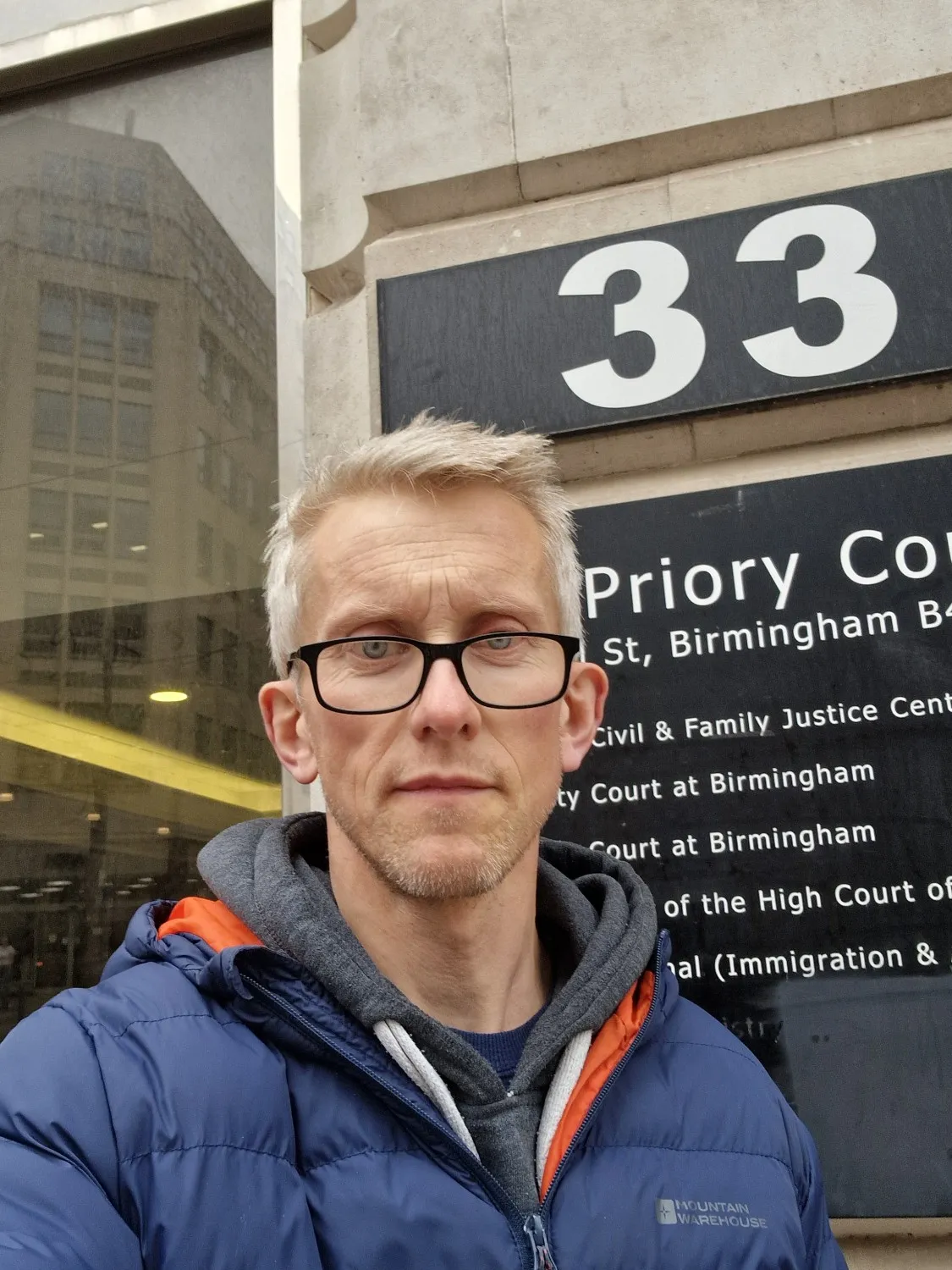 This is me outside the courts, several years later, feeling triggered to be back there, but pushing through for the sake of the photo!
Family courts are:
- Financially draining (cases can cost up to £100,000 – mine cost in total c £20,000 over several years)
- Unpredictable (your result can be hugely swayed by the preferences/outlook of the judge or CAFCASS worker)
- Highly adversarial
- Drawn out and time consuming
They are an emotional pressure cooker. The financial strain alone can push people to breaking point and both the alienation from your kids (caused by the other parent) and the inadequate family court system, are known triggers for suicide.
FOR EXAMPLE:
Let’s imagine your male colleague has a family court hearing scheduled at 10:00am. It’s listed as a 20-minute hearing, and because the family courts are situated only fifteen minutes from the office, he takes half a day of annual leave, confident he’ll be back by lunchtime.
But he won’t be!
The hearing might not be heard until 3:00pm. It might last an hour. It might last 60 seconds.
- He could walk out with good news, bad news, or something that leaves him more confused than before.
- It might have been a relatively constructive process or he might have been battered with accusations.
- He might have felt supported by the professionals or hung out to dry.
- Progress might have been made, or literally nothing happened and he just wasted his money with more legal outings on the cards.
And then he’s expected to return to work, function, perform, and cope – as if nothing just happened. The following week, no doubt, he’ll be taking phone calls at work from his solicitor and/or CAFCASS, the independent case workers who are supposed to befriend the children, secure the truth and advise the judge on what to do. These phone calls by the way, may last 5 minutes or 60 minutes, with your colleague, feeling torn apart by the process and plagued with guilt that he’s letting his employer down because it’s encroaching on his working life.
This is why, if as employers we’re serious about safeguarding men’s mental health, we have to talk about the family courts. The family court system is not fit for purpose, and the emotional fallout doesn’t stay at the courthouse doors. It follows people into their workplaces, their homes, and their heads.
ACTION POINTS FOR EMPLOYERS
As employers, leaders, and colleagues, we can:
-
Raise awareness among our leaders and managers so if they’ve not personally been through it, they’re more sympathetic towards those who are experiencing it.
-
Provide flexibility for people going through it, understanding that ‘flexibility’ may need to be long-term as cases typically drag on for months.
-
Include provision within Employee Assistance Programmes from counselling to legal support, for those enduring the family courts.
-
Look out for colleagues going through it - kindness, understanding, meaningful check-ins. They’ll certainly need them!
For more short articles on topics relating to understanding and improving men’s mental health, please subscribe to my newsletter and connect/follow me on Linkedin. Thanks for reading!
Andrew Pain – Motivational Mental Health Speaker
(If you find absorbing videos easier than written text, check out one of my latest short videos on the topic:
A version of this article was first shared with Andrew's newsletter subscribers on LinkedIn .
Get the next one straight to your inbox
Andrew writes regularly on men's mental health, burnout and resilience. No spam, unsubscribe any time.
Subscriptions open shortly – the mailing list isn't connected yet.
Booking a speaker instead? Let's talk .