Are we less sympathetic to struggling men? And if we are - so what?
I know this sounds provocative, but the title is not clickbait, and I’m not trying to be controversial in order to raise levels of engagement in the build-up to my book release (on August 6th - although I do talk about the empathy gap within the book)
Genuinely, if there’s any truth behind the notion that we might be have less empathy towards men, then we should explore it, because we cannot say we’re serious about addressing men’s mental health and raising a healthy generation young men, if we’re lacking in empathy for them.
I grew up with a traditional, old-school man-code. I saw myself as a chivalrous knight in shining armour whose job it was, to rescue damsels in distress. I put women firmly on a pedestal and my job as a male, was to serve them dutifully and constantly improve myself until I could attract positive female attention.
- Instinctively, I had less time for men and more for women.
- Instinctively, it seemed natural to step aside in order to let a women on a train before me, but I wouldn’t do that for a man.
- Instinctively, I became attuned to looking out for women who might need help, but not men.
… and it appears I’m not alone!
In a recent and large-scale study of 35,000 people in the US, which examined their attitudes towards men and women, researchers found that people in general are more accepting of men suffering than women. It also found that when men have fallen behind, people are more likely to see this as due to a lack of effort, whereas for women, it’s more likely to be seen as the result of systemic failure (ie not their personal fault). Or if men are in poor health, it’s due to their behavioural issues rather than external factors.
The empathy gap is a topic I unpack in my forthcoming book, ‘Honestly Man’ which is available NOW for pre-order and will be released as a paperback and kindle from Aug 6th (the audio version will follow later in 2026)
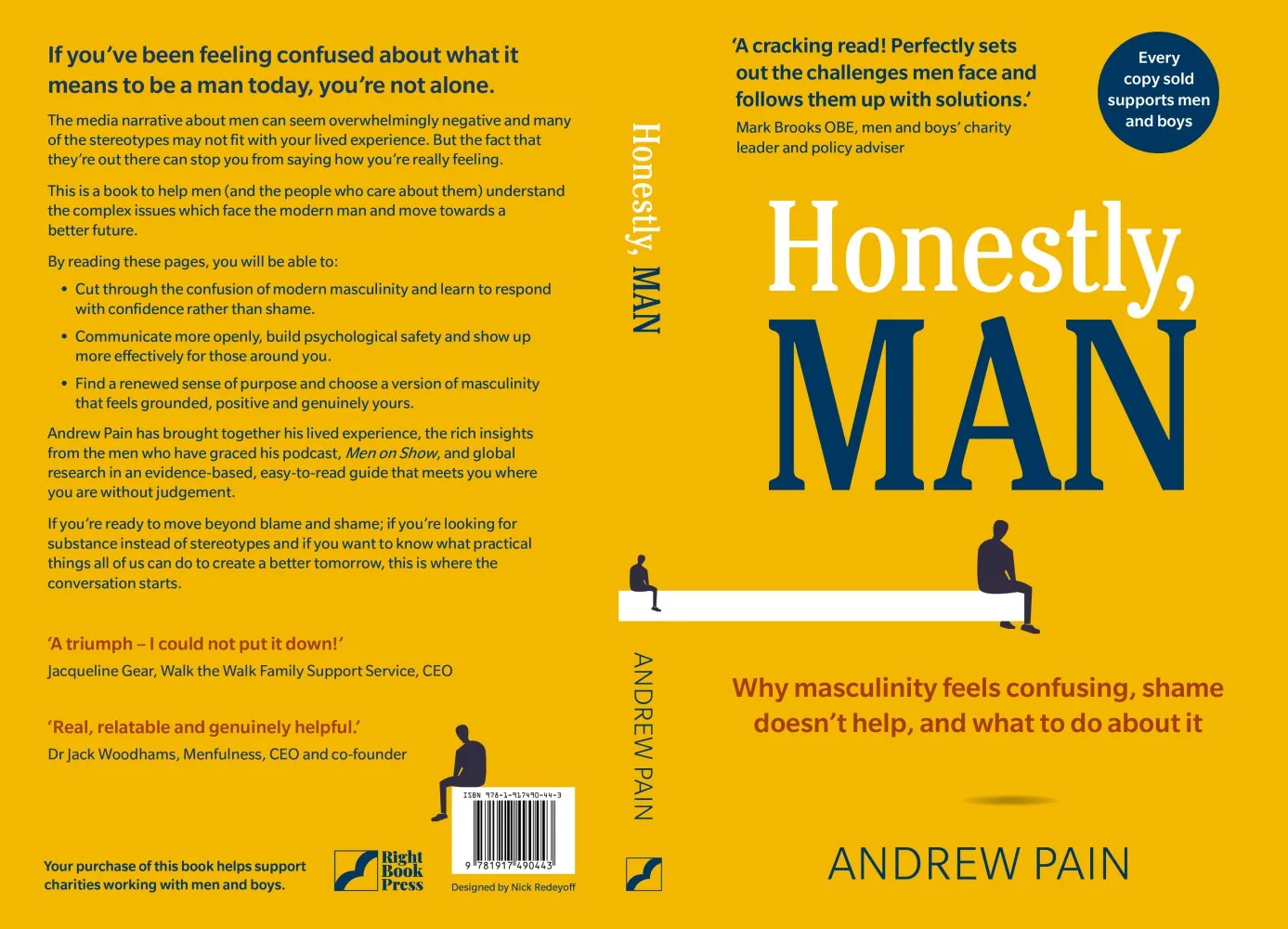 All profits raised from book sales will be invested in charities supporting men and boys
The survey of 35,000 people I refer to is not an isolated survey - there’s other credible research which I mention in my book and which underlines the same point, that people (including men and women) are less sympathetic to struggling men, than women in the same predicament.
You may wonder why and the reasons are varied but to give you a flavour of some of those reasons. They include;
A) Stereotypical views about men and women - shaped over centuries by society.
B) Evolutionary pressures (in that for the survival of the species, if you had 20 people left on the planet, you’d be better off with 7 men and 12 women, than the other way around)
C) The Birkenhead Drill – women and girls first, which came into being after the sinking of HMS Birkenhead in February 1852, and which may have shaped our attitudes over time.
D) Levelling up - in order to level the playing field for women and girls, we’re less attuned to the challenges men and boys face, because we don’t hear much about them and it feels unfair on women and girls: it’s seen as classic ‘whataboutery’ to shift the spotlight away from where it’s most needed.
But, if we’re lacking in empathy for half the human population, when it comes to sensitive topics like domestic abuse for example, we’ll ignore the men affected, and/or downplay their suffering (and the numbers).
It may be why government seems to overlook the fact that 40% of estimated victims of domestic abuse are men. You’d barely believe from the conversations within parliament, that there are any male victims of domestic abuse, let alone nearly half!
It may be why we don’t have a specific strategy to tackle violence against men and boys – all the men and boy’s data is swept into the women and girls data. So if you’re a male victim of violence and your perpetrator is female, technically, you’re a victim of violence against women and girls.
It may be why so many men are switched off from wellbeing and DEI initiatives, in that they don’t feel their issues are worthy of support and even if they did recognise their pain, they’d fear not being believed, or being taken seriously.
So - how do we close the empathy gap?
A truly massive question which is a book in itself (and a full chapter in my own book), but for the sake of brevity and offering value in this newsletter, I have a few thoughts
-
Men struggle for complex reasons, not because they’re toxic. Widespread acceptance of these complexities would be a step forward. It’s not that all men are struggling of course, but many are, and the indictors from suicide data, homelessness, life expectancy, loneliness, and poverty and prison show this to be true.
-
Supporting men and women is not a competition. We can advocate for women and girls AND men and boys. Both are important, both need funding, resource and careful thought. These pieces of work are not ‘Contradictory’, they’re ‘Complimentary’.
-
De-gender the narrative around domestic abuse, both within the media, and at parliament, and in our schools when we talk about it. It’s not just a problem for men to deal with - it’s a people problem involving people as victims and perpetrators.
-
Action at parliament. Give us a VAMB (violence against men and boys strategy)! And whilst you’re at it, give us a minister for men too. These steps send an important signal that men and boys are not disposable and they set the tone for wider conversation in society.
-
Action at work. Within our organisations, let’s support men’s networks/initiatives. Listen to your men. Get conversations started. Put on events which appeal to men in their own language and don’t give up. They may feel wary about opening up at first.
-
Update our dated man codes. I’ve updated mine. I explore it in the final chapter in my book. One thing that changed was my chivalry. Today, for me, chivalry is about extending kindness to everyone, not just women and girls. I’m now just as likely to stand up and give my seat to a guy with lots of baggage, as I am for a woman with lots of baggage.
If you want to bring the topic of men’s wellbeing to life, either as part of an away day, or as part of a wellbeing week initiative, or as part of men’s health week (June) or International Men’s Day (November) then get in touch and let’s talk.
I’m a CPD accredited and TEDx speaker, podcaster and author, delivering entertaining, inspirational and relatable keynote talks, grounded in lived experience and global research.
Connect with me at: https://www.andrewpain.co.uk/
And/ Or let’s connect on Linkedin and DM me to book an exploratory conversation

A version of this article was first shared with Andrew's newsletter subscribers on LinkedIn .
Get the next one straight to your inbox
Andrew writes regularly on men's mental health, burnout and resilience. No spam, unsubscribe any time.
Subscriptions open shortly – the mailing list isn't connected yet.
Booking a speaker instead? Let's talk .